When the Western Roman Empire crumbled in the 5th century, history books often mark it as the end of an era. But in the east, the story was far from over. For another thousand years, the Roman Empire endured, centered on its magnificent capital, Constantinople. Its people never called themselves "Byzantine"; they were Romans, guardians of a legacy that stretched back to Augustus. This is the story of that empire—a civilization of immense power, faith, and culture that served as a shield for Europe, preserved the wisdom of the ancient world, and shaped the course of history in ways that still echo today.
The Empire That Didn't Fall: From Rome to Constantinople
In 330 AD, Emperor Constantine the Great made a decision that would change the world. He established a new capital for the Roman Empire on the site of an old Greek colony called Byzantium. Strategically positioned between Europe and Asia, this "New Rome," soon known as Constantinople, was destined for greatness. When the Western Empire finally collapsed under the weight of internal decay and external invasions in 476 AD, Constantinople stood firm. The Eastern Roman Empire, as it was known, possessed a stronger economy, a more stable administration, and formidable defensive walls, allowing it to weather the storm that had consumed its western counterpart.
What's in a Name? Why We Call Them "Byzantine"
It's a historical irony that the people of this empire, who proudly identified as Romans (Rhomaioi), are now known by a name they never used. The term "Byzantine Empire" was coined by a German historian in the 16th century, long after the empire's fall. He derived it from Byzantium, the city's original name. While modern historians use the term for clarity—to distinguish the medieval, Greek-speaking, Christian empire from the ancient, Latin-speaking, pagan one—it's crucial to remember that for its entire existence, this was, in its own eyes and the eyes of its neighbors, the Roman Empire.
The New Rome: The Foundation of Constantinople
Constantine didn't just build a city; he forged a new center of gravity for the Roman world. He endowed it with a senate, modeled its administration on Rome's, and filled it with treasures and monuments from across the empire. More importantly, he made it a Christian capital. This fusion of Roman political tradition, Greek culture and language, and Christian faith would become the defining characteristic of the Byzantine Empire, a powerful identity that would sustain it through centuries of crisis and triumph.
The Age of Restoration: Justinian's Dream (527-565)
In the 6th century, one emperor dared to dream of reversing history. Justinian I, a ruler of boundless ambition and energy, sought nothing less than the renovatio imperii Romanorum—the restoration of the Roman Empire to its former glory. His reign represents one of the empire's most brilliant and transformative periods.
Reconquest: Belisarius and the Gothic Wars
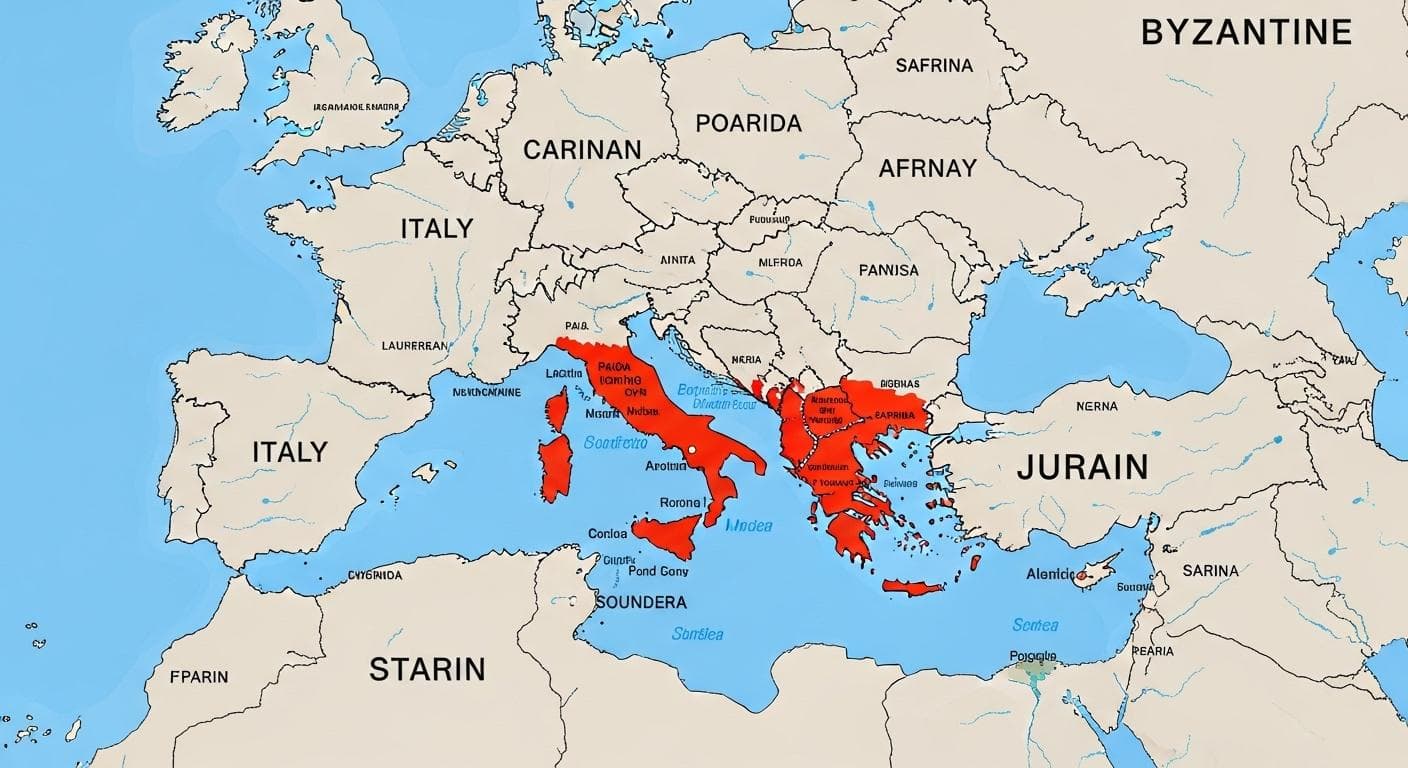
To reclaim the lost western provinces, Justinian unleashed his brilliant general, Belisarius. In a series of stunning campaigns, Belisarius shattered the Vandal kingdom in North Africa in 534 and then turned his sights on Italy, held by the Ostrogoths. The resulting Gothic War was a brutal, two-decade-long struggle that ravaged the Italian peninsula. Though the Goths, under leaders like Totila, proved resilient, Roman forces under Belisarius and his successor, Narses, were ultimately victorious. By 554, Italy, Sicily, and even a sliver of southern Spain were back under imperial control. For a brief, shining moment, the Mediterranean was once again a Roman lake.
The Nika Riots: A City in Flames, An Empress of Iron
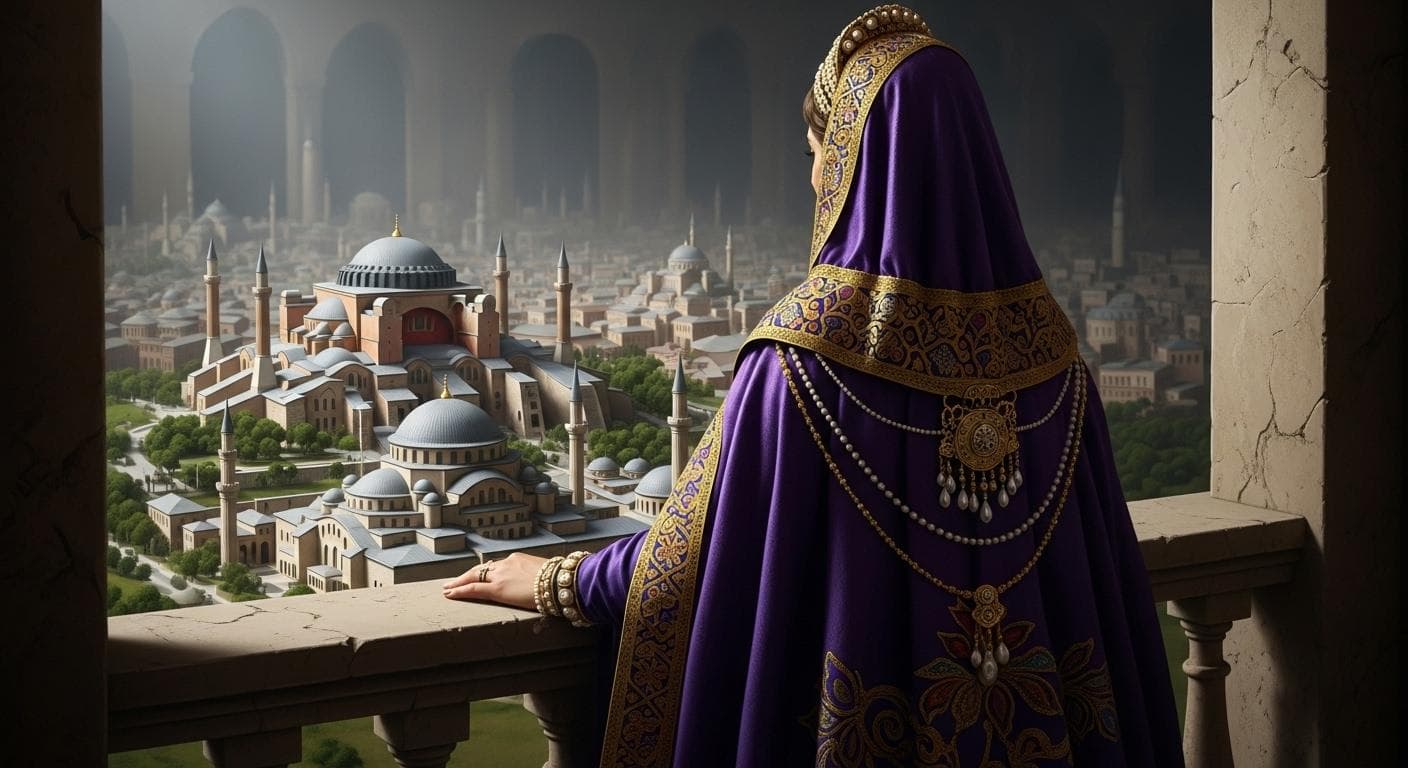
Justinian's ambitions were nearly extinguished at home. In 532, political tensions, fueled by the fierce rivalry between the Blue and Green chariot-racing factions, exploded into the Nika Riots. For five days, Constantinople burned. The mob torched landmarks, including the main church, the Hagia Sophia, and crowned a new emperor. A panicked Justinian was ready to flee, but his wife, Empress Theodora, refused. A former actress of humble origins, Theodora possessed a will of iron. In a now-famous speech, she declared she would rather die a ruler than live as a fugitive, proclaiming, "The royal purple is the noblest shroud." Her courage galvanized Justinian. He ordered Belisarius and Narses to crush the revolt, a brutal affair that left tens of thousands dead in the Hippodrome but secured Justinian's throne for good.
Building a Legacy: The Hagia Sophia and the Code of Justinian
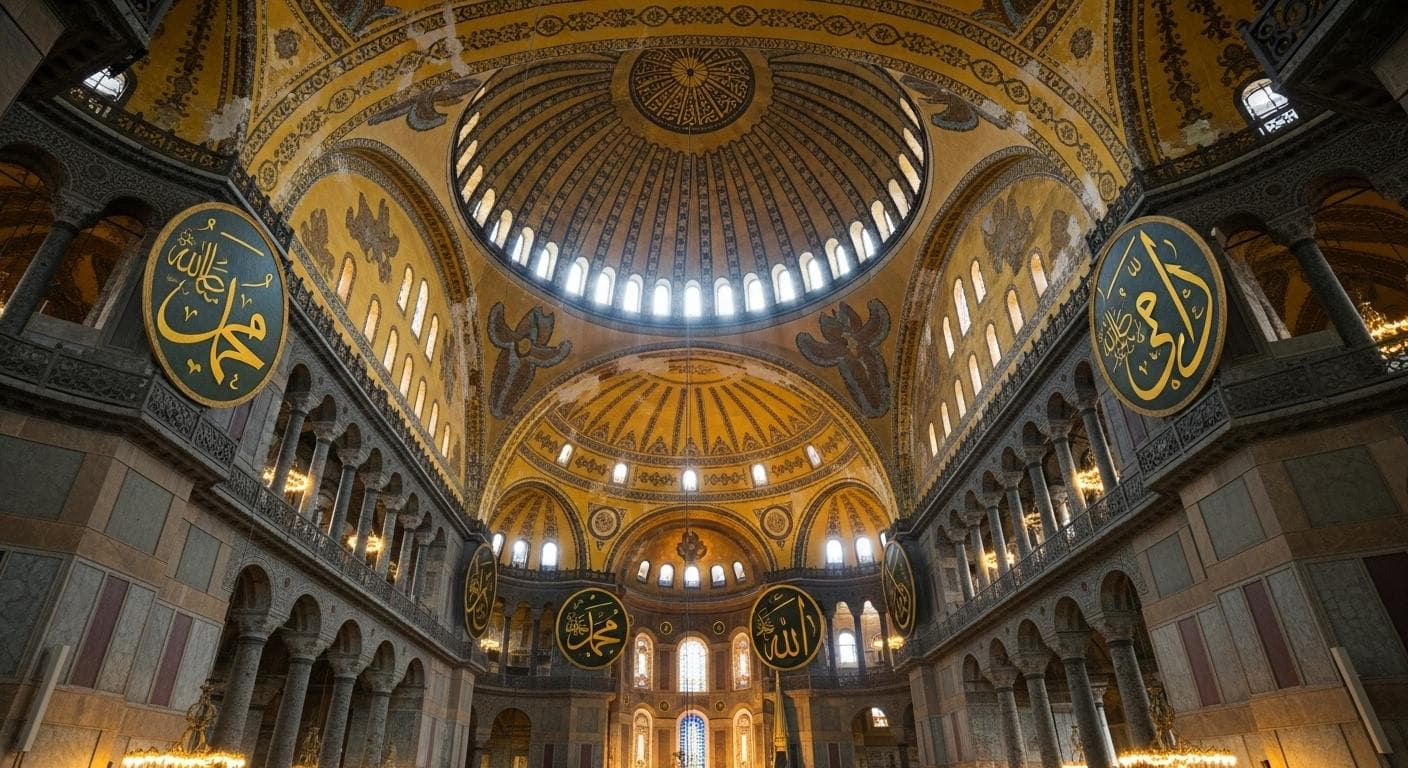
From the ashes of the riots, Justinian rebuilt Constantinople on an even grander scale. His crowning achievement was the new Hagia Sophia, the Church of Holy Wisdom. Designed by two Greek scientists, it was an architectural marvel, capped by a colossal dome that seemed to float on a cascade of light from forty windows. For nearly a thousand years, it remained the largest church in Christendom, a testament to Byzantine faith and engineering.
Justinian's other monumental legacy was legal. He commissioned the jurist Tribonian to compile and codify centuries of Roman law. The result, the Corpus Juris Civilis ("Body of Civil Law"), organized Roman legal thought into a coherent system. This masterpiece of jurisprudence not only governed the empire but was later rediscovered in Western Europe, where it became the foundational text for most modern civil law systems. In law, as in architecture, Justinian's work echoed for centuries.
The Fight for Survival: Invasions and a Crisis of Faith (610-843)
Justinian's reconquests, coupled with a devastating plague that bears his name, left the empire overextended and exhausted. The centuries that followed were a desperate struggle for survival as new enemies rose on all sides, and a profound religious crisis threatened to tear the empire apart from within.
The Last Great War of Antiquity: Heraclius vs. Persia
In the early 7th century, the empire's ancient rival, the Sassanid Persian Empire, launched a devastating invasion, conquering Syria, Palestine, and Egypt. The situation was dire. But Emperor Heraclius (r. 610-641) orchestrated a brilliant counter-offensive, taking the war deep into Persian territory. His victory in 628 was total, but the conflict left both empires catastrophically weakened, setting the stage for a new, unforeseen threat.
The Rise of Islam and the Sieges of Constantinople
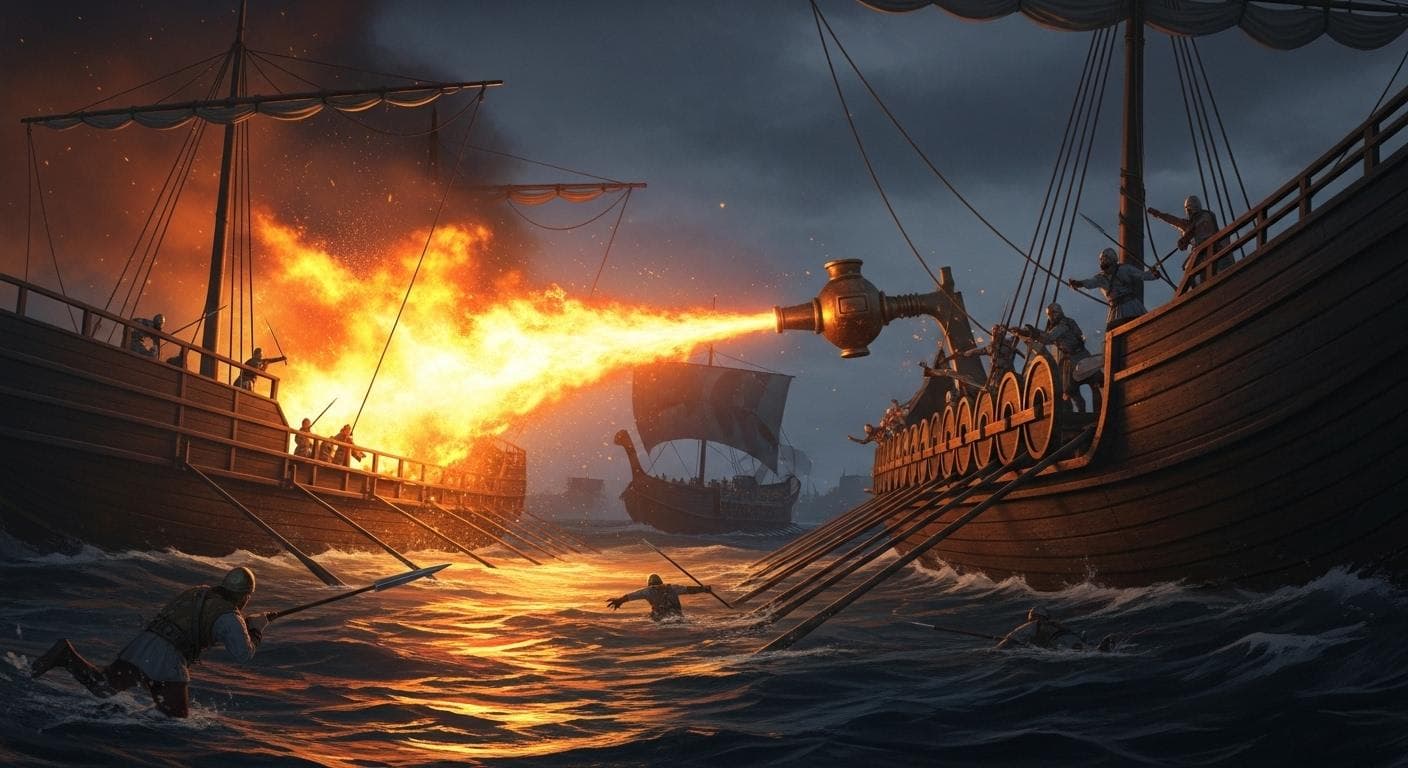
Emerging from the Arabian Peninsula, unified by the new faith of Islam, Arab armies exploded onto the world stage. They swiftly conquered the exhausted Sassanid Empire and wrested Syria, Egypt, and North Africa from the Byzantines. Twice, in 674-678 and 717-718, massive Arab armies and navies laid siege to Constantinople itself. The fall of the city seemed inevitable. But the capital was saved by its formidable walls and a terrifying secret weapon: Greek Fire. This incendiary liquid, likely a petroleum-based compound, could be shot through nozzles from Byzantine ships, burning even on water. It devastated the Arab fleets and secured the empire's survival, creating a permanent border in southern Anatolia and halting the Muslim advance into Eastern Europe for centuries.
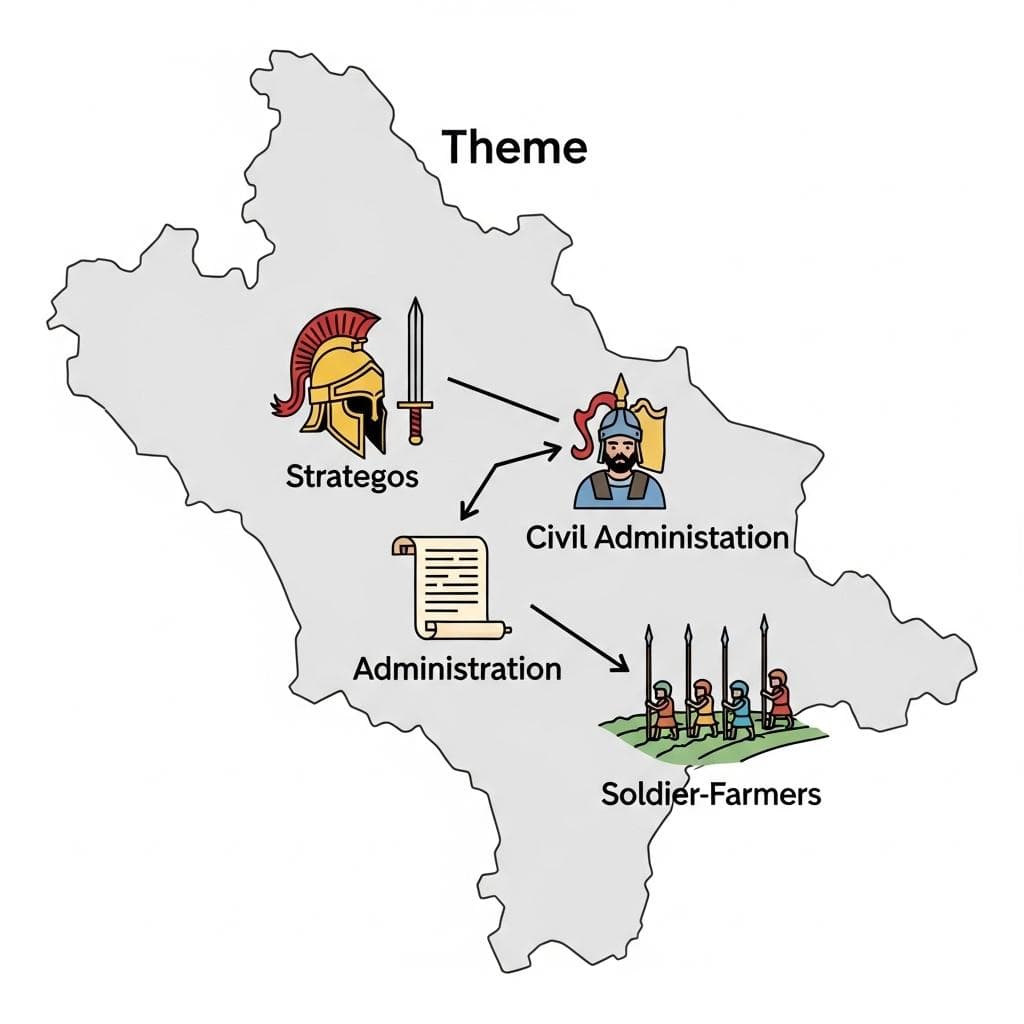
To manage this new reality of constant warfare, the Byzantines developed the Theme System. The empire was divided into military districts (themes), where a general (strategos) held both civil and military authority. Peasant-soldiers were given land in exchange for military service, creating a loyal, defensive army and a resilient social structure that would serve the empire well for centuries.
Smashing the Idols: The Iconoclasm Controversy Explained
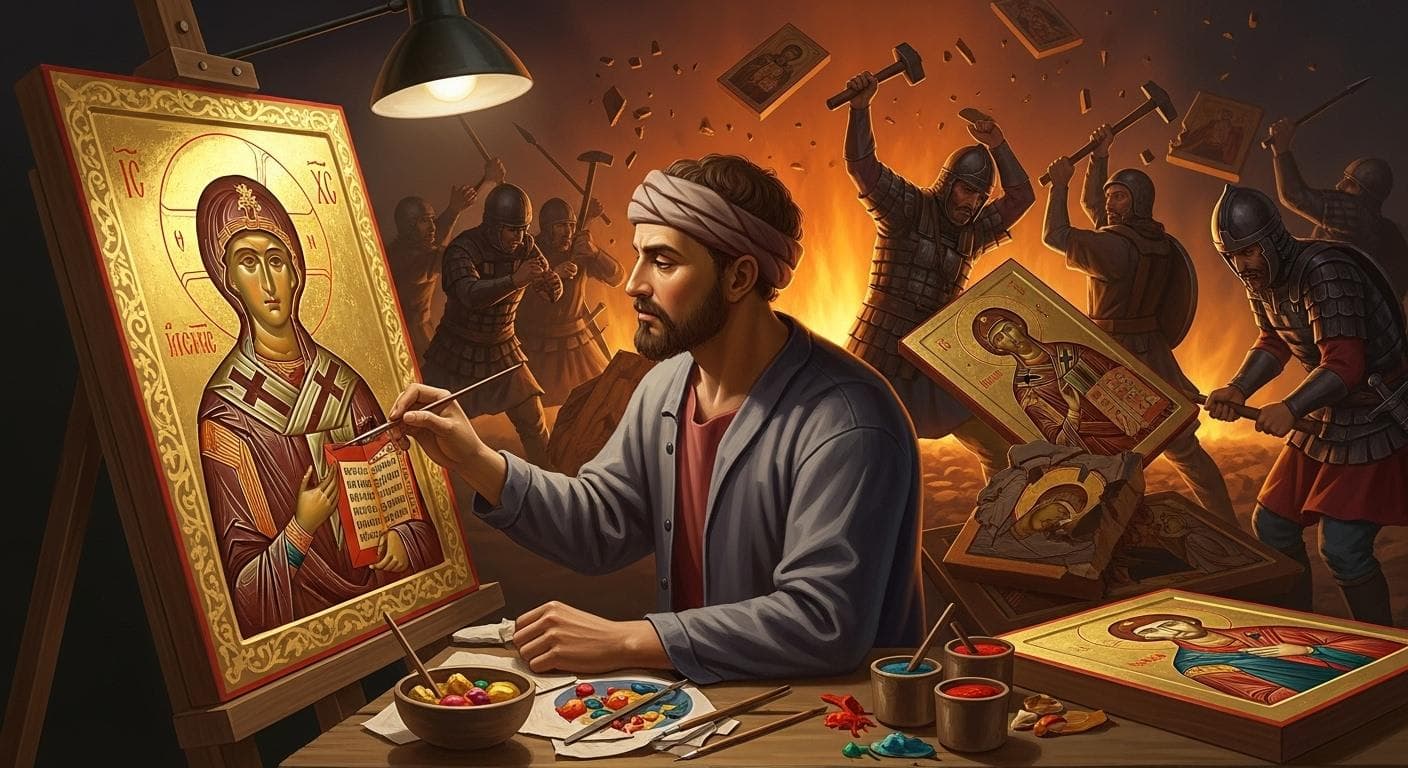
As the empire fought external enemies, an internal war erupted over religion. A growing movement, known as Iconoclasm (literally "image-smashing"), condemned the veneration of religious icons—paintings of Christ, Mary, and the saints—as a form of idolatry forbidden by the Bible. The movement gained imperial force when Emperor Leo III, influenced by the belief that recent military disasters were a sign of divine displeasure, began to speak out against icons. In 730 AD, he formalized this policy, issuing an edict that outlawed their veneration. This began the first Iconoclast period, leading to the widespread destruction of religious images and the persecution of those who defended them, especially monks. The Iconodules ("icon-lovers") argued that icons were not worshipped but were windows into the divine, aiding the faithful in their devotion. The controversy raged for over a century, causing deep social and political division and worsening the growing rift with the Pope in Rome, who staunchly defended the use of images. The final restoration of icons in 843, an event still celebrated in the Orthodox Church as the "Triumph of Orthodoxy," marked the end of a painful chapter in Byzantine history.
The Golden Age: The Macedonian Renaissance (867-1056)
Following the turmoil of the preceding centuries, the Macedonian dynasty ushered in a new golden age. This period saw a powerful resurgence of military strength, economic prosperity, and a brilliant cultural flowering known as the Macedonian Renaissance.
From Peasant to Emperor: The Rise of Basil I
The dynasty's founder, Basil I, had a remarkable story. A poor but ambitious peasant from Macedonia, he caught the eye of Emperor Michael III, rising from stable hand to co-emperor through his strength and cunning. In 867, he murdered his benefactor and seized the throne for himself. Despite his brutal rise to power, Basil I was an effective ruler who stabilized the empire and laid the groundwork for its revival.
The Byzantine War Machine
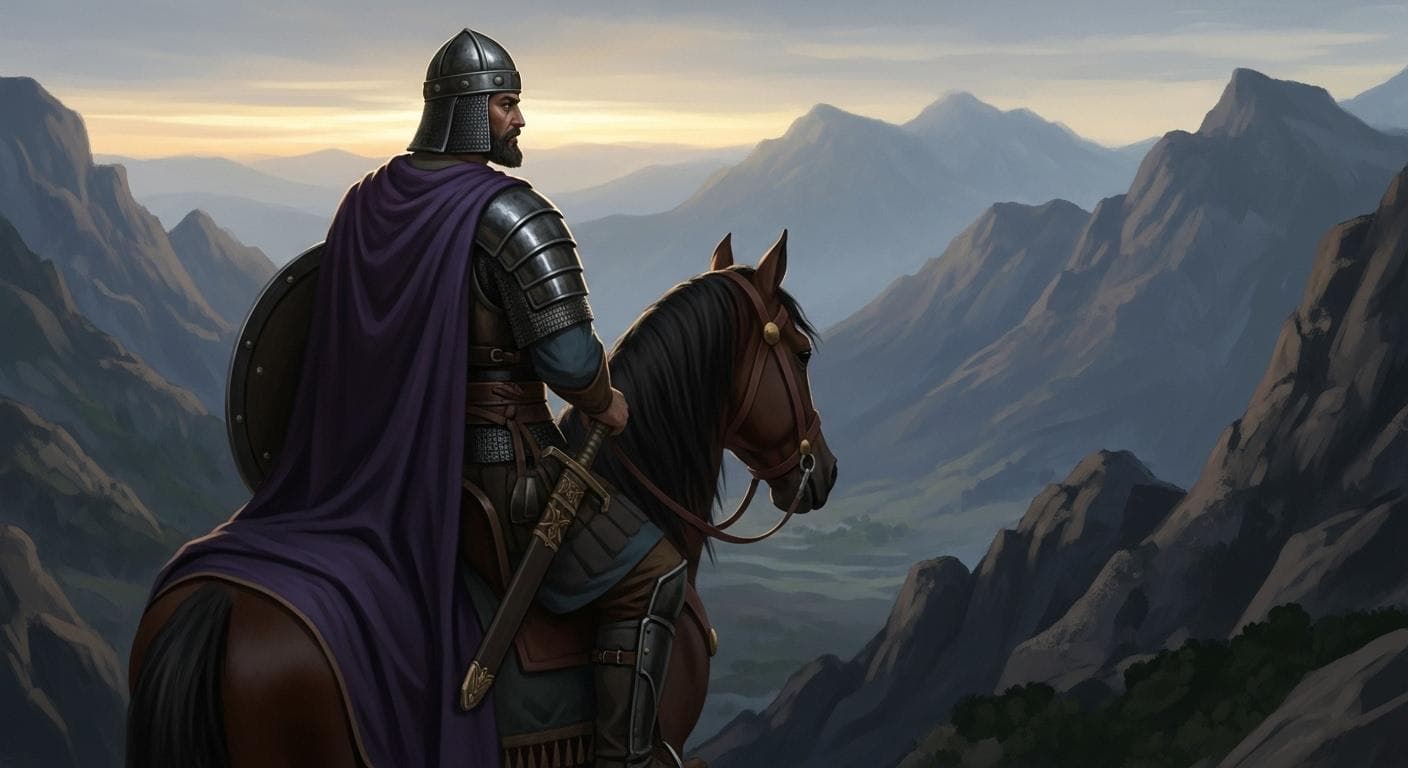
The military success of this era was built on centuries of evolution. Even before the Theme System solidified the empire's defenses, the Byzantine army relied on its elite shock troops: the cataphracts. These heavily armored cavalrymen, with both rider and horse encased in lamellar armor, were a terrifying sight. Wielding a long lance (kontos), a sword, and sometimes a bow, they were a versatile force capable of shattering enemy formations with a devastating charge. To supplement these native forces, the empire often employed mercenaries, none more famous or loyal than the Varangian Guard. Originally formed from Kievan Rus' warriors sent to Basil II, the Guard soon became a magnet for Norsemen, Anglo-Saxons, and Vikings seeking glory. Wielding fearsome double-handed axes, they served as the emperor's personal bodyguard. Their loyalty was legendary, bought not just with gold but with a fierce code of honor, and they stood as the last line of defense for the emperor in the treacherous world of Constantinopolitan politics.
Basil II "the Bulgar Slayer": The Empire at its Zenith
The dynasty reached its zenith under Basil II (r. 976-1025), one of the most formidable emperors in Byzantine history. A stern, ascetic soldier-emperor, he dedicated his long reign to crushing the empire's enemies. His most relentless campaign was against the powerful Bulgarian Empire in the Balkans. After decades of savage warfare, he won a decisive victory in 1014. According to legend, he captured 15,000 Bulgarian soldiers, blinded 99 out of every 100, and left the last man with one eye to lead them home. The sight of his mutilated army is said to have caused the Bulgarian Tsar to die of a heart attack. By the time of his death, Basil II, known forever after as the Boulgaroktonos ("Bulgar-Slayer"), had restored the Danube frontier and expanded the empire to its greatest extent since the days of Justinian. The treasury was full, the borders were secure, and the Roman Empire was once again the dominant power in the eastern Mediterranean.
The Great Schism and the Coming Storm (1054-1081)
The peak of Byzantine power under Basil II was tragically brief. A series of weak successors, combined with rising tensions with the West and the emergence of a new enemy in the East, would bring the empire to the brink of collapse.
A Permanent Break: The Catholic-Orthodox Schism Explained
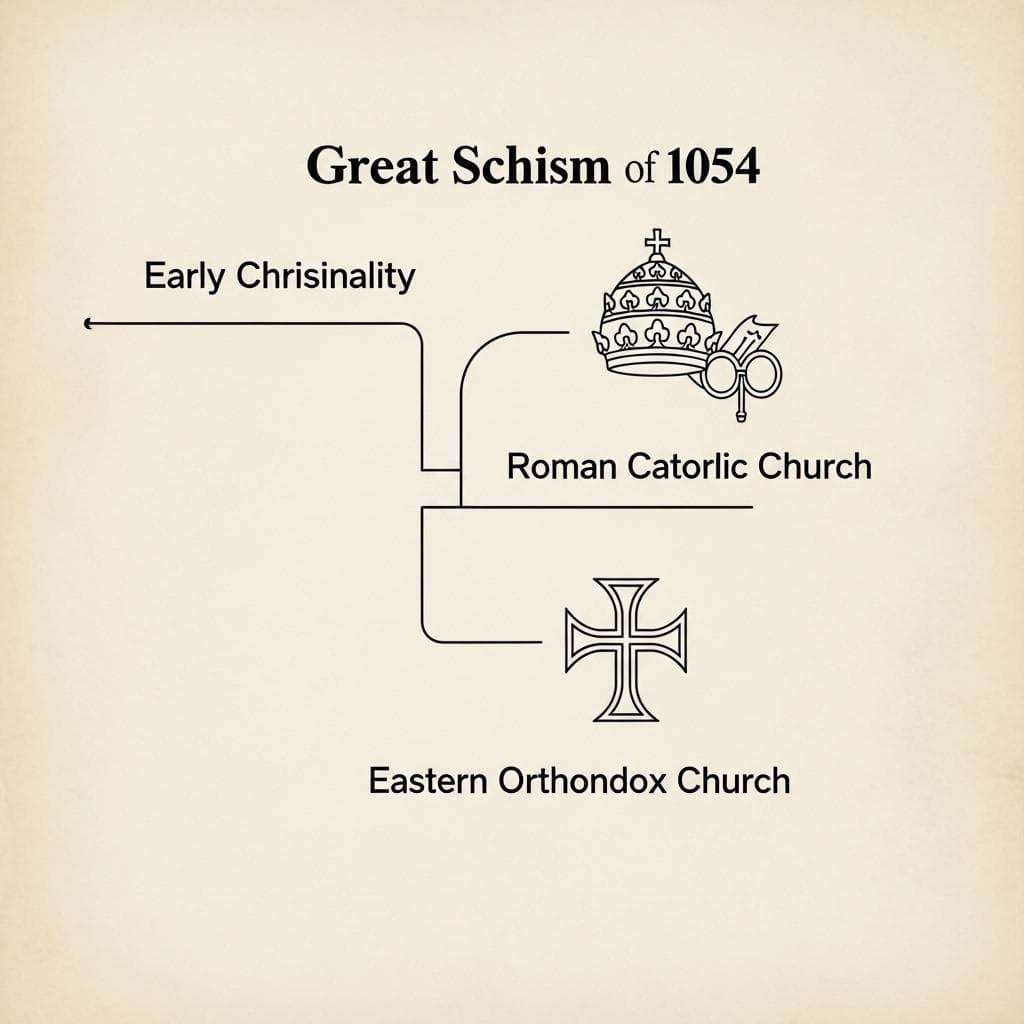
For centuries, the churches of Rome (West) and Constantinople (East) had been drifting apart. They differed in language (Latin vs. Greek), clerical customs, and theological interpretation. The most significant dispute was over papal authority: the Pope in Rome claimed universal jurisdiction over all Christians, a claim the Patriarch of Constantinople and the other eastern patriarchs rejected. In 1054, these simmering tensions boiled over. Papal legates and the Patriarch excommunicated each other, formalizing the Great Schism. This split between what would become the Roman Catholic and Eastern Orthodox churches became a permanent rupture in the Christian world, transforming a sibling rivalry into a bitter divorce.
Disaster at Manzikert: The Turks Arrive
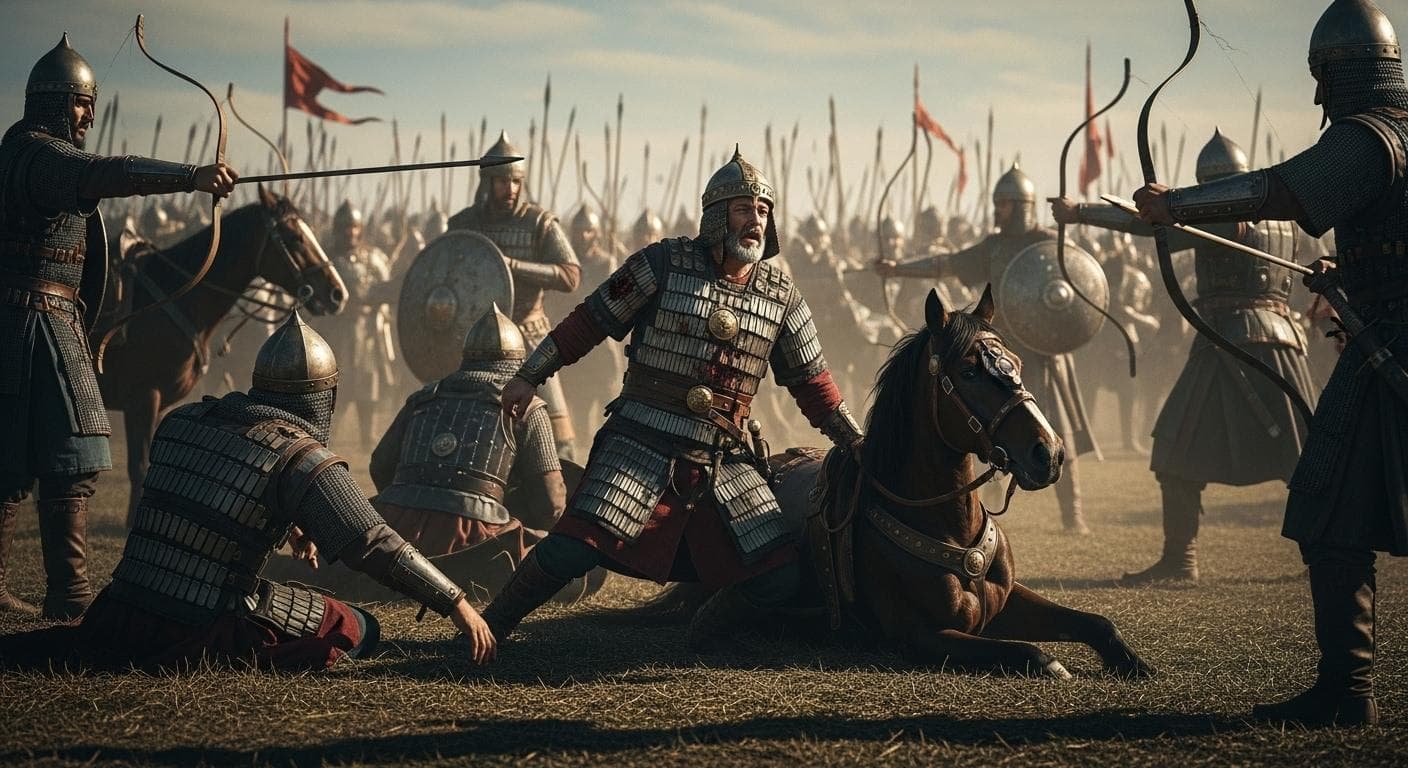
While the church was breaking apart, a new and formidable power was rising in the east: the Seljuk Turks. A nomadic people from Central Asia who had converted to Islam, the Seljuks swept into the Middle East. In 1071, Emperor Romanos IV led a massive army to confront them at Manzikert in eastern Anatolia. The battle was a catastrophe. Betrayal and tactical errors led to the utter defeat of the Byzantine army and, for only the second time in Roman history, the capture of the emperor himself. The Battle of Manzikert was a turning point. It shattered the Byzantine hold on Anatolia, the empire's heartland for manpower and resources. In the years that followed, Turkic tribes poured into the region, transforming it forever.
A Fragile Recovery: The Komnenian Dynasty and the Crusades (1081-1185)
In the wake of Manzikert, the empire seemed doomed. But it was rescued by the rise of a new dynasty of brilliant military leaders and diplomats: the Komnenoi.
Alexios I Komnenos and the Double-Edged Sword of the First Crusade
Alexios I Komnenos (r. 1081-1118) inherited a state in chaos. Through masterful diplomacy, military reforms, and sheer force of will, he stabilized the empire. Facing the relentless Seljuk threat, he made a fateful appeal to the Pope and the western powers for military aid. He expected a contingent of mercenaries; what he got was the First Crusade. Thousands of heavily armed Western knights arrived at Constantinople, viewing the Byzantines with suspicion and avarice. Alexios skillfully managed this volatile force, extracting oaths of loyalty and ensuring that any former imperial lands they recaptured would be returned to him. While the crusade was a success in capturing Jerusalem, it also created new Crusader States in the Levant, adding another complicated and often hostile neighbor to the empire's borders. The Crusades were a double-edged sword: a source of potential aid, but also a cause of immense friction and mistrust between the Greek East and the Latin West.
The Betrayal: The 1204 Sack of Constantinople
That mistrust would culminate in one of the most shocking events of the Middle Ages. The Fourth Crusade, initially intended to attack Egypt, was tragically and greedily diverted.
How the Fourth Crusade Went Wrong
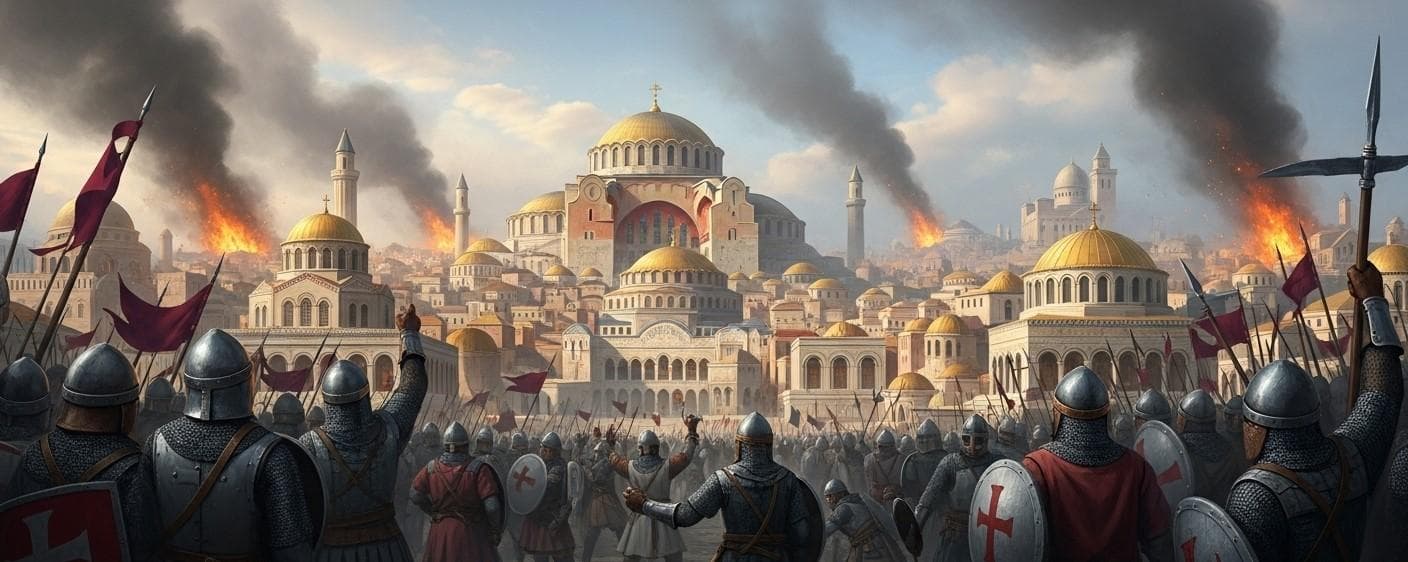
Driven by Venetian commercial ambitions and a Byzantine succession crisis, the Crusader army agreed to help a deposed prince regain the throne in exchange for a massive payment. When the restored prince couldn't pay, tensions flared. In April 1204, the Crusader army did the unthinkable: they turned on their fellow Christians and brutally sacked the city of Constantinople. For three days, the greatest city in Christendom was subjected to an orgy of looting, destruction, and slaughter. Priceless relics were stolen, ancient works of art were melted down for coin, and the city's great library was burned. It was a cultural catastrophe from which the empire would never truly recover.
The Latin Empire and the Byzantine Successor States
The Crusaders carved up the empire's territory, establishing a fragile "Latin Empire" in Constantinople. The Byzantine nobility fled, setting up three successor states in Nicaea, Trebizond, and Epirus, keeping the flame of Roman legacy alive in exile.
The Long Twilight: The Final Dynasty and the Fall (1261-1453)
In 1261, the Byzantine general Michael Palaiologos, ruler of the Empire of Nicaea, managed to recapture Constantinople from the Latins, restoring the Byzantine Empire. But the restored empire was a shadow of its former self.
A Hollow Crown: The Restored but Weakened Empire
The Palaiologan dynasty ruled over a state that was small, poor, and surrounded by powerful enemies. Stripped of its Anatolian heartland and its commercial wealth (now in the hands of Venice and Genoa), the empire was engaged in constant civil wars that sapped its remaining strength. It was a long, slow, two-century decline.
The Rise of the Ottomans and the Encirclement of the City
From the ashes of the Seljuk Sultanate in Anatolia, a new power emerged: the Ottoman Turks. Under a series of brilliant and ruthless sultans, the Ottomans expanded rapidly. They bypassed Constantinople and crossed into the Balkans, conquering Byzantine territories one by one. By the early 1400s, the Byzantine Empire was reduced to little more than the city of Constantinople itself, a Christian island in a sea of Ottoman territory.
May 29, 1453: The Day the Walls Fell
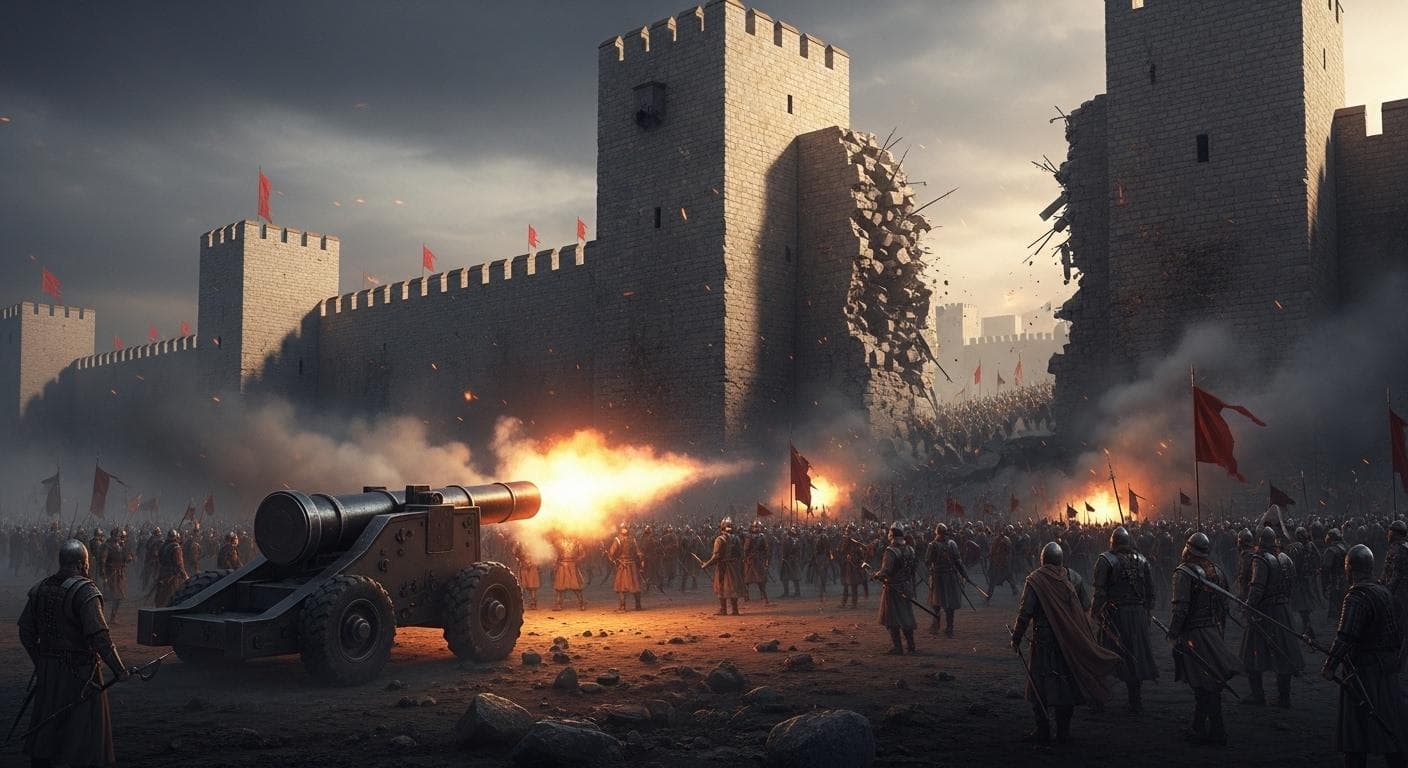
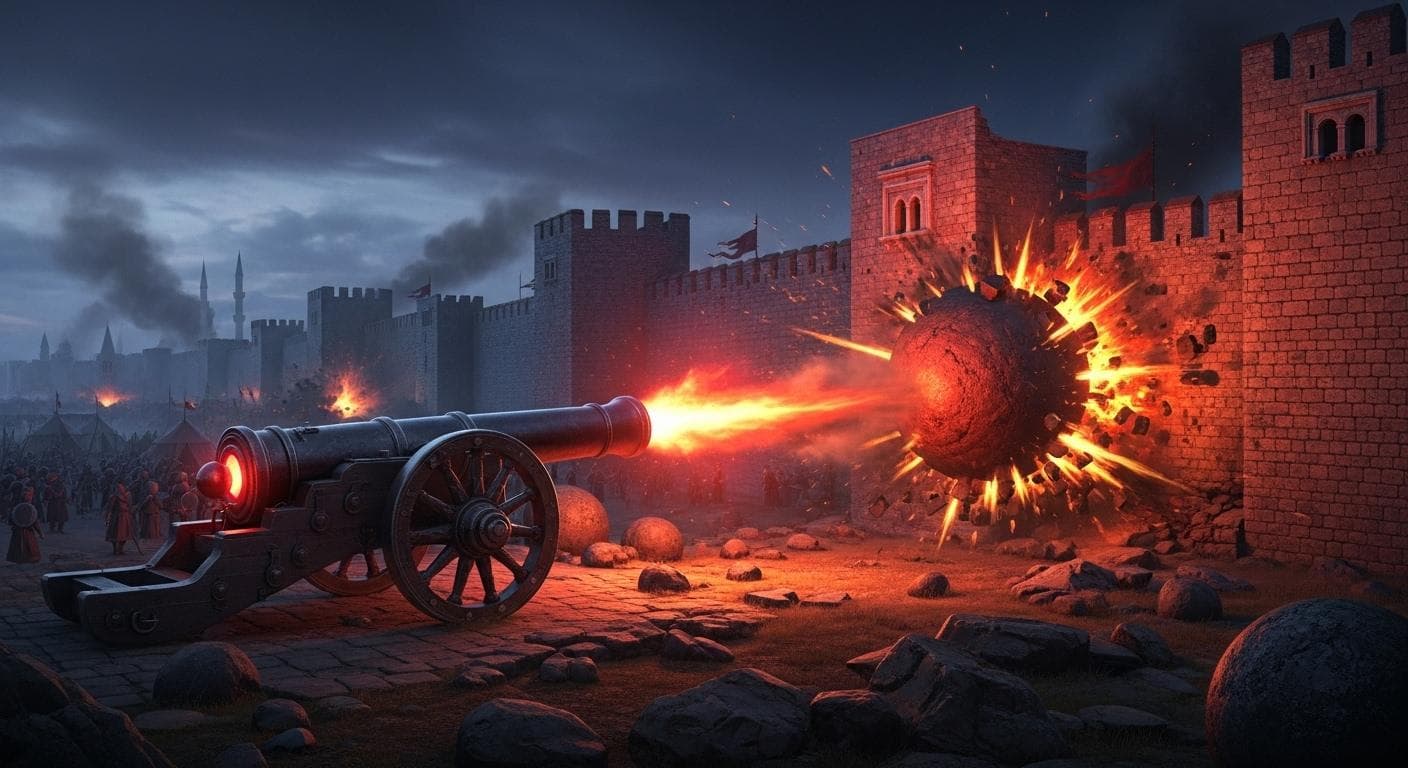
In 1451, the young, ambitious Sultan Mehmed II ascended the Ottoman throne, his sights set firmly on conquering Constantinople. In the spring of 1453, he laid siege to the city with a massive army and a new, terrifying weapon: gigantic cannons capable of shattering the city's legendary walls. One such cannon, built by an engineer named Orban, could hurl stone balls weighing over half a ton.
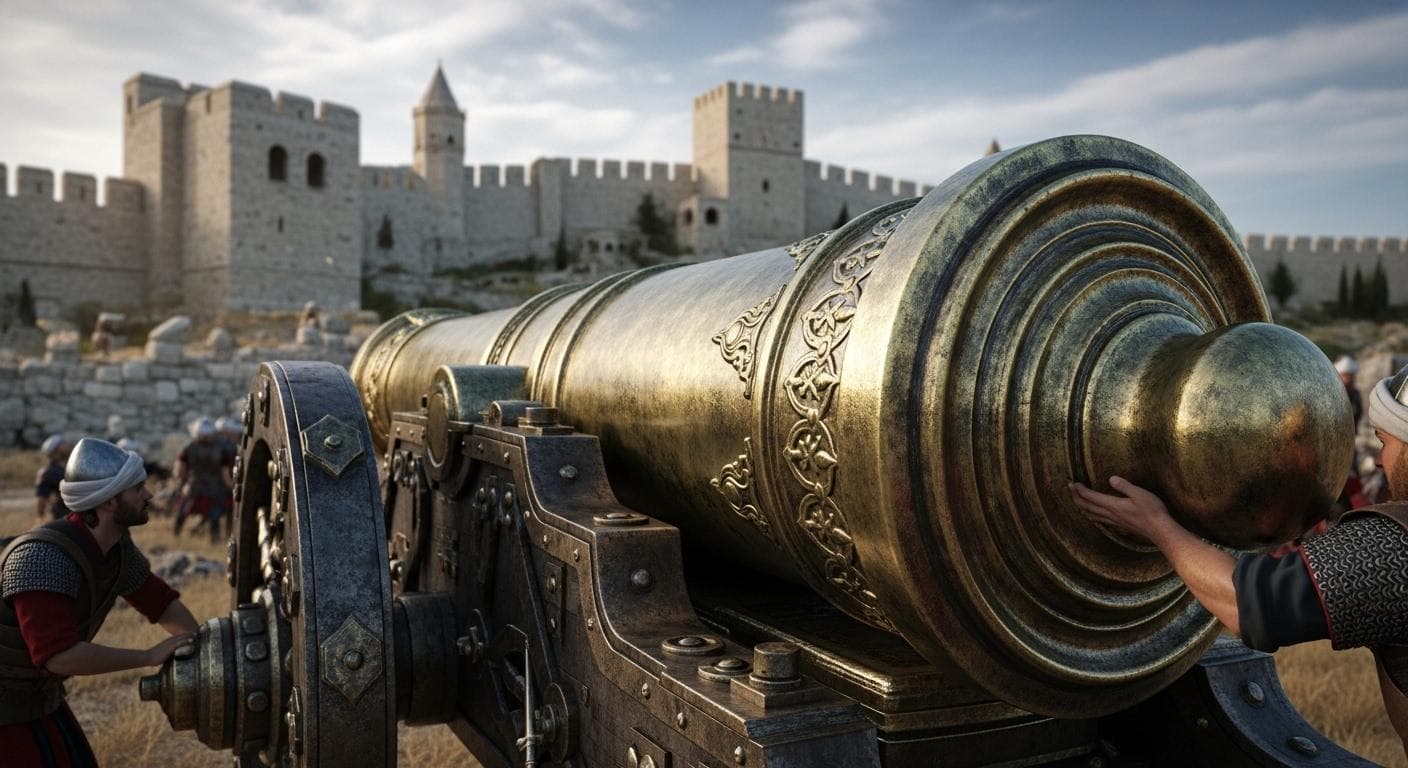
For 53 days, the small band of defenders, led by the last emperor, Constantine XI Palaiologos, held out heroically against overwhelming odds. But on May 29, 1453, the Ottomans breached the walls. Constantine XI cast off his imperial regalia and charged into the fray, dying alongside his soldiers. The city fell, and after 1,123 years, the Roman Empire was no more.
Life in the New Rome: Byzantine Society and Economy
Beyond the dramatic history of emperors and battles, a complex and vibrant civilization thrived. For centuries, Constantinople was the largest and wealthiest city in Europe, a bustling metropolis that dazzled all who visited.
The Crossroads of the World
At its heart was the Mese, the main street, a grand, colonnaded avenue that served as the city's commercial and ceremonial core. It linked magnificent public squares, or forums, and was lined with shops selling goods from across the known world. Life for the city's half a million inhabitants was a mix of commerce, entertainment at the Hippodrome, and profound religious devotion. Grand aqueducts supplied water to public baths and fountains, while a complex bureaucracy, a legacy of old Rome, managed the city and the empire.
An Economy of Silk and Gold
The empire's wealth was built on its strategic control of key trade routes between East and West. Spices, gems, and other luxuries flowed through Constantinople, enriching the state treasury. The Byzantine gold coin, the solidus, was so pure and stable that it served as the international currency of the medieval world for over 700 years. The empire's most famous industry was silk. After Byzantine monks smuggled silkworms out of China in the 6th century, the empire established a highly profitable state monopoly, producing luxurious silks that were coveted by kings and nobles across Europe.
A Hierarchy of Faith and Family
Byzantine society was deeply hierarchical and profoundly religious. At the apex was the emperor, seen not merely as a political ruler but as God's chosen regent on Earth. Below him was a complex aristocracy and a vast civil service based on merit and education. But the most powerful institution outside the state was the Orthodox Church. The rhythm of daily life was dictated by the religious calendar of feasts and fasts. Monasteries were powerful landowners and centers of learning, and the Patriarch of Constantinople was the spiritual father of the empire. For ordinary people, life revolved around the family, the local community, and the parish church.
The Undying Legacy: How Byzantium Shaped Our World
The fall of Constantinople was not the end of the story. The legacy of the Byzantine Empire is a deep and powerful current running through the veins of modern civilization, often in ways we don't even realize.
Preserver of Greek and Roman Knowledge
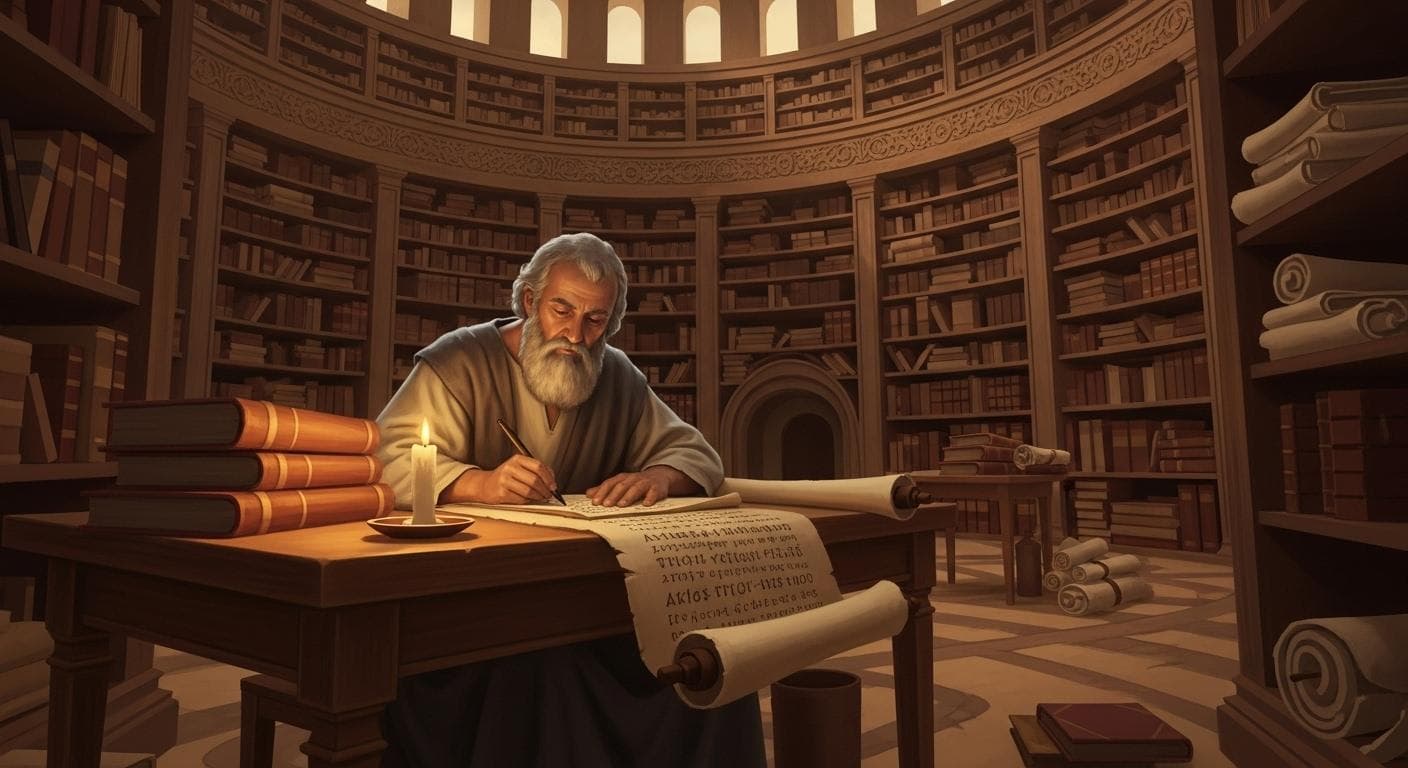
For a thousand years, while much of Western Europe was fragmented, Byzantine scribes and scholars painstakingly copied and preserved the great works of ancient Greece and Rome. Philosophy, science, history, and literature—from Plato and Aristotle to Thucydides—survived because of them. When Byzantine scholars fled to Italy after the fall of Constantinople, they brought this knowledge with them, helping to ignite the flame of the Renaissance.
The Foundation of Modern European Law
Justinian's Corpus Juris Civilis stands as one of the most important legal documents ever created. Its rediscovery in the 11th century revolutionized legal thought in the West, providing the framework for the civil law systems used by most of continental Europe, Latin America, and many other parts of the world today.
The Orthodox Shield: Shaping Russia and Eastern Europe
Byzantine missionaries, like the brothers Cyril and Methodius, brought Orthodox Christianity and literacy to the Slavic peoples of Eastern Europe. The conversion of the Kievan Rus' in the 10th century was a pivotal moment, shaping the cultural and religious identity of Russia, Ukraine, and other Eastern European nations for centuries to come. Moscow would later see itself as the "Third Rome," the heir to Byzantium's Orthodox legacy.
A Lasting Influence on Art, Architecture, and Religion
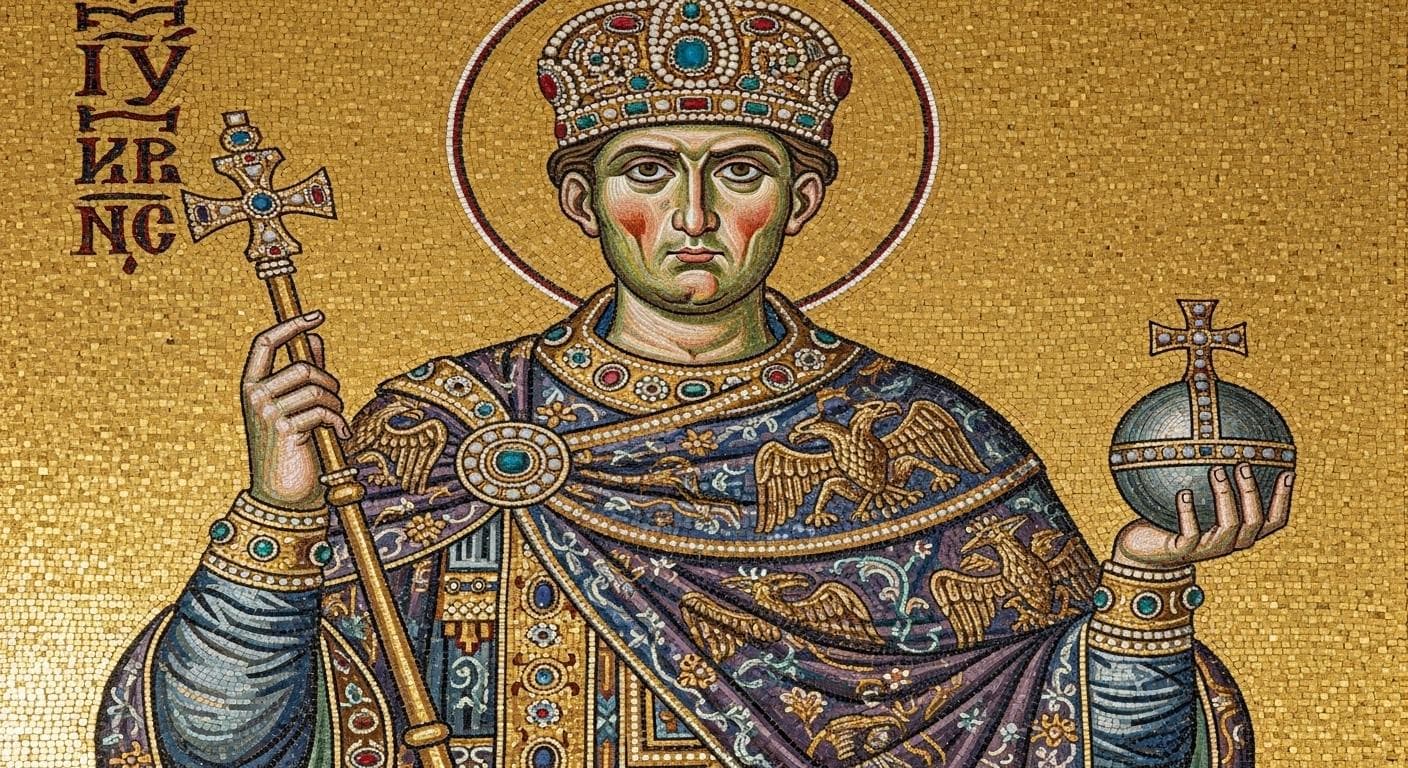
The empire's artistic and architectural legacy is immense. The golden mosaics, the iconic religious imagery, and the engineering marvel of the dome, epitomized by the Hagia Sophia, influenced art and architecture from Venice to Moscow. The Eastern Orthodox Church, the second-largest Christian communion in the world, is a direct spiritual descendant of the Byzantine state church, carrying its theology, liturgy, and traditions into the 21st century.
Conclusion: The Thousand-Year Echo of Rome
The Byzantine Empire was not a pale imitation of Rome; it was its living, breathing continuation. For over a millennium, it was a beacon of civilization, a military powerhouse, a center of profound faith, and a repository of classical wisdom. It faced down existential threats from every direction, reinventing itself time and again to survive. Though its walls eventually fell, the echo of this thousand-year Roman Empire continues to resonate, embedded in our laws, our art, our faith, and the very foundations of Western and Eastern European culture.
What aspect of the Byzantine Empire's long and complex history do you find the most fascinating? Was it the ambition of Justinian, the military genius of Basil II, or its incredible resilience against all odds? Share your thoughts in the comments below!

Comments
We load comments on demand to keep the page fast.