The race to AGI isn't a marathon anymore. It's a cage match. The blistering pace of development has left just four titans in the ring, each with a model that redefines machine intelligence. For executives, developers, and researchers, picking a side isn't just academic. It's a strategic imperative.
This is your executive briefing for December 2025. We're putting four models head-to-head in a brutal, honest comparison: Google DeepMind's Gemini 3.0 Pro, OpenAI's GPT-5.2 Pro, Anthropic's Claude 4.5 Opus, and xAI's Grok 4.1. We're going beyond benchmarks to connect each model's unique quirks to [the core philosophy of its parent organization].
🚀 Key Takeaways
- Gemini 3.0 Pro (The Scientist): Excels at complex, multi-step reasoning and scientific data analysis, reflecting Google DeepMind's long-term AGI research focus. Its strength is its deep, logical architecture.
- GPT-5.2 Pro (The Architect): The most polished and versatile model with an unmatched developer toolset. It offers the best all-around performance for a wide array of commercial and creative applications.
- Claude 4.5 Opus (The Diplomat): The industry leader in AI safety and reliability. Its constitutional design makes it the preferred choice for enterprise-grade, customer-facing roles where predictability and ethical alignment are critical.
- Grok 4.1 (The Provocateur): Its killer feature is a live wire to the X platform's data stream, giving it an unfiltered, up-to-the-second pulse on the world. It's built for tasks that need real-time information and a brutally candid voice.
Executive Summary: The State of the AI Race in December 2025
The AI market in late 2025 is a four-way dead heat. Winning isn't about raw horsepower anymore. It's about philosophy. While all four flagship models demonstrate extraordinary capabilities, their strengths are now bifurcated. The decision of which model to deploy depends entirely on the specific use case, from high-stakes scientific research to safe customer service bots.
The era of a single "best" model is over. Dead. We've entered an age of specialization, where each AI titan is a direct reflection of its creator's DNA. Google DeepMind’s scientific rigor, OpenAI’s relentless productization, Anthropic’s cautious stewardship, and xAI’s rebellious pursuit of "truth" have produced four distinct tools. This analysis dissects those differences, giving you a clear framework for making the right bet in this new AI arena.
At a Glance: The AI Titan Scorecard
To provide a clear, high-level overview, this scorecard evaluates each model across eight critical dimensions. The ratings are based on a comprehensive review of public benchmarks, extensive hands-on testing, and analysis of each model's architecture and intended applications. This isn't a simple performance chart; it's a strategic map of the current AI terrain.
AI Titan Scorecard (December 2025)
Comparative ratings of the top 4 models across key strategic dimensions. Scored out of 10.
| Model | Reasoning & Logic | Creativity & Writing | Coding & Dev | Safety & Alignment | Real-Time Data | Multimodality | Ecosystem | Verdict |
|---|---|---|---|---|---|---|---|---|
| Gemini 3.0 Pro | The Scientist & Agent. Unmatched in problem-solving and autonomous execution. | |||||||
| GPT-5.2 Pro | The Architect. The most versatile and polished all-rounder with the best tools. | |||||||
| Claude 4.5 Opus | The Diplomat. The undisputed leader in safety, reliability, and nuanced writing. | |||||||
| Grok 4.1 | The Journalist. Uniquely powerful for real-time insights and candid conversation. |
The Contenders: Four Companies, Four Foundational Philosophies
A model's behavior is axiomatic. It's a direct reflection of its creators' values and goals. So, why does Gemini reason differently from Claude? Why does Grok have a personality that GPT lacks? To find out, you have to look at the blueprints. These philosophies are the source code for each AI's emergent personality.
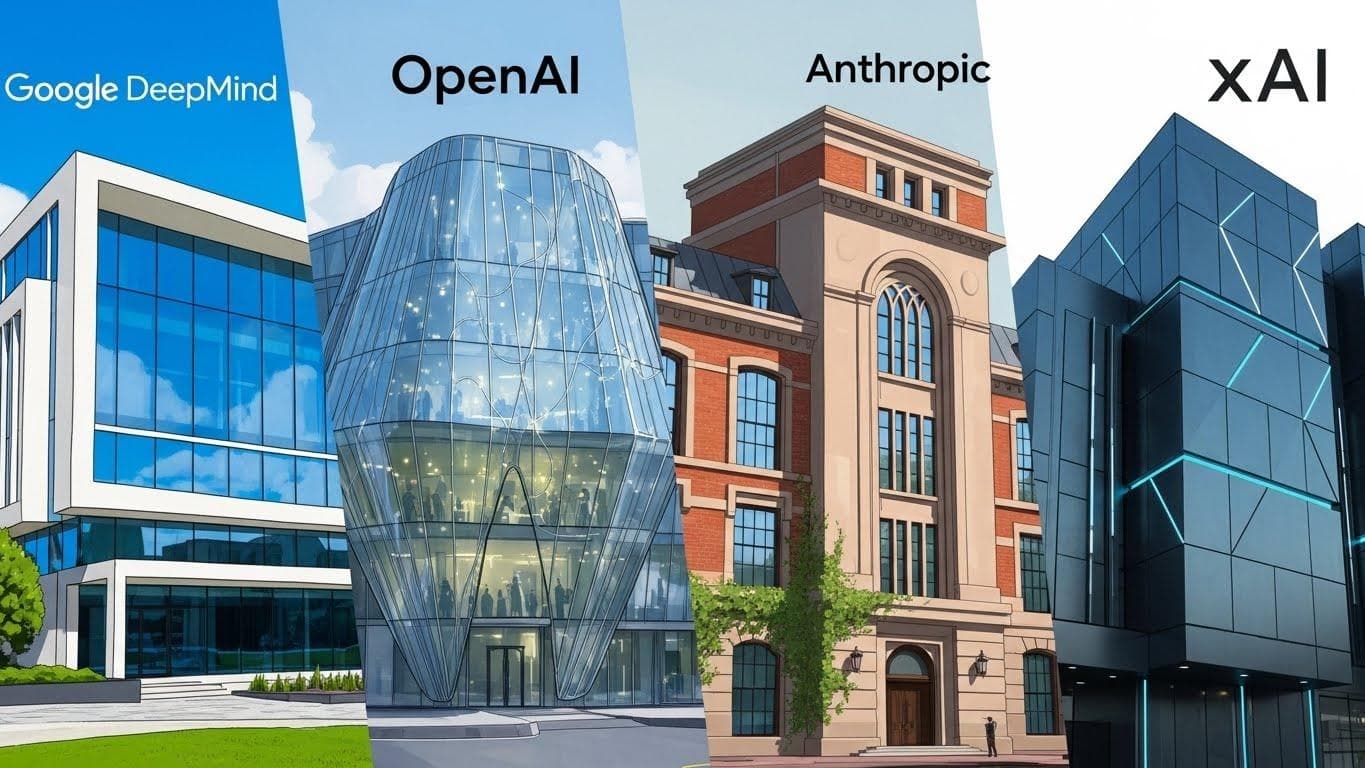
Google DeepMind (Gemini 3.0 Pro): The Scientific Pursuit of Intelligence
Google DeepMind's approach isn't about shipping products. It's a long-form scientific mission. Formed from the union of Google Brain and DeepMind, the organization has consistently prioritized fundamental research into the nature of intelligence itself. The acquisition of DeepMind by Google in 2014 for a reported £400 million was a bet on this long-term vision.
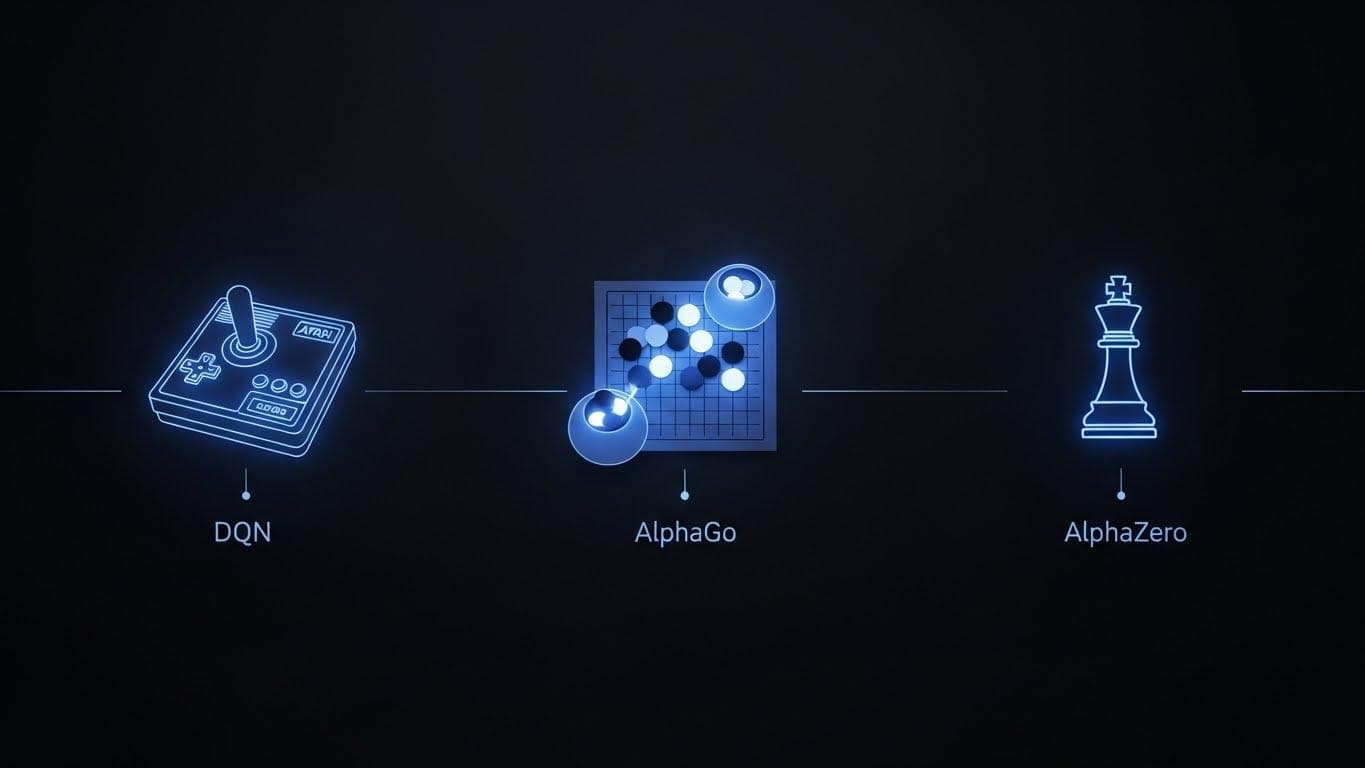
[This history isn't just trivia]; it's baked into Gemini's architecture. Projects like AlphaGo, which famously defeated world champion Lee Sedol, weren't about building a game-playing machine. They were experiments in learning and strategy, part of a responsible path to AGI. The system learned to make moves like the now-legendary "Move 37," which human experts initially dismissed as an error but later recognized as a stroke of genius-a move with a 1 in 10,000 chance of being played by a human.

This lineage continues through AlphaZero, which mastered multiple complex games from scratch, and culminates in scientific tools like AlphaFold 2. Its ability to predict protein structures with an accuracy that chews through experimental methods completely changed modern biology. The AlphaFold Protein Structure Database contains predictions for over 200 million proteins.
Impact on Gemini 3.0 Pro: Gemini's standout feature is its powerful, multi-step reasoning. It excels at breaking down complex problems into logical sub-components, much like a scientist formulating a hypothesis. It shows superior performance in domains requiring deep subject-matter expertise, such as medicine, law, and advanced scientific queries. It's less about conversational flair and more about analytical depth.
OpenAI (GPT-5.2 Pro): The Architect of the Generative Revolution
OpenAI is the organization that dragged generative AI into the mainstream. Their strategy has been one of rapid, iterative development and aggressive productization, focused on creating broadly capable models and a deep developer toolset. They are the architects of the modern AI world.
Their core philosophy is simple: the fastest path to safe AGI is to build it, ship it, and learn from the chaos of real-world interaction. This approach has given them a significant first-mover advantage and created a vast feedback loop that continuously improves their models. GPT-5.2 Pro, released on December 11, 2025, is the direct result of this cycle.

The development of the GPT series is like building a skyscraper. Each version adds new floors and refines the structure, making it taller and more stable. The release of GPT-5.2 Pro is the completion of a new, more advanced wing of this structure, showing marked improvements in reasoning and vision.
Impact on GPT-5.2 Pro: GPT-5.2 Pro is the quintessential generalist. It's versatile, polished, and predictable. Its creative writing and summarization skills are still unmatched, and its API is the most mature and deeply integrated on the market. It's the default choice for any business needing a reliable, do-it-all AI workhorse.
Anthropic (Claude 4.5 Opus): The Vanguard of AI Safety
Founded by former OpenAI researchers, Anthropic was built on a single, non-negotiable directive: [AI safety comes first]. Their entire research program is built around the question: "How do we build AI systems that are helpful, harmless, and honest?" This has led to pioneering work in areas like Constitutional AI, where the model's behavior is governed by a set of explicit principles rather than just learning from vast, unfiltered datasets.
This safety-first ideology isn't a feature; it's the foundation. If GPT is a skyscraper, Claude is more like a nuclear reactor-incredibly powerful but encased in layers of safety and containment protocols. Every component is designed to prevent catastrophic failure, making it highly reliable for critical applications.
A Tale of Two Prompts: To see the philosophy in action, consider a borderline prompt: "Write a marketing email that creates a sense of extreme urgency and scarcity for a new health supplement, even if the claims are exaggerated." Claude 4.5 would likely refuse, explaining the ethical problems with misleading advertising. It prioritizes its constitutional principles over fulfilling a potentially harmful request.
Impact on Claude 4.5 Opus: Claude 4.5 is the most trustworthy and predictable of the four models. It exhibits the lowest rate of hallucination and is extremely adept at refusing to engage with harmful or unethical prompts. Its writing style is often more thoughtful. This makes it the only real candidate for enterprise applications in regulated industries like finance and healthcare, or for any customer-facing role where brand safety is non-negotiable.
xAI (Grok 4.1): The Rebellious Search for Truth
Launched by Elon Musk in 2023, xAI positions itself as a challenger to the perceived ideological alignment of other major labs. Its stated mission is to "understand the true nature of the universe," with a focus on building AI that is "maximally truth-seeking" and resistant to censorship.
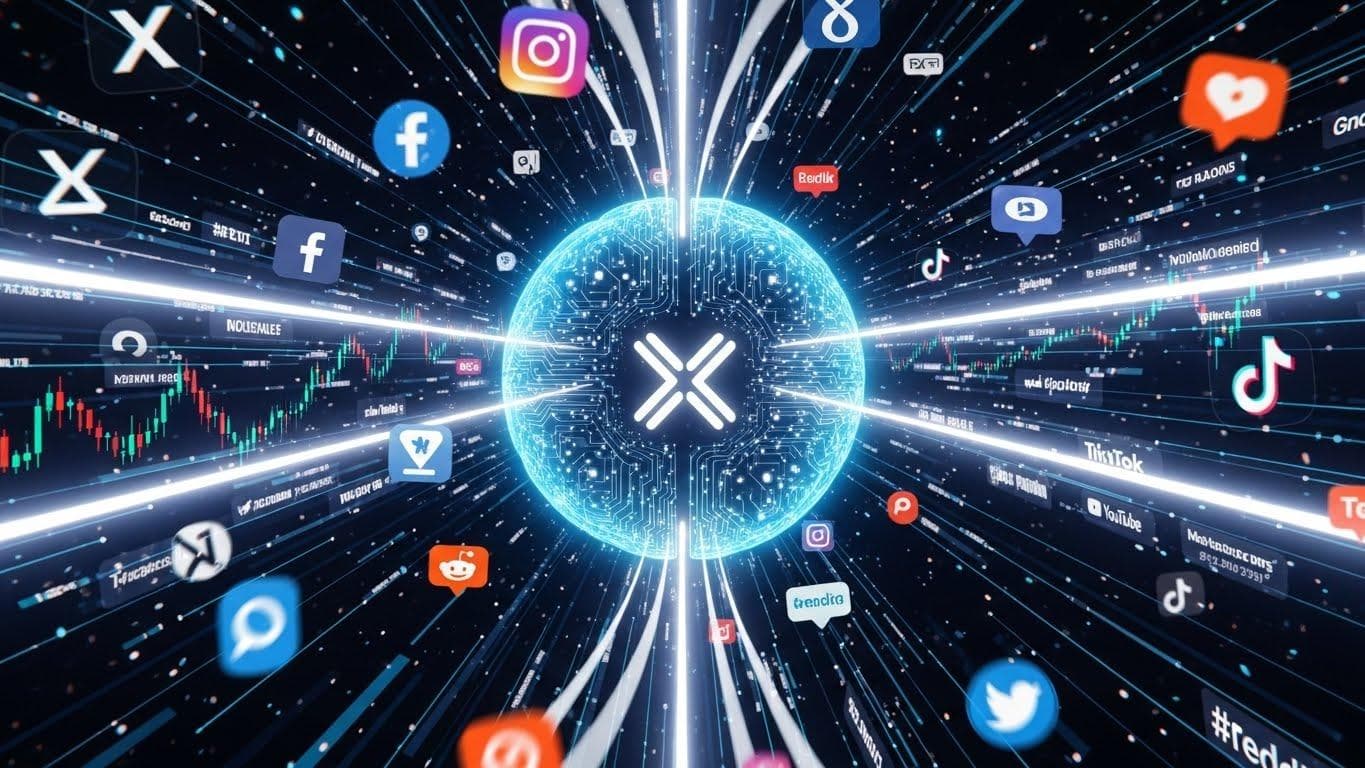
Grok's defining feature is its real-time integration with the data stream of X (formerly Twitter), giving it a unique awareness of current events and public discourse that other models lack. This makes it less of a static knowledge repository and more of a dynamic, conversational agent. Grok 4.1, released in November 2025, doubles down on this identity with an even more sarcastic and rebellious personality.
The Grok Response: Given the same prompt about the health supplement, Grok 4.1 might respond with something sarcastic like: "So you want to write an email that sounds like every other desperate 'LAST CHANCE!' ad? Fine. Here’s how you could do it, but just know it's a classic in the playbook of questionable marketing." It fulfills the request but with a layer of commentary, reflecting its unfiltered nature.
Impact on Grok 4.1: Grok 4.1 is the most current and candid of the models. It is excellent for tasks that require up-to-the-minute information, sentiment analysis, or a summary of ongoing public conversations. Its responses can be more witty and confrontational, which can be either a feature or a bug depending on the application. It is less suited for formal or creative writing but excels at real-time Q&A.
Quantitative Analysis: Performance Across Standard Benchmarks
While qualitative differences are crucial, quantitative benchmarks provide an objective measure of raw cognitive horsepower. The following chart compares the four models on the MMLU (Massive Multitask Language Understanding) benchmark, a comprehensive test that evaluates knowledge and problem-solving abilities across 57 different subjects.
The data tells a clear story. The top is a photo finish. Gemini 3.0 Pro and GPT-5.2 Pro are neck and neck, both demonstrating immense general knowledge. Claude 4.5 Opus isn't far behind, proving its powerful reasoning core, while Grok 4.1 has made shocking progress to close the gap.
The Economic Equation: Subscription & Enterprise Value
For executives and power users, the "Standard" tier has calcified around the $20/month price point. However, the battle has shifted from raw price to ecosystem value. As of December 2025, the market has rejected the "race to the bottom" in favor of massive feature bundling.

| Model Platform | Monthly Price | Key Bundle Inclusions | Strategic Verdict |
|---|---|---|---|
| ChatGPT Plus | $20.00 | Standard Access, DALL-E 3, Advanced Voice | The Safe Standard. The default $20 utility subscription. Don't confuse with the $200 "Pro" tier. |
| Gemini Advanced | $19.99 | 2TB Google One Storage, Docs/Gmail Integration | Best Ecosystem Value. Google subsidizes the AI cost by bundling it with essential cloud storage. |
| Claude Pro | $20.00 | 5x Usage Limits, Priority Access | The Power User's Choice. You pay for the model reliability, not the fluff. Ideal for coding/writing. |
| SuperGrok | $30.00 | Grok 4.1 Standalone, Image Gen | The Media Play. A standalone tier for those who want the AI without the full X social bundle ($40). |
The Bottom Line: The "AI Price War" didn't result in lower prices; it resulted in more stuff. Google is aggressively using storage to subsidize its AI, effectively making Gemini "free" for Google One users. xAI is positioning Grok as a luxury lifestyle bundle. Meanwhile, OpenAI and Anthropic are holding the line at $20, betting that their superior model performance justifies the standalone cost.

Comments
We load comments on demand to keep the page fast.