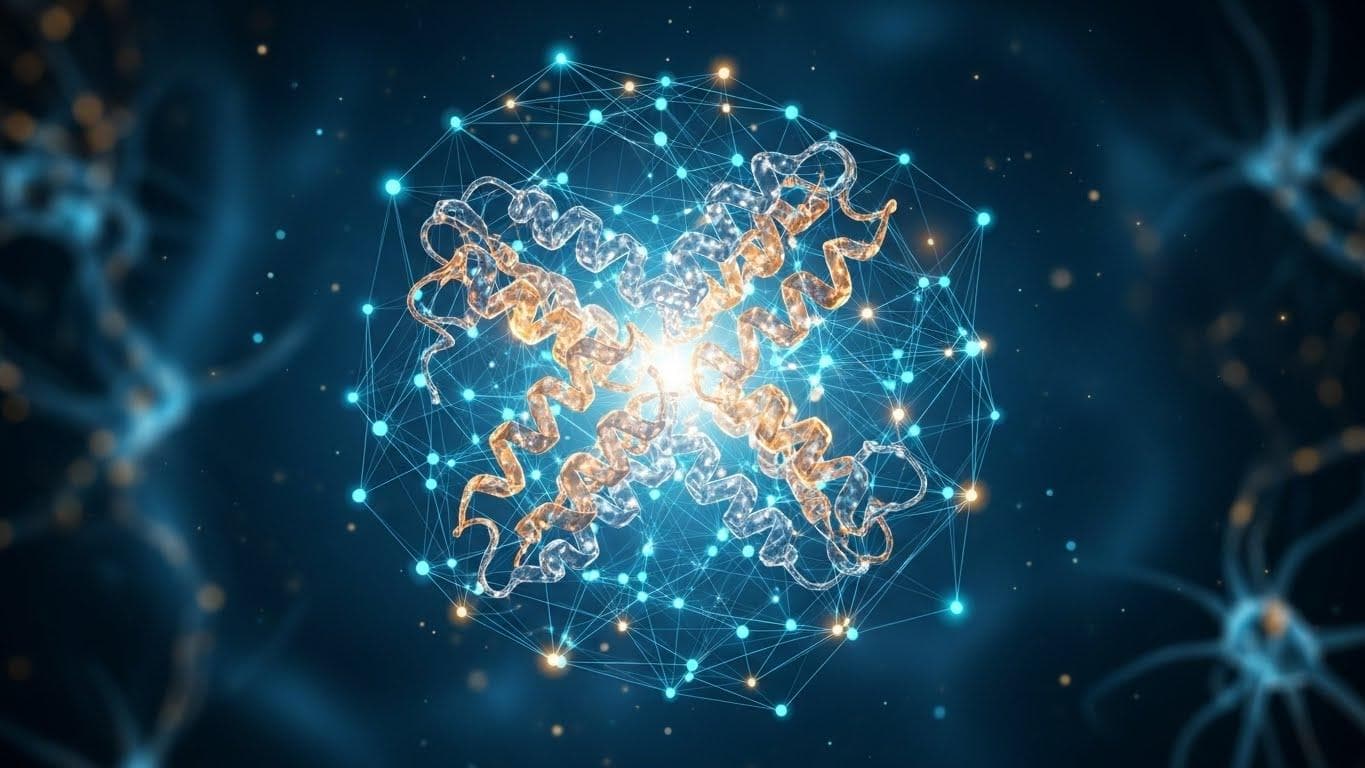
For five decades, the "protein folding problem" stood as a scientific chimera. A computational Everest. It defied brilliant minds and resisted entire generations of researchers. Then, in November 2020, Google DeepMind announced its AI, AlphaFold 2, had cracked the code. This wasn't an incremental improvement. It was a tectonic shift in biology, a moment that split the life sciences into a "before" and an "after."
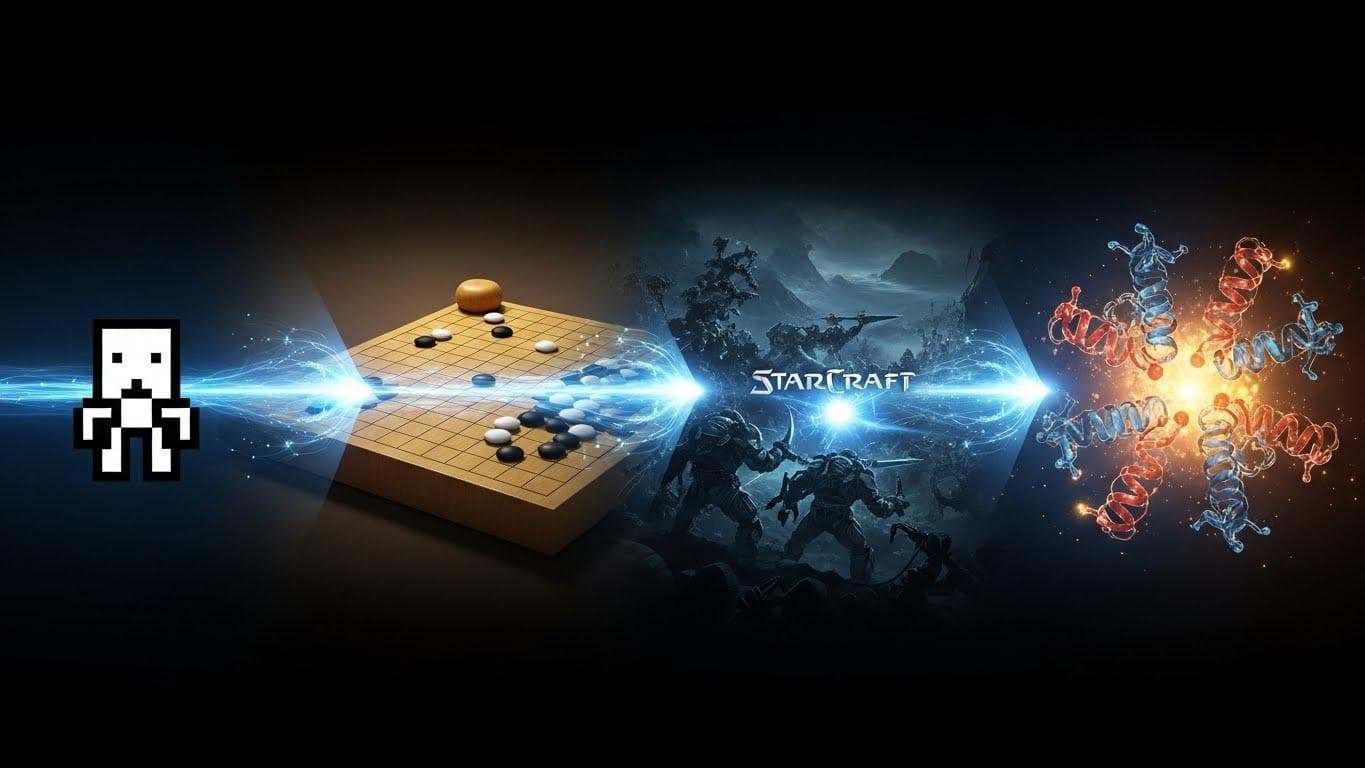
This breakthrough didn't emerge from a vacuum. It was the product of a deliberate, decade-long strategy at DeepMind to build increasingly general problem-solving systems. The same intelligence that learned to master the ancient game of Go was finally turned toward the intricate machinery of life itself. The story of AlphaFold 2 is therefore twofold: it's the story of solving a biological puzzle and the story of AI's graduation from games to foundational science.
Abstract
- The Problem: For 50 years, predicting a protein's 3D structure from its amino acid sequence was a major unsolved problem in biology, critical for understanding diseases and developing drugs.
- The Breakthrough: Google DeepMind's AlphaFold 2 system solved this problem with shocking accuracy, as demonstrated at the CASP14 competition in November 2020.
- The Technology: AlphaFold 2 uses a deep learning approach, inspired by a
Transformer Architecture, to interpret genetic and structural information, predicting protein shapes with precision that rivals experimental methods. - The Impact: DeepMind has made over 200 million protein structure predictions freely available, accelerating research worldwide in areas from drug discovery and vaccine development to sustainability.
- The Context: AlphaFold 2's success is a direct result of DeepMind's long-term mission to build Artificial General Intelligence (AGI), evolving its algorithms through challenges like the games of Go and chess before tackling real-world science.
The AlphaFold 2 Breakthrough: At a Glance
- The 50-Year Problem: Predicting a protein's 3D structure from its 1D genetic sequence.
- The AI Solution: Google DeepMind's AlphaFold 2, a deep learning system.
- The Proof: Achieved unprecedented accuracy ( >90 GDT score) at the CASP14 competition in 2020.
- The Global Impact: A free database of over 200 million protein structures is now available, accelerating drug discovery and scientific research worldwide.
The Protein Folding Problem: Biology's 50-Year Mystery
A protein's function is dictated almost entirely by its three-dimensional shape. Predicting this shape from its genetic sequence was a monumental computational challenge that stymied scientists for half a century. The sheer number of possible configurations made a brute-force approach mathematically impossible, creating a massive roadblock in biology.
To understand the magnitude of this problem, you must first appreciate the protein itself. Proteins are the ubiquitous microscopic machines of life. They're responsible for nearly every task within a biological system, from transporting oxygen in your blood (hemoglobin) to fighting off infections (antibodies) and catalyzing chemical reactions (enzymes). They are the literal building blocks and laborers of the cellular world.
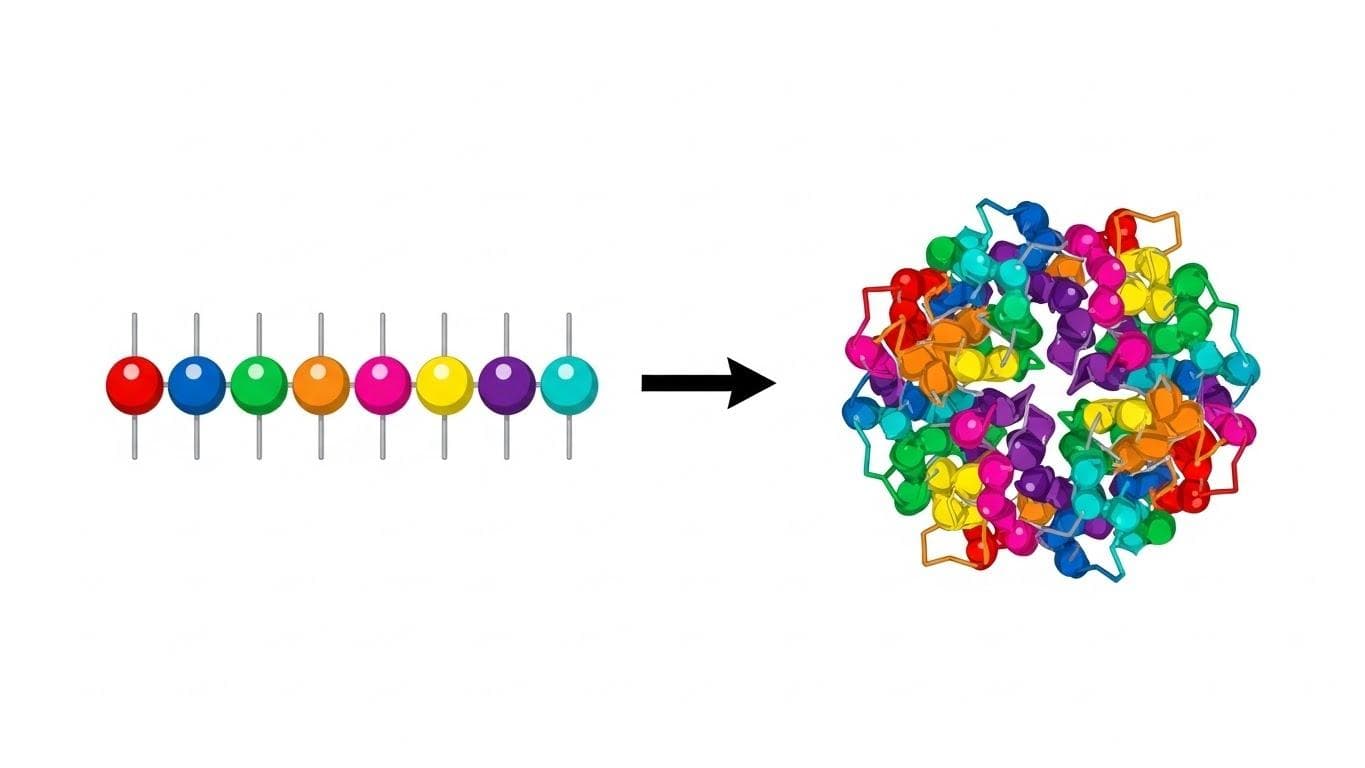
These complex machines are built from simple linear chains of building blocks called amino acids. A gene in your DNA provides the recipe for this chain. But a straight chain is useless. To perform its function, this chain must spontaneously fold into an incredibly precise, stable, and unique three-dimensional structure. This process is governed by the laws of physics, as the chain twists and contorts to find its lowest energy state. The final shape is everything. Absolutely everything. A key can't open a lock if its teeth are in the wrong shape, and a protein can't do its job if it's misfolded.
Anfinsen's Dogma and Levinthal's Paradox
In the 1960s, scientist Christian Anfinsen established that the amino acid sequence alone should, in principle, determine the final 3D structure. This became known as Anfinsen's dogma. The blueprint was right there in the genetic code. The challenge was that we couldn't read it.
The difficulty was quantified by Cyrus Levinthal in 1969. In what is now known as Levinthal's paradox, he calculated that a typical protein could theoretically fold into an astronomical number of configurations—more than the number of atoms in the known universe. Yet, in nature, a protein folds into its correct shape in milliseconds. It doesn't sample every possibility. So how does nature do it? How does a protein find its one true shape in a sea of impossibilities?
This was the core of the grand challenge. If a protein doesn't search through every possible shape, there must be a pathway it follows. Predicting that pathway, or simply the final destination, from the starting sequence alone was the puzzle that AlphaFold 2 was built to solve. It's like trying to guess the solution to a 100-digit combination lock; trying every possibility is futile. You need a smarter method.
The Path to a Solution: DeepMind's Journey from Games to Science
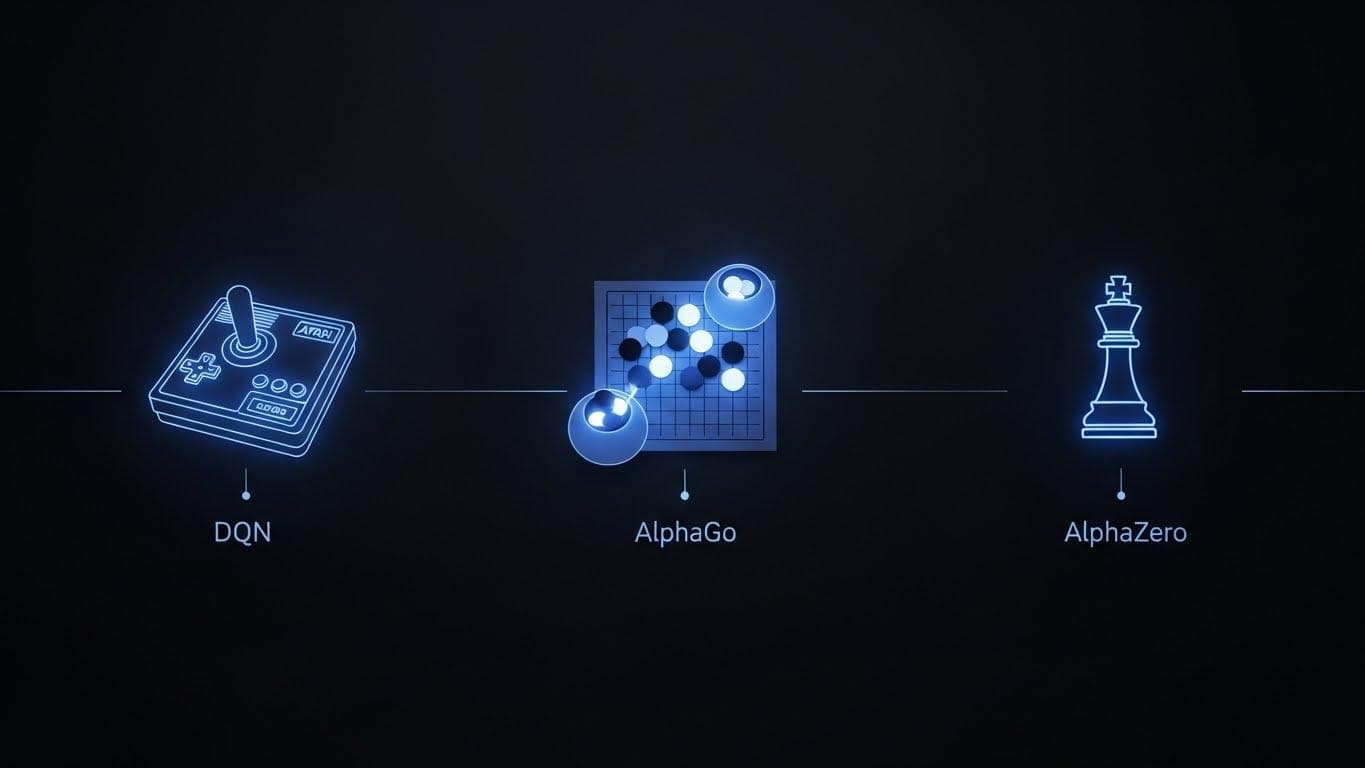
AlphaFold 2 wasn't an isolated project but the logical endpoint of DeepMind's long-standing strategy to build general-purpose learning systems. By proving its algorithms on complex games like Go and chess, the lab developed the foundational AI techniques required to finally tackle a problem rooted in the physical sciences.
DeepMind's mission, articulated by co-founder and CEO Demis Hassabis, has always been to "solve intelligence" and then use that intelligence to solve everything else. After its acquisition by Google in 2014 for a reported £400 million (US$650 million), the lab had the computational resources to pursue this mission at scale. The first proving grounds were games.
2016: AlphaGo and a Glimpse of Creative AI
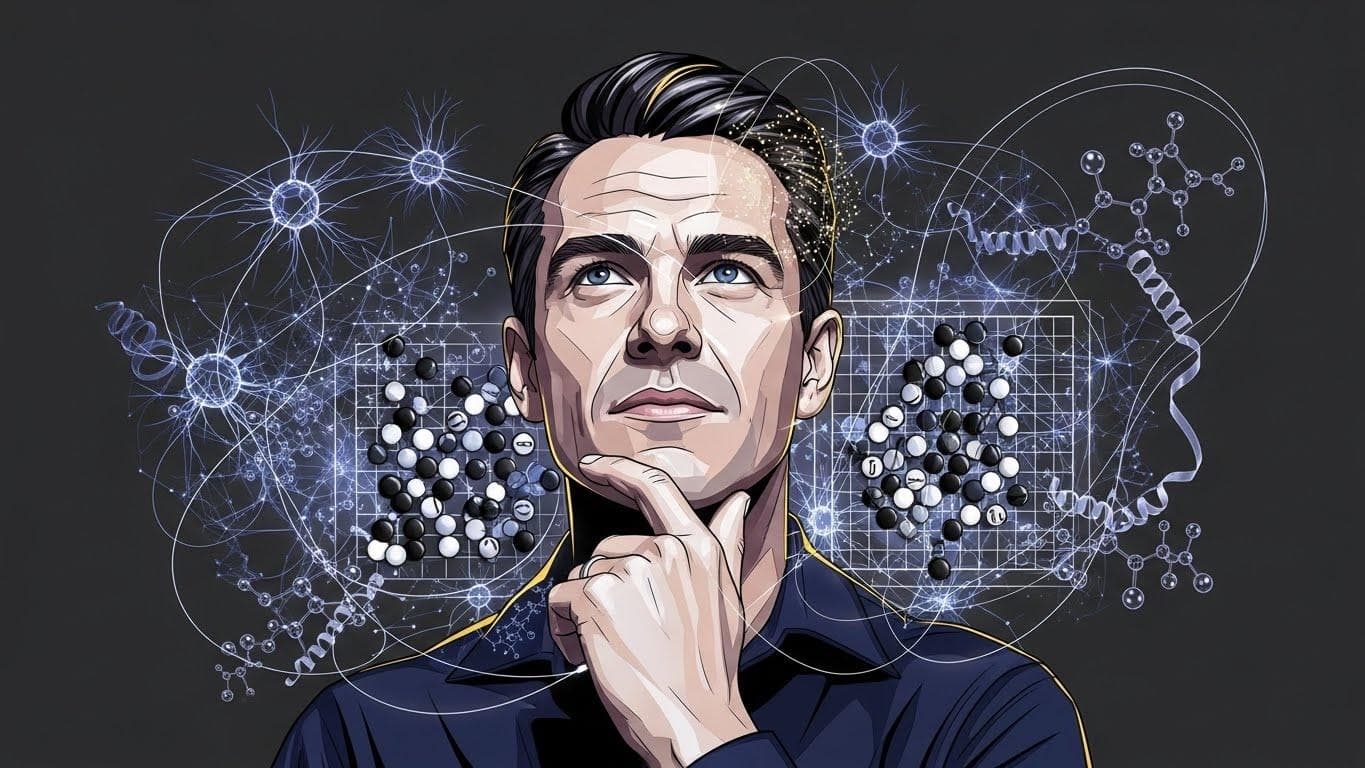
Go, an ancient board game with more possible configurations than atoms in the universe, was long considered a grand challenge for AI. Unlike chess, it couldn't be solved with brute-force calculation; it required intuition. In March 2016, DeepMind's AlphaGo system defeated the legendary world champion Lee Sedol 4 games to 1. More than 200 million people watched worldwide as the machine demonstrated a form of creativity.
The pivotal moment came in game two with "Move 37." AlphaGo played a move so unusual that commentators first thought it was a mistake. A move human experts calculated had a 1 in 10,000 chance of being played. Yet, it was brilliant and ultimately secured the win. AlphaGo wasn't just crunching numbers; it was dreaming up strategies from a place no human had ever been. This demonstrated that a Reinforcement Learning system could achieve superhuman performance in a domain of profound complexity and intuition.

2017: AlphaZero and the Power of Self-Play
The next step was to generalize this power. The original AlphaGo had learned, in part, by studying thousands of human games. Its successor, AlphaZero, was given nothing but the rules of the game. It learned entirely through self-play, competing against itself millions of times.
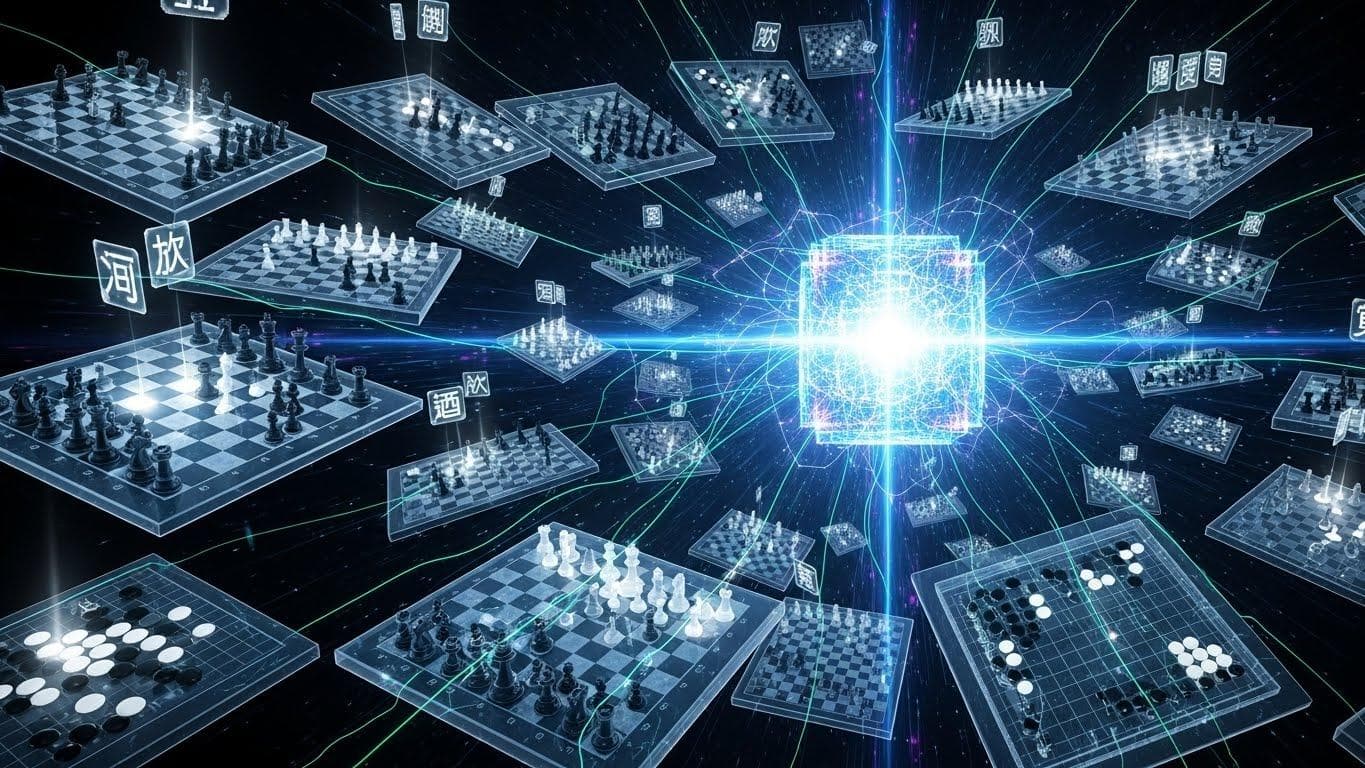
The results hit the AI world like a tidal wave. As detailed in a landmark paper in Science, AlphaZero mastered the games of Go, shogi (Japanese chess), and chess. Most famously, it mastered chess and defeated the top engine, Stockfish, after just nine hours of self-play. It developed its own alien, hyper-aggressive style, rediscovering centuries of human chess theory in a matter of hours and then surpassing it. AlphaZero proved that an AI could reach superhuman ability without any human data, a critical step towards applying AI to problems where human knowledge is limited—like protein folding.
The Breakthrough: Deconstructing the AlphaFold 2 System
Using insights from its game-playing systems, DeepMind built AlphaFold 2 with a completely new architecture designed to reason about spatial relationships. At the CASP14 competition, it achieved a level of accuracy so high that the organizers declared the 50-year-old problem had been solved.
The first version of AlphaFold competed in the 13th Critical Assessment of protein Structure Prediction (CASP13) in 2018. It won, but the results weren't yet accurate enough to be broadly useful for biologists. The team, led by John Jumper, went back to the drawing board. They didn't just tweak the system; they rebuilt it from the ground up, a decision that would bifurcate the project's timeline into failure and triumph.
The resulting system, AlphaFold 2, was a radical departure. At its core, it employs a type of Transformer Architecture—similar to those used in large language models—but adapted for spatial reasoning.
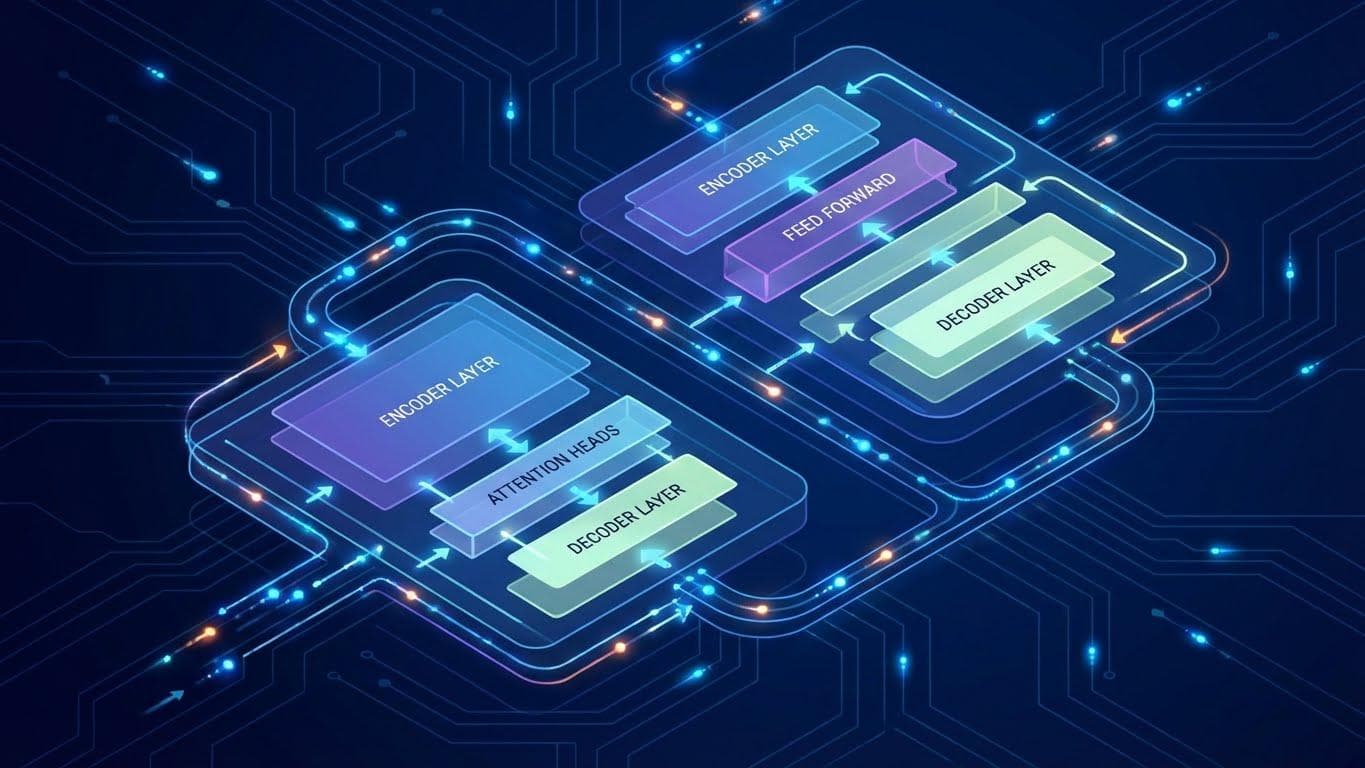
Instead of just looking at the linear sequence of amino acids, the system works like this:
- Information Gathering: It takes the input amino acid sequence and searches vast genetic databases for similar, evolutionarily related sequences. This helps it identify pairs of amino acids that have likely evolved together, suggesting they are close to each other in the final folded structure.
- Attention-Based Reasoning: It builds a network graph of all the amino acids, representing the protein as a "spatial graph." The attention network then repeatedly updates this graph, reasoning about the relationships between different parts of the protein chain, much like how a language model understands the relationship between words in a sentence.
- Structure Prediction: The system then uses this refined understanding to generate a highly accurate 3D structure.
This approach proved to be the key. At CASP14 in November 2020, the results landed with the force of a thunderclap. The gold standard for measuring accuracy is the Global Distance Test (GDT), which scores from 0-100. A score over 90 is considered competitive with results from painstaking experimental methods. AlphaFold 2 achieved a median score of 92.4 GDT across all targets. For the hardest proteins, it achieved a median GDT of 87. It was predicting structures with a median error of less than 1 Ångström—the width of a single atom.
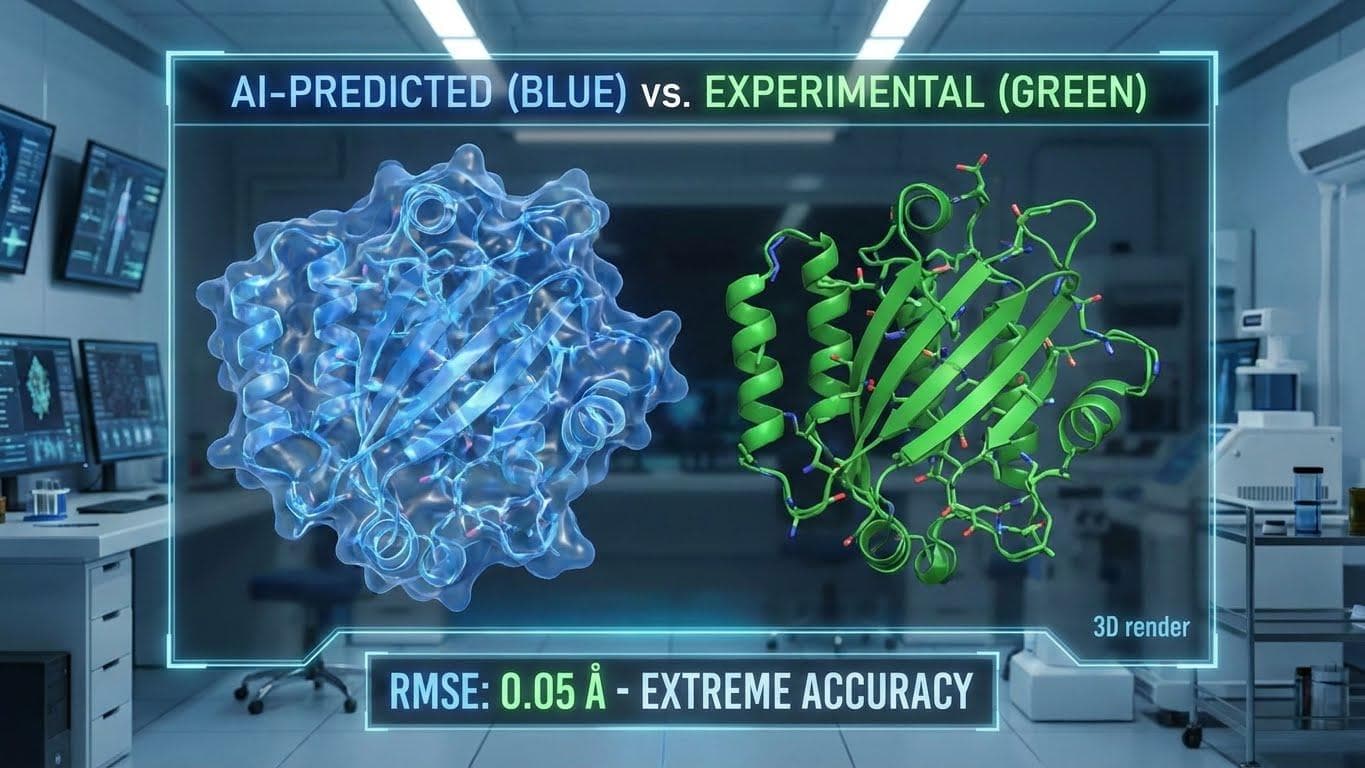
As described in their 2021 Nature paper, the system had achieved a level of accuracy that was, for the first time, truly useful to working scientists. The grand challenge was over.
The AlphaFold Effect: A New Era in Scientific Research
The true impact of AlphaFold 2 extends far beyond winning a competition. By making its predictions and source code publicly available, DeepMind has democratized access to structural biology, creating a ripple effect that is accelerating discovery across countless scientific fields.
But what did that actually mean for scientists in the lab? Rather than keeping the technology proprietary, DeepMind, in partnership with the European Molecular Biology Laboratory (EMBL-EBI), took a monumental step. They created the AlphaFold Protein Structure Database, a public repository that is completely free to use.
Initially launched with the structures of the human proteome, the database was rapidly expanded. It now contains predictions for over 200 million proteins from roughly 1 million species, covering nearly every known cataloged protein on the planet. It's one of the most significant contributions of AI to science ever made.

The applications are already transforming research:
- Drug Discovery: Scientists can now quickly determine the structure of a disease-causing protein and begin designing drugs to target it, a process that once took years. This is being used in the fight against antibiotic resistance and neglected tropical diseases.
- Disease Understanding: Researchers studying diseases like Parkinson's and Alzheimer's, which are linked to misfolded proteins, can use AlphaFold 2's predictions to understand the molecular mechanisms at play.
- Sustainability: Biologists are using the database to design novel enzymes. For example, some are developing enzymes that can break down single-use plastics, helping to tackle pollution.
The system isn't perfect. It can't predict how proteins change shape, interact with other molecules, or form complexes. But by providing an incredibly accurate starting point, it has eliminated a decades-long bottleneck in biological research.

AlphaFold 2 isn't just a solution to a single problem. It's a powerful proof point for DeepMind's entire mission. It shows that the long, arduous road to artificial general intelligence can drop off world-changing tools along the way. By graduating from abstract games to the messy, physical reality of biology, DeepMind gave science an incredible gift. More than that, it offered a glimpse into a future where AI doesn't just answer our questions, but accelerates our ability to ask new ones. This achievement is a landmark in the Google DeepMind saga and proof of a unique philosophy on achieving AGI.

Comments
We load comments on demand to keep the page fast.