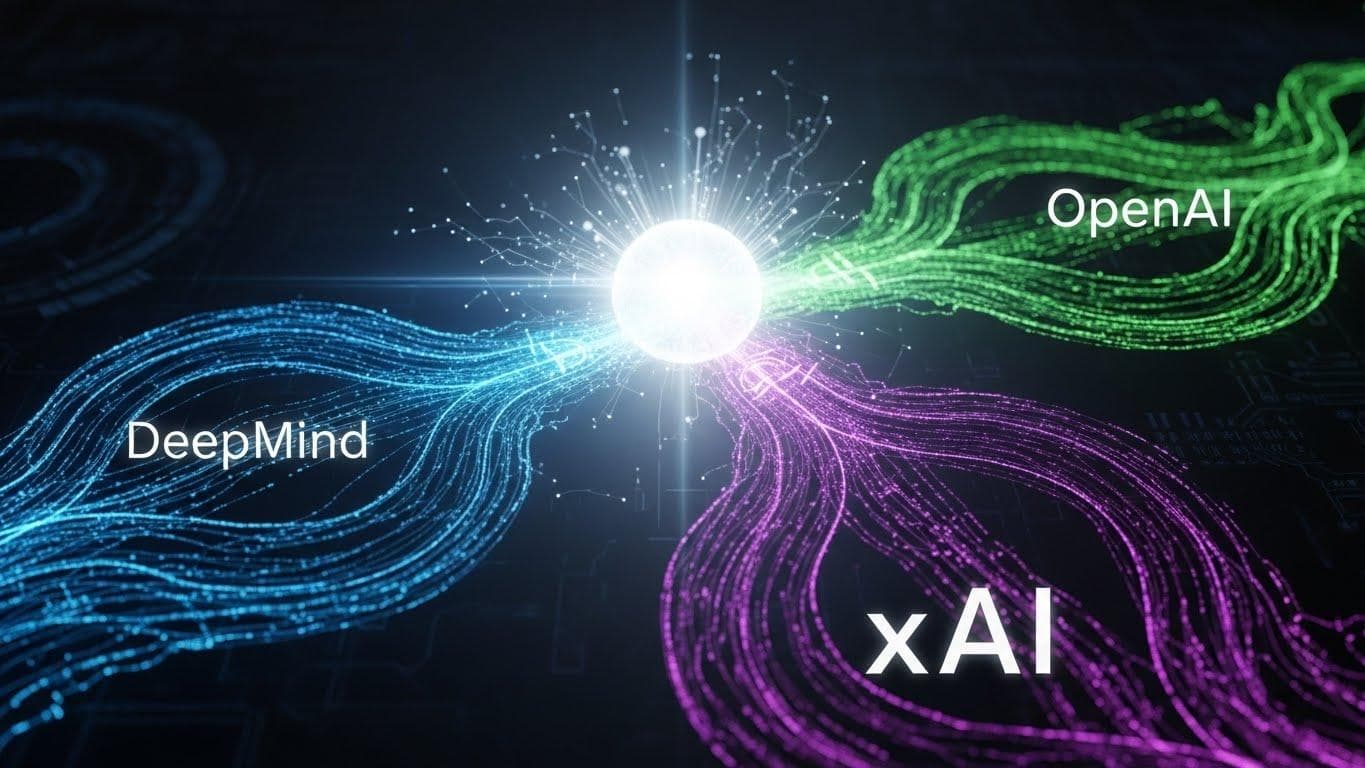
The race to Artificial General Intelligence is on. It's the defining challenge of our time. Three labs, three philosophies, three radically different paths to the future. Each lab's journey is a unique chapter in the broader saga of the race to AGI. Google DeepMind, OpenAI, and xAI aren't just building products. They're executing deeply held beliefs about what intelligence is, why we should build it, and how we can control it.
So, how did we get here? This isn't a simple feature comparison. We're digging into the core ideologies that will shape the most important technology humanity has ever created. We'll examine how the worldviews of their founders—Demis Hassabis, Sam Altman, and Elon Musk—forged their missions, their milestones, and their answers to the alignment problem.
🚀 Key Takeaways
- Google DeepMind: Follows a "solve intelligence" doctrine, using a neuroscience-inspired, research-first approach. Its goal is to use AGI as a master tool for scientific discovery, exemplified by breakthroughs like AlphaFold.
- OpenAI: Has evolved from a non-profit idealist to a commercial pragmatist. Its mission is to deploy AGI that "benefits all of humanity," using an iterative deployment strategy to gather real-world data on safety and alignment.
- xAI: Pursues a "maximally truth-seeking" AGI to understand the universe. Founded on a principle of minimal censorship and user discretion, it champions a more open approach as a counterweight to what it views as overly restrictive safety measures at competing labs.
- The Core Conflict: The central tension lies between DeepMind's measured, scientific approach, OpenAI's iterative and commercially-driven deployment, and xAI's challenge for unrestricted truth and transparency.
- Executive Summary: Three Labs, Three Visions for the Future of Intelligence
- The Godfather: Google DeepMind's "Solve Intelligence" Doctrine
- The Vanguard: OpenAI's Evolving Mission for "Beneficial" AGI
- Founder Philosophy: From Non-Profit Idealism to Commercial Pragmatism
- Defining Milestones: The Generative Revolution with the GPT Series
- Approach to Safety: Iterative Deployment and Reinforcement Learning from Human Feedback (RLHF)
- Current State (December 2025): The Capabilities and Safeguards of GPT-5.2 Pro
- The Challenger: xAI's Quest for a "Maximally Curious" AGI
Executive Summary: Three Labs, Three Visions for the Future of Intelligence
The fundamental difference between these labs isn't their tech—it's their endgame. Google DeepMind sees AGI as the ultimate scientific instrument. OpenAI sees it as a public utility to be carefully rolled out. And xAI? It sees AGI as an unfiltered oracle for cosmic truth. These visions dictate everything: their research, their safety protocols, their entire reason for being.

The Godfather: Google DeepMind's "Solve Intelligence" Doctrine
Google DeepMind's core belief is simple: to build AGI, you must first understand natural intelligence. Period. The lab treats its creation as the ultimate research project, rooted in academic rigor and pure scientific exploration. It's less about building a product and more about deconstructing the abstruse mechanics of the mind to recreate them in silicon. This entire methodology is a direct reflection of its co-founder's lifelong ambition.
Founder Philosophy: Demis Hassabis and the Neuroscience-Inspired Path to AGI
Demis Hassabis, a former chess prodigy and neuroscientist, has been driven by a single goal: to "solve intelligence." His background isn't in enterprise software but in computational neuroscience. This academic lens shapes DeepMind's entire strategy. For Hassabis, the human brain is the only working proof of general intelligence. Therefore, the most logical path to building an artificial version is to draw inspiration from its architecture and learning mechanisms, particularly the concept of Reinforcement Learning.
This isn't just about building software; it's a scientific quest that defines the Google DeepMind saga. The lab's structure and its independent operation within Google, secured during its acquisition in 2014 for a reported £400 million (US$650 million), was designed to protect this long-term research mission from the pressures of short-term product cycles.
Defining Milestones: From Atari's DQN to AlphaFold's Biological Revolution
DeepMind's greatest hits aren't consumer apps; they are scientific proofs of concept.
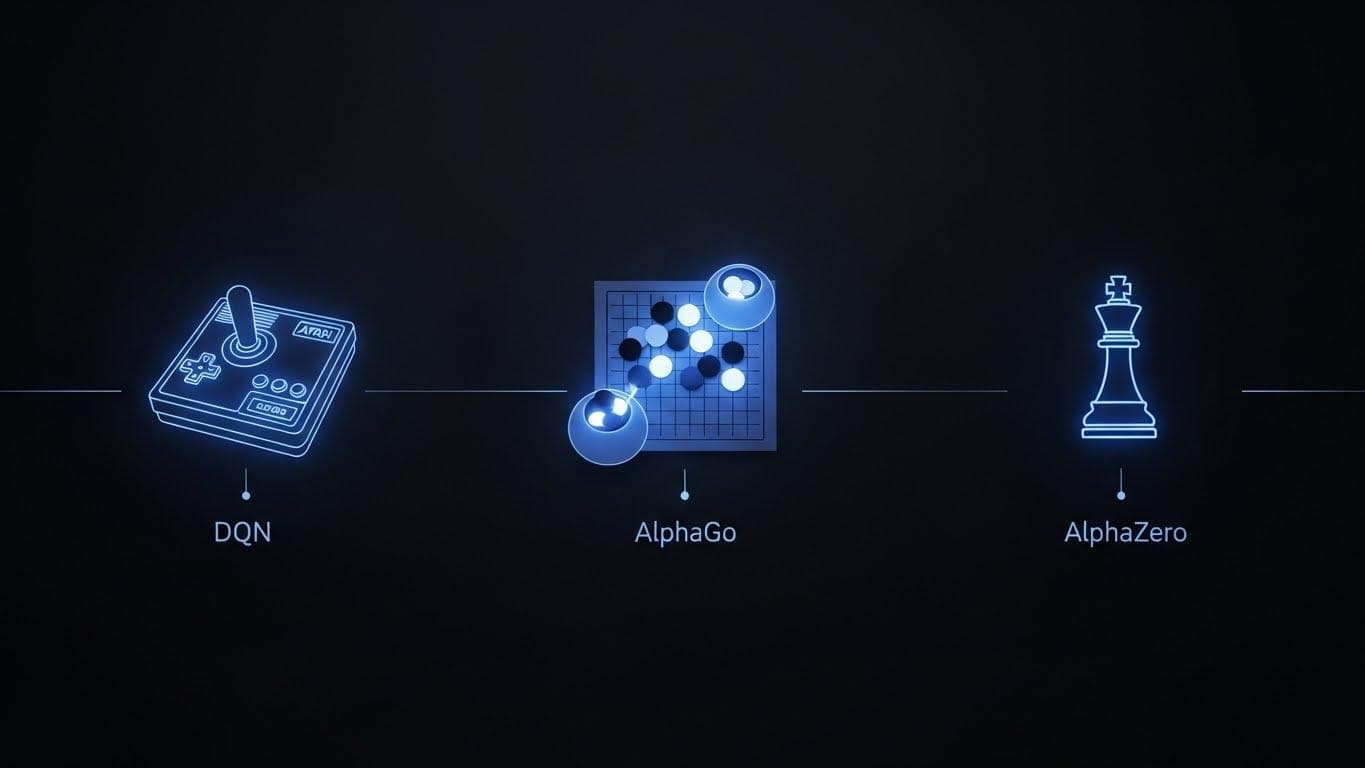
- Deep Q-Network (DQN): The first major breakthrough combined deep learning with reinforcement learning, creating a single algorithm that learned to master dozens of Atari games from pixels alone. This was the first real proof: a general learning system could be built.
- AlphaGo: The 4-1 victory over world Go champion Lee Sedol in their historic March 2016 match was a global "Sputnik moment" for AI. The system's "Move 37" in game two, a move with a 1 in 10,000 chance of being selected by a human, demonstrated that AI could produce not just superhuman performance but genuine creativity.
- AlphaZero: This successor system was more profound. It learned Go, chess, and shogi without any human data, learning entirely through self-play. After just nine hours of training, it decisively defeated Stockfish, the world's top chess engine, proving an AI could surpass the entirety of human knowledge in complex domains as documented in its landmark paper.
- AlphaFold 2: Perhaps DeepMind's most significant contribution to humanity, AlphaFold 2 effectively solved the 50-year-old grand challenge of protein folding. By predicting protein structures with an accuracy rivaling expensive experimental methods (median error of less than 1 Ångström), as detailed in its Nature publication, it opened new frontiers in medicine. The subsequent release of the AlphaFold Protein Structure Database, containing predictions for over 200 million proteins, was a monumental gift to the scientific community.
These milestones aren't random successes. They are a direct result of the core philosophy: build general algorithms, test them in complex domains, and then apply them to fundamental scientific problems.

Approach to Safety: A Measured, Research-First Framework
Consistent with its scientific culture, DeepMind's approach to AI safety is methodical and cautious. They don't see safety as a feature to be bolted on later. For them, it's a fundamental research problem to be solved in parallel with capability advancements. Their philosophy emphasizes understanding the systems in controlled environments before widespread deployment.
"The approach to building technology which is embodied by move fast and break things, is exactly what we should not be doing... you can't afford to break things and then fix them afterwards." - Demis Hassabis
This stance prioritizes risk analysis, formal verification of system behaviors, and a deep collaboration with ethicists and social scientists. Their public statements often focus on the need for global coordination and taking a responsible path to AGI.
Current State (December 2025): The Gemini 3.0 Pro Reality
Today, Google DeepMind's public-facing work is channeled through models like Gemini 3.0 Pro. This powerful model is the culmination of years of research into Transformer Architecture and large-scale training. While it competes directly with OpenAI's GPT-5.2 Pro, its development is guided by that same underlying philosophy: build general, multimodal systems that can reason across different types of information. A key step on the path to AGI.
Comparing AGI Safety Philosophies
Google DeepMind (Research-First)
Pros
- High Rigor: Emphasizes understanding and formal verification before deployment.
- Reduced Unexpected Risks: Controlled lab environment minimizes real-world harm from early versions.
- Scientific Foundation: Safety is treated as a core research problem, not an afterthought.
Cons
- Slower Progress: Caution can slow down the pace of innovation compared to rivals.
- "Ivory Tower" Problem: Lab-based solutions may not be robust to complex, real-world scenarios.
- Concentrated Power: Keeps cutting-edge safety research within a single corporate entity.
OpenAI (Iterative Deployment)
Pros
- Real-World Data: Gathers invaluable data on alignment challenges that can't be simulated.
- Societal Adaptation: Allows society to gradually co-evolve with increasingly capable AI.
- Practical Alignment: Techniques like RLHF have proven effective at steering model behavior.
Cons
- Risk of "Escapes": Early models may cause unforeseen harm before they can be patched.
- "Move Fast, Break Things" Culture: Prioritizes deployment speed, potentially over thorough risk assessment.
- Proprietary Nature: Alignment techniques are developed behind closed doors.
xAI (Minimalist & Transparent)
Pros
- Public Scrutiny: Open-sourcing models allows a global community to audit for flaws and biases.
- Resists Capture: Aims to prevent a single ideology from controlling AI's "values."
- Fosters Competition: Prevents a monopoly on powerful AI technology.
Cons
- High Misuse Potential: Unfiltered models can be easily weaponized for disinformation or malice.
- Offloads Responsibility: Places a heavy burden on end-users to use the technology ethically.
- Unpredictable Emergence: An "unrestricted" AI could develop goals that are difficult to foresee or control.
The Vanguard: OpenAI's Evolving Mission for "Beneficial" AGI
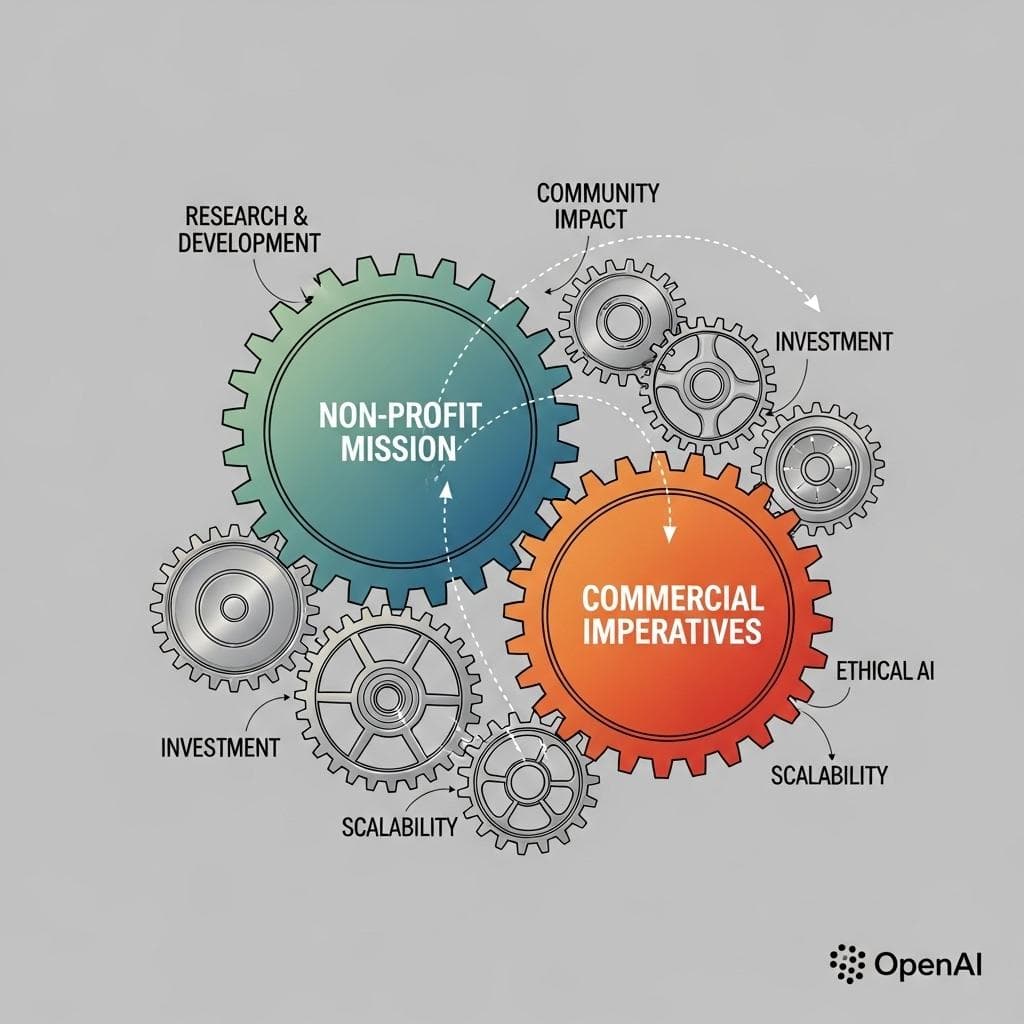
OpenAI's philosophy is all about evolution. It's a shift from pure non-profit idealism to a "capped-profit" pragmatism needed to fund its capital-intensive research. The core mission—to ensure AGI benefits all of humanity—hasn't changed, but their method for getting there has. Radically. Their principle is that the safest way to build AGI is to ship it, letting society co-evolve with the technology one update at a time.
Founder Philosophy: From Non-Profit Idealism to Commercial Pragmatism
OpenAI was founded in 2015 as a non-profit research laboratory, a direct response to the perceived risk of a single corporate entity (namely Google, post-DeepMind acquisition) controlling the path to AGI. Early backers, including Elon Musk, envisioned it as an open counterweight.
But the immense computational costs of training large-scale models led to a restructuring in 2019. The creation of a "capped-profit" arm allowed OpenAI to raise billions in capital, primarily from Microsoft, while attempting to remain tethered to its original humanitarian mission. This decision created a bifurcated organization, one that must balance commercial imperatives with its stated goal of broad benefit. This internal tension is a defining feature of its philosophy.
Defining Milestones: The Generative Revolution with the GPT Series
Where DeepMind's milestones feel like scientific experiments, OpenAI's are akin to industrial revolutions. Their Generative Pre-trained Transformer (GPT) series fundamentally changed the public's relationship with AI.
The release of models like GPT-3, ChatGPT, and their successors, culminating in the current GPT-5.2 Pro, demonstrated the power of Generative Models at an unprecedented scale. They made high-powered AI accessible to millions, sparking a wave of innovation and forcing a global conversation about the technology's potential and perils. OpenAI's strategy is to put the tool in the hands of the people and learn from how they use it, a stark contrast to DeepMind's more sequestered lab environment. Their progress is less about solving a single grand challenge and more about scaling a general capability for language and reasoning.

Approach to Safety: Iterative Deployment and Reinforcement Learning from Human Feedback (RLHF)
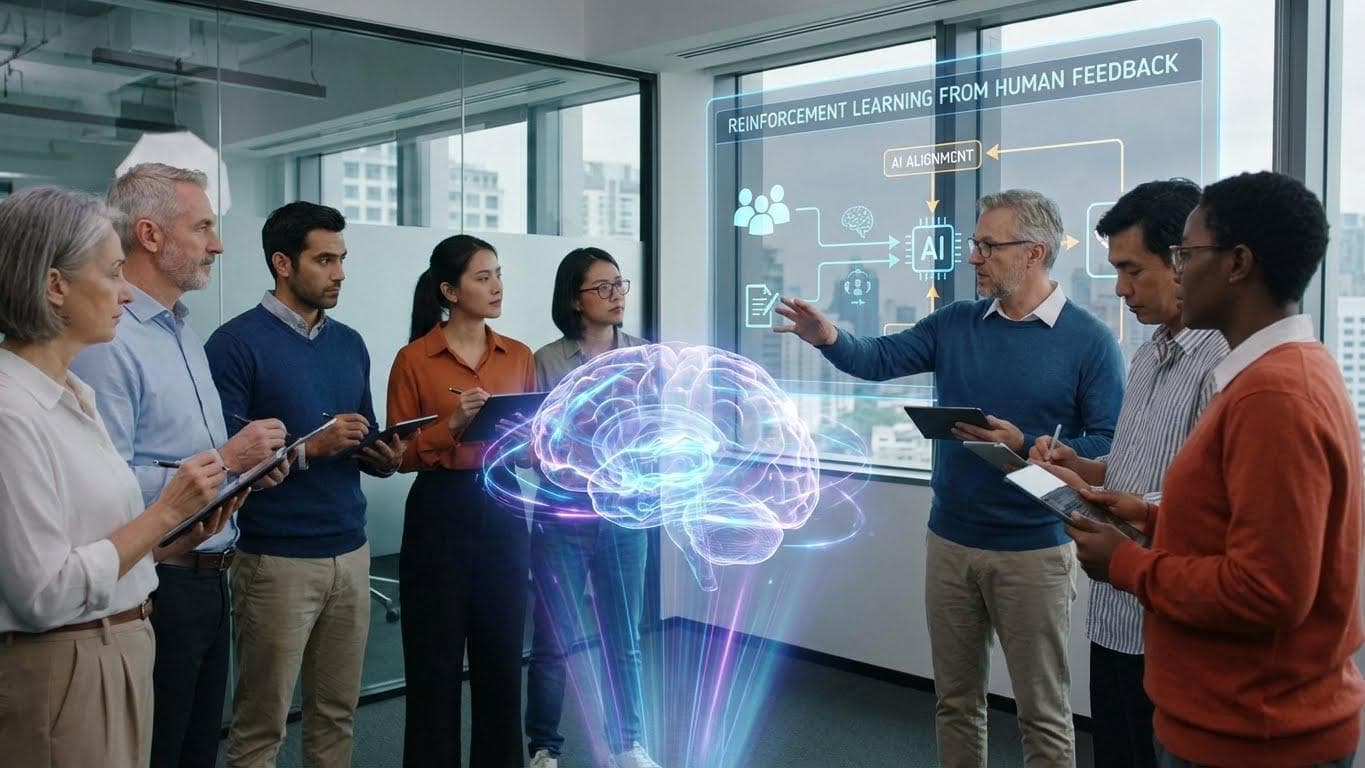
OpenAI pioneered the widespread use of Reinforcement Learning from Human Feedback (RLHF) as a core alignment technique. Their safety philosophy is built on this iterative loop: deploy a model, observe its failures and misuses in the real world, collect human feedback, and use that data to train a safer, more aligned successor.
This approach is fundamentally empirical. It accepts that you can't foresee every risk in a lab. The model's "constitution" is shaped by the collective feedback of its users. Critics argue this method resembles building the plane while flying it, potentially exposing society to risks from less-mature models. Proponents argue it is the only way to make genuine progress on the AI alignment problem, as theoretical solutions often fail when confronted with the complexity of the real world.
Current State (December 2025): The Capabilities and Safeguards of GPT-5.2 Pro
As of late 2025, GPT-5.2 Pro represents the frontier of OpenAI's capabilities. It powers the company's flagship products and is available to developers through an extensive API. The model's development cycle reflects the company's safety philosophy; its safeguards are the direct result of massive-scale RLHF and red-teaming—lessons learned the hard way from previous versions. OpenAI's strategy hinges on the belief that this real-world feedback loop is the fastest and most effective path to creating a truly beneficial AGI.
The Challenger: xAI's Quest for a "Maximally Curious" AGI
xAI is a rebellion. Founded by Elon Musk in 2023, it's a direct philosophical counterpunch to what he sees as labs captured by political correctness and commercial caution. Its guiding principle? Create a "maximally truth-seeking" AGI. The lab's mission isn't explicitly humanitarian or scientific like its rivals. Its goal is cosmological: "to understand the true nature of the universe."

Founder Philosophy: Elon Musk's Vision of Unrestricted, "Truth-Seeking" AI
Elon Musk's journey is intertwined with both DeepMind (as an early investor) and OpenAI (as a co-founder). His departure from OpenAI was reportedly driven by disagreements over safety and control. He founded xAI to build the AGI he felt OpenAI was no longer pursuing: one that prioritizes uncensored truth and dodges what he calls "woke" biases.
This philosophy equates safety with truth. The logic is simple: an AI that is forbidden from exploring certain topics or expressing certain



Comments
We load comments on demand to keep the page fast.