The race to build Artificial General Intelligence (AGI) isn't just another tech trend. It's the defining scientific quest of our time. And at the heart of this race is Google DeepMind, an organization driven not by code alone, but by a small cadre of brilliant, and sometimes obsessive, minds. To understand DeepMind's mission, its stunning achievements, and its future, you have to understand the people who built it.
This isn't just a company directory. It's a field guide to the architects of our intelligent future. We'll break down the founding trio who dreamed it up, the investors who bet on that dream, and the scientists who turned science fiction into fact. This is who's who at the frontier of AI.
🚀 Key Takeaways
- The Founders: Google DeepMind was born from a trio with complementary skills: Demis Hassabis (the visionary CEO), Shane Legg (the chief AGI scientist), and Mustafa Suleyman (the applied AI and ethics lead).
- The Vision: The core mission was always to "solve intelligence" and then use that intelligence to solve everything else, with a laser focus on achieving Artificial General Intelligence (AGI).
- Key Investors: Early cash from heavyweights like Peter Thiel and Elon Musk was critical. Musk has since become a direct competitor, founding his own company, xAI.
- Landmark Projects: Researchers like David Silver (AlphaGo) and John Jumper (AlphaFold) led teams that turned an audacious vision into reality.
- Google Integration: The 2014 acquisition by Google provided near-limitless compute, and the 2023 merger with Google Brain consolidated the company's AI talent under Hassabis's command.
- The Founding Triumvirate: Architects of "Solving Intelligence"
- The Early Backers: The Venture Capitalists Who Fueled the Mission
- The Google Era: Leadership Through Acquisition and Integration
- The Project Vanguards: Leads of Landmark Achievements
- The Current Leadership Core (as of December 2025)
- The Guiding Philosophy: A Mission Shaped by Its People
The Founding Triumvirate: Architects of "Solving Intelligence"
DeepMind didn't start in a garage in 2010. It began in London as something far more ambitious: a self-described "Manhattan Project for AI." Its entire mission was built on the complementary genius of three founders. A neuroscientist, a theorist, and a pragmatist.
Demis Hassabis: The Visionary CEO and Neuroscientist
At the center of it all is Demis Hassabis. His life reads like a training manual for building AGI. He was a child chess prodigy. A video game designer at 17, co-creating the classic Theme Park. This wasn't just a job; it was an education in building complex, simulated worlds.
But his real target was the mind itself. Hassabis earned a Ph.D. in cognitive neuroscience to study the brain's blueprint—the only working model of general intelligence we have. He's the architect of DeepMind's simple, audacious strategy: understand intelligence, build it artificially, and then use it to solve everything else. Today, he leads the unified Google DeepMind, aiming models like Gemini 3.0 Pro squarely at competitors like OpenAI's GPT-5.2 Pro, which hit the scene in December 2025 with its own formidable multimodal skills.
"My whole life goal is to solve artificial general intelligence. And on the way, use AI as the ultimate tool to solve all the world's most complex scientific problems." - Demis Hassabis
Shane Legg: The Chief Scientist and AGI Theorist
If Hassabis is the strategist, Shane Legg is the scientific conscience. The purist. As Chief Scientist, Legg has been obsessed with the theory of AGI since long before it was cool. His academic work was foundational, asking a simple question with a monstrously complex answer: how do you even measure machine intelligence?
Legg is the one who constantly reminds everyone of the stakes. He and Hassabis bonded over their nascent obsession with AGI when the rest of the academic world had moved on. It's Legg's relentless focus on the core AGI problem that keeps the company from getting distracted by shiny, short-term projects.
Mustafa Suleyman: The Applied AI and Ethics Pioneer
The trio's third leg was Mustafa Suleyman, the pragmatist who grounded the mission in the real world. While Hassabis and Legg chased the theoretical horizon, Suleyman asked a different question: how will this technology actually touch people's lives? He brought the focus to application and ethics, founding the DeepMind Ethics & Society unit to grapple with the societal impact of their work.
Suleyman's path eventually diverged. He left to co-found Inflection AI and now runs Microsoft's consumer AI division. But his early insistence on embedding ethics into the research DNA left a permanent mark on DeepMind's culture.
The Early Backers: The Venture Capitalists Who Fueled the Mission
Pitching a company with the goal of "solving intelligence" and no immediate product was a difficult sell. It required investors who were buying into a grand, almost audacious, vision rather than a predictable business model.

Peter Thiel: The Founders Fund Investment
Peter Thiel, through his venture capital firm Founders Fund, became one of DeepMind's first and most important investors. Known for backing ambitious, world-changing companies, Thiel's support gave the company the validation and the capital it needed to assemble its initial team.
Elon Musk: The Early Investor and Future Competitor
Elon Musk was another key early investor drawn to the sheer scale of DeepMind's mission. His involvement highlighted the high-stakes nature of the AGI pursuit. His relationship with the field, however, has soured. Citing concerns over AI safety and corporate control, Musk parted ways and, in July 2023, founded xAI, a direct competitor to Google DeepMind and OpenAI. This move turns a former backer into a formidable rival, with models like Grok 4.1 now in the same arena.
The Google Era: Leadership Through Acquisition and Integration
To build God, you need a big workshop. DeepMind needed more than venture capital; it needed computational power on a planetary scale. That led to one of the biggest acquisitions in AI history.
The 2014 Acquisition: A Landmark Deal
In 2014, Google bought DeepMind for a reported £400 million (US$650 million). The deal, pushed by then-CEO Larry Page, was a shot of adrenaline. It gave Hassabis's team the keys to Google's kingdom: its colossal infrastructure and custom-built Tensor Processing Units (TPUs), the silicon brains needed to train massive neural networks. Crucially, the deal preserved DeepMind's autonomy, letting it operate as a pure research lab inside the corporate behemoth.
The 2023 Merger: Uniting DeepMind and Google Brain
Nearly a decade later, the AI world was a different beast. To fend off ascendant rivals like OpenAI, Google made another big move in April 2023. It merged DeepMind with its other premier AI lab, Google Brain. The new, unified organization—Google DeepMind—is run by Demis Hassabis. This wasn't just a re-org; it was a consolidation of power, focusing all of Google's top AI minds into a single weapon aimed at winning the AGI race.
The Project Vanguards: Leads of Landmark Achievements
A vision is just a dream without people to build it. The researchers who led DeepMind's signature projects became legends in their own right, proving the company's philosophy could produce world-shaking results.

The AlphaGo Team: Mastering the Divine Game
The world got its first real taste of DeepMind's power in March 2016. The project was AlphaGo, an AI built to conquer the ancient, impossibly complex game of Go.
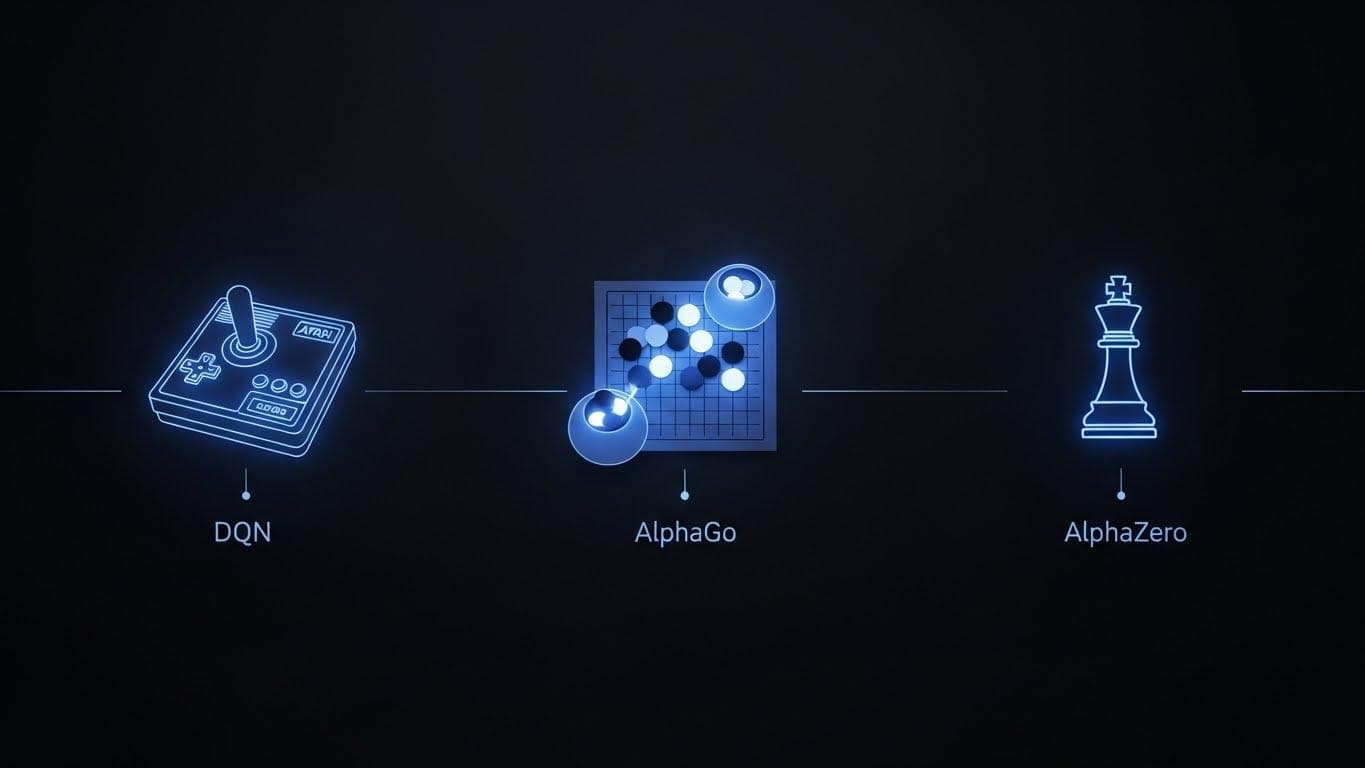
David Silver, a principal researcher and old friend of Hassabis, helped lead the charge. The team fed AlphaGo a diet of human games before letting it refine its skills through Reinforcement Learning, playing millions of games against itself. The result was a showdown with Lee Sedol, a legend of the game. Over 200 million people watched AlphaGo dismantle him, 4 games to 1. The match was defined by moments of sublime, alien creativity, none more famous than "Move 37" in the second game—a move so bizarre it broke the commentators' brains. You can read more about the research behind AlphaGo on their official blog.
The sequel was even more impressive. AlphaZero mastered chess using only self-play, as documented in Science. It didn't just learn our strategies; it invented its own, superior ones. It was like watching an intelligence discover a thousand years of human thought in a single afternoon.
The AlphaFold Team: Revolutionizing Structural Biology
If AlphaGo was a brilliant parlor trick, AlphaFold was the main event. This was the true mission: using AI to crack open fundamental scientific problems. For 50 years, the 'protein folding problem'—predicting a protein's 3D shape from its genetic sequence—had been a holy grail of biology. A problem that had stymied generations of scientists.
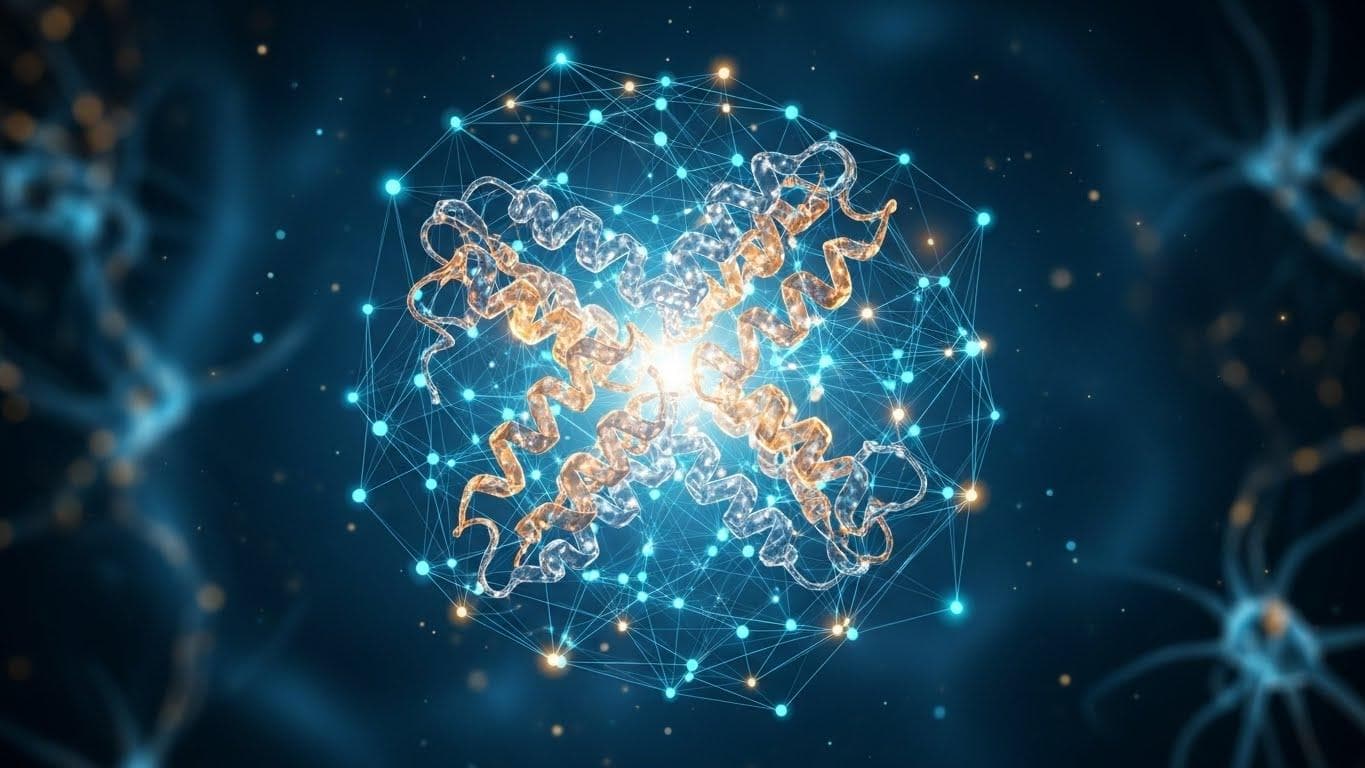
Led by researcher John Jumper, the AlphaFold 2 team built a system that simply solved it. The results, published in Nature, were staggering. AlphaFold 2 predicted structures with an accuracy that matched slow, expensive lab methods. It didn't just get better; it won the game. It turned the protein database from a flat list of ingredients into a vibrant, 3D library of molecular machines.
Then, in an act of profound scientific generosity, Google DeepMind used AlphaFold to predict and release over 200 million protein structures. For free. This single move hit the accelerator on drug discovery, disease research, and environmental science across the globe.
The Current Leadership Core (as of December 2025)
Beyond the founders, a new layer of leadership keeps the modern Google DeepMind running. These are the people who translate the grand vision into daily reality, guiding hundreds of research teams.

Lila Ibrahim: The Operational Architect (COO)
Merging DeepMind and Google Brain created an operational beast. As Chief Operating Officer, Lila Ibrahim wrangles the immense resources, collaborations, and governance policies across the organization. She builds the machine that lets the scientists do science, managing the critical bridge between DeepMind's research goals and Google's broader corporate infrastructure.
Koray Kavukcuoglu and Pushmeet Kohli: The Research Engine
Reporting to Hassabis is a cadre of elite technical leaders. Koray Kavukcuoglu (CTO) serves as a key bridge between pure research and product, helping to integrate DeepMind's breakthroughs into the Gemini model family. On the scientific front, Pushmeet Kohli (VP of Research) leads the "AI for Science" division, directing teams to apply AI to fundamental problems in biology, physics, and climate science. These leaders aren't just managers; they are intellectual stewards pointing their teams toward the most fertile ground for discovery.
The Guiding Philosophy: A Mission Shaped by Its People
You can't understand DeepMind without understanding the philosophy that drives its people. Two principles have guided its journey from an obscure London startup to a global AI powerhouse.
The Unwavering Goal: The Pursuit of Artificial General Intelligence
AGI is everything. For DeepMind, it has always been the North Star. It's not a side project or a buzzword; it's the fundamental organizing principle of the company. This singular, almost monastic focus, set by Hassabis and Legg from day one, is a magnet for a certain kind of researcher—one who wants to be part of a generational scientific quest.


Comments
We load comments on demand to keep the page fast.