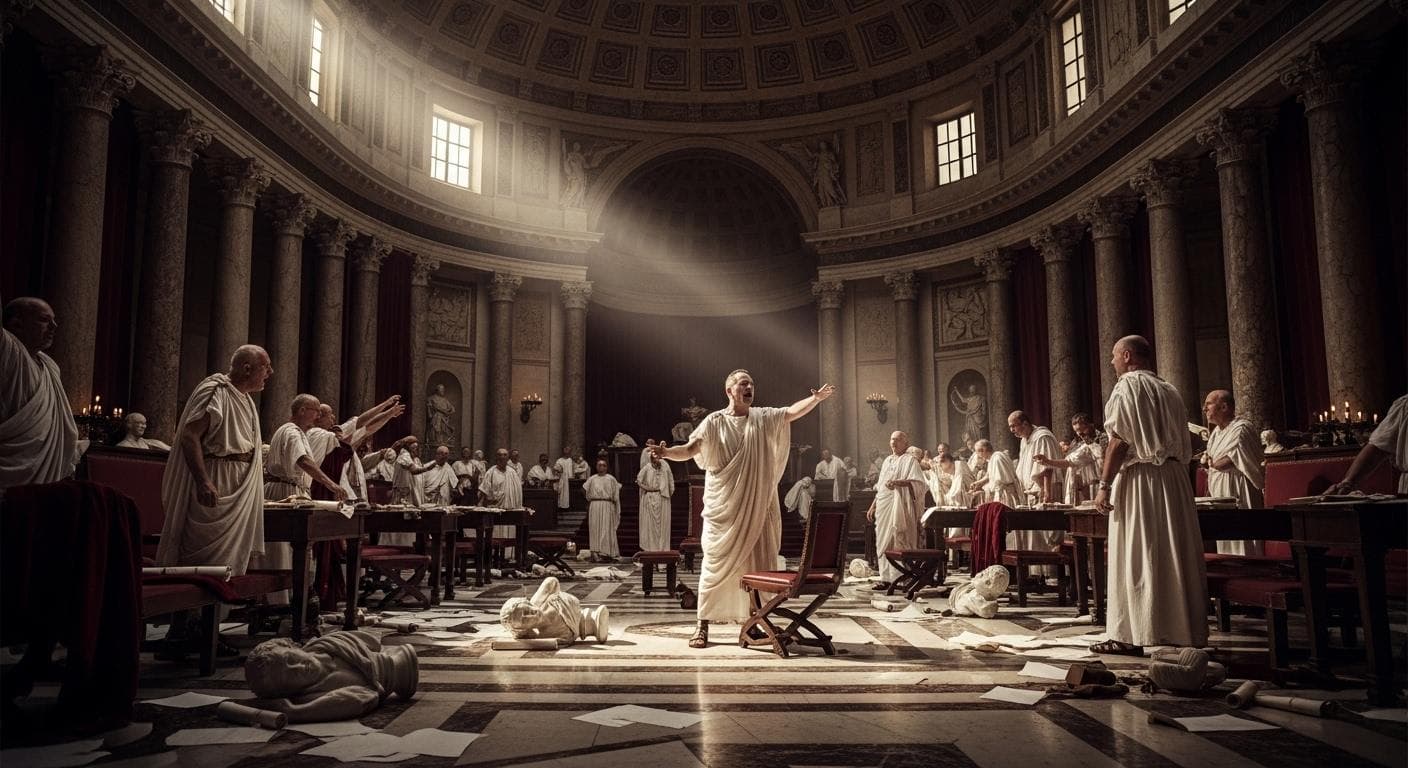
The Cracks in the Republic's Foundation
The fall of the Roman Republic was not a single, dramatic event. It was a slow, grinding collapse, a death by a thousand cuts that spanned more than a century. By the time Julius Caesar led his legions across the Rubicon River in 49 B.C., the Republic was already a hollow shell, its democratic institutions crippled by deep-seated, systemic failures. The story of Rome's transition from Republic to Empire isn't just about great men and their ambitions; it's about a political system that had ceased to function for the majority of its people, creating a vacuum that only absolute power could fill.
A System Under Stress: Economic Inequality and Political Gridlock
For centuries, the backbone of Rome was the small, land-owning farmer who doubled as a citizen-soldier. But relentless expansion brought immense wealth to a tiny aristocratic elite, who amassed vast agricultural estates called latifundia, worked by an ever-growing population of slaves from conquered lands. This economic shift decimated the small farmer class, pushing them off their ancestral lands and into the city of Rome. There, they swelled the ranks of a volatile, landless urban poor known as the proletariat.
This massive inequality created a political powder keg. In the 2nd century B.C., reformers like the Gracchi brothers attempted to pass land reforms to redistribute wealth and restore the citizen-farmer class. Their efforts were met not with debate, but with brutal violence and assassination orchestrated by the entrenched senatorial elite. This was a catastrophic turning point, demonstrating a fatal flaw in the system: political norms were breaking down. Debate was being replaced by street violence, and the Senate, once a body of statesmen, increasingly acted as a cartel to protect its own wealth and power at any cost.
The New Roman Army: Loyalty to Generals, Not the State
The second critical flaw emerged from the military. Facing a recruitment crisis, the general Gaius Marius enacted a series of sweeping reforms. He professionalized the army by abolishing the property requirement for service, allowing the landless proletariat to enlist for long-term careers. In doing so, he solved a manpower problem but created a much larger, existential political one.
These new soldiers were loyal not to the abstract idea of the "Senate and People of Rome" (SPQR), but to the general who paid their wages, gave them a chance at a better life, and-most importantly-promised them a plot of land upon retirement. The Roman legions transformed into what were essentially private armies. Generals like Sulla, and later Pompey and Caesar, wielded immense personal power and were not afraid to use their loyal troops to intimidate political opponents or even march on Rome itself. The state had lost its monopoly on violence, a fundamental requirement for any stable government. This military transformation was a crucial factor in Rome's military and political decline, a theme explored further in the broader context of the Empire.
Part I: The Wrecking Ball - Gaius Julius Caesar
Into this decaying system stepped Gaius Julius Caesar, a man of breathtaking ambition, charisma, and military genius. He understood the new rules of the game: that true power no longer came from the Senate floor, but from the loyalty of legions and the adoration of the masses.
The First Triumvirate: An Alliance of Ambition
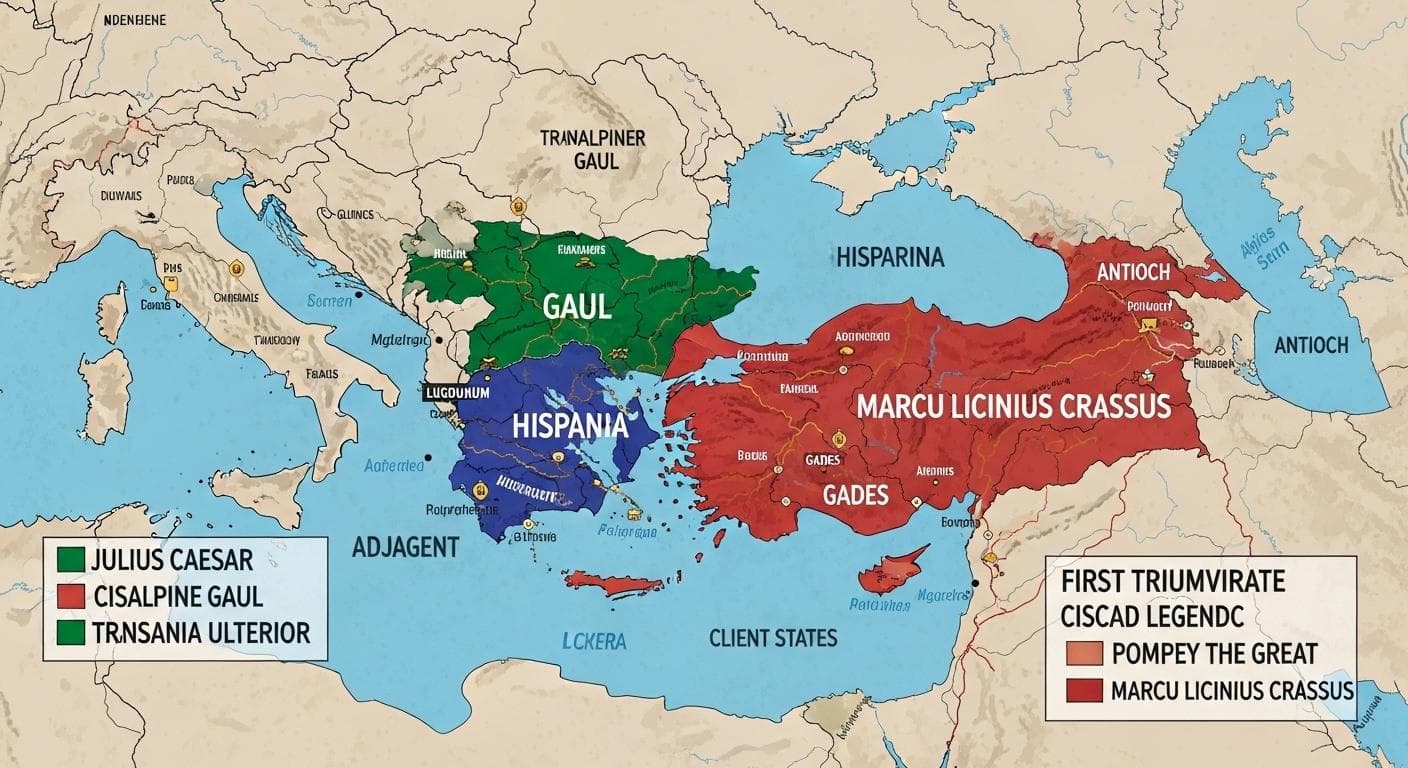
In 60 B.C., Caesar formed a powerful, unofficial political alliance with two other Roman titans: Gnaeus Pompeius Magnus (Pompey the Great), Rome's most celebrated general, and Marcus Licinius Crassus, its wealthiest man. This "First Triumvirate" was not an official office but a private pact between three powerful individuals to bypass the gridlocked Senate and advance their own interests. Together, they dominated Roman politics. Crassus provided the funds, Pompey the military prestige, and Caesar the political cunning and popular support. The alliance was a direct assault on the Republic's institutions, proving that personal power could now override constitutional process.
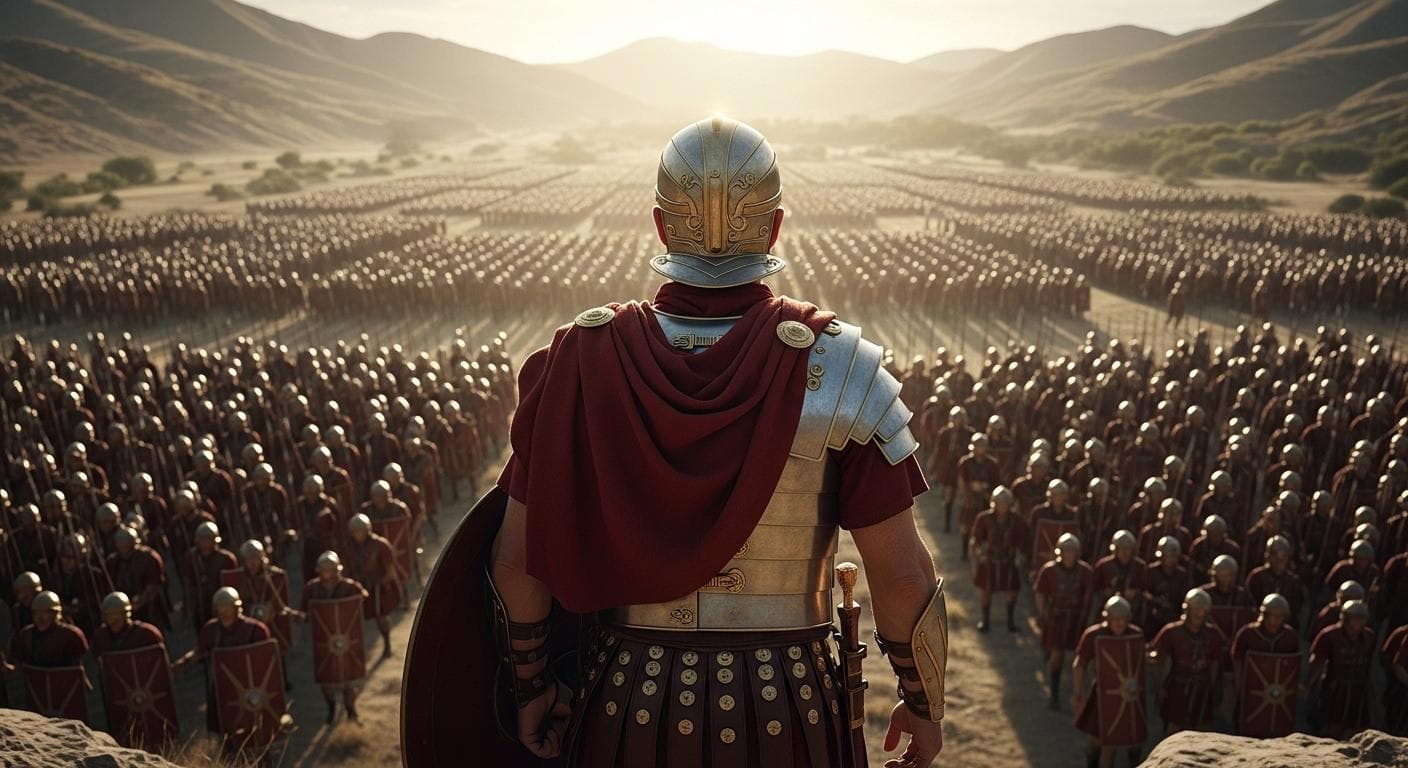
Crossing the Rubicon: From General to Rebel
Caesar used the Triumvirate to secure for himself the governorship of Gaul. Over the next decade, he conducted a brilliant and brutal campaign, conquering the vast territory (modern-day France) and amassing a personal fortune. More importantly, he forged one of the most battle-hardened, fanatically loyal armies in Roman history.
As his power grew, so did the fear and jealousy of his rivals in Rome, particularly Pompey. After Crassus's death in battle, the Triumvirate dissolved. The Senate, now allied with Pompey, ordered Caesar to disband his army and return to Rome as a private citizen, where he would undoubtedly face prosecution for his actions as consul. Caesar knew this was a political death sentence. In January 49 B.C., he made his fateful decision.
The historian Suetonius reports that upon reaching the Rubicon River, the northern boundary of Italy, Caesar hesitated before declaring, "Iacta alea est" - "The die is cast."
By leading his Thirteenth Legion onto Italian soil, he was declaring war on the state. The phrase "crossing the Rubicon" became immortalized as a term for passing a point of no return.
Dictator for Life: Caesar's Reforms and Fatal Miscalculation
Caesar's march on Rome sparked a civil war that he ultimately won, chasing Pompey to Egypt and defeating the last of the senatorial armies. Upon his return, he consolidated power with breathtaking speed. He was named dictator-an old Roman office for emergencies-first for a year, then for ten, and finally, in early 44 B.C., dictator perpetuo-dictator for life.
Caesar was not a tyrant in practice. He initiated popular reforms: creating public works jobs for the poor, reforming the calendar, and granting citizenship to people in the provinces. But he made a fatal miscalculation. While he reformed the state, he did nothing to reform the appearance of power. He collected titles, sat on a golden chair in the Senate, and had his image placed on coins-all things that reeked of monarchy to a people who had overthrown their kings four centuries earlier. He had destroyed the Republic's power but left its empty forms and traditions in place, creating a cognitive dissonance that the old aristocracy could not tolerate.
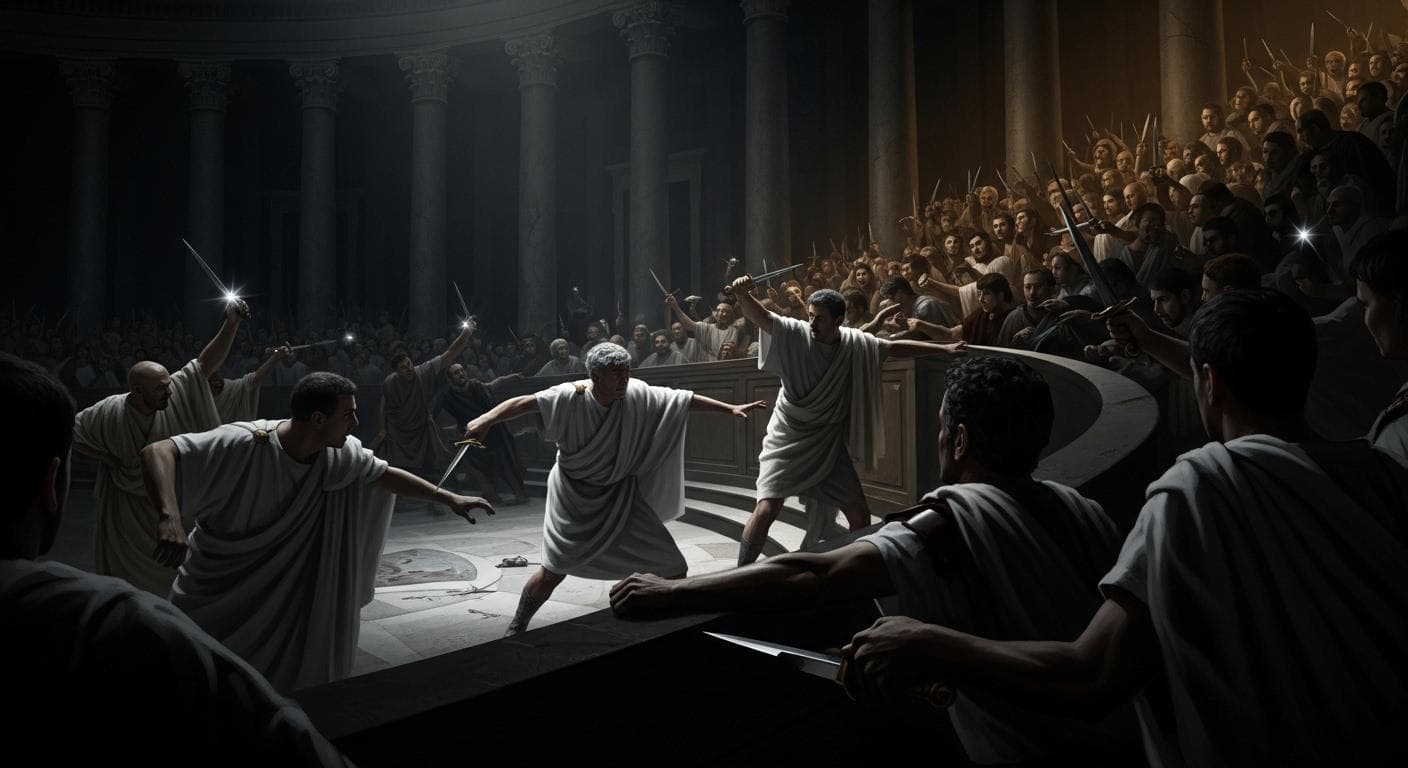
The Ides of March: Assassination and the Power Vacuum
On the Ides of March (March 15), 44 B.C., a group of senators, calling themselves the Liberators, cornered Caesar at the base of a statue of his great rival Pompey and stabbed him to death. They believed that by killing the man, they could save the Republic. They were tragically wrong. They had not killed an idea, only a man, and in doing so, they plunged Rome into thirteen more years of bloody civil war.
Part II: The Chaos - A Second Civil War
The assassins failed to understand that the Republic they sought to restore was already dead. Its institutions had failed, and its armies were loyal to individuals. The power vacuum left by Caesar's death was not filled by a restored Senate, but by a new generation of ambitious warlords.
The Second Triumvirate: A Bloody Alliance
Three men emerged to fill the void: Mark Antony, Caesar's loyal and capable lieutenant; Marcus Lepidus, another of Caesar's generals; and Gaius Octavian, Caesar's grand-nephew and adopted son and heir. At the time of Caesar's death, Octavian was a sickly 18-year-old, but he was cunning, ruthless, and possessed the invaluable asset of Caesar's name and fortune. In 43 B.C., these three, with a now 19-year-old Octavian proving his political prowess, formed the "Second Triumvirate," an official, five-year military dictatorship. Their first act was to unleash a wave of proscriptions-legalized murder-to eliminate their political enemies (including the great orator Cicero) and seize their wealth to fund their armies.
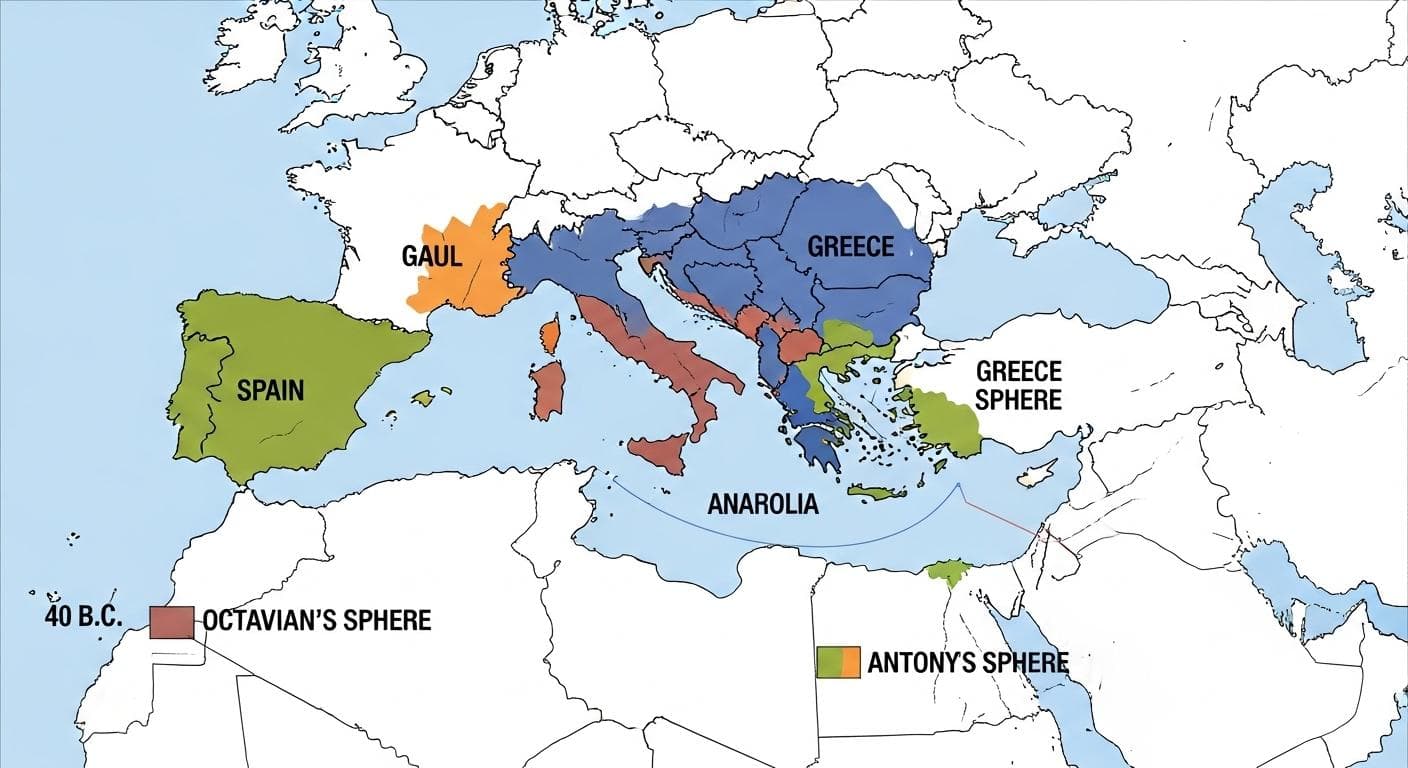
The Clash of Titans: Octavian's West vs. Antony's East
After defeating Caesar's assassins at the Battle of Philippi, the Triumvirate divided the Roman world. Lepidus was soon sidelined, leaving a tense standoff between Octavian in the West (ruling from Italy) and Antony in the East. Antony, based in Alexandria, formed a powerful political and romantic alliance with the Egyptian queen, Cleopatra. Octavian, a master of propaganda in Rome, skillfully portrayed Antony as a decadent, eastern-style monarch under the spell of a foreign seductress, a man who had abandoned his Roman heritage. The stage was set for a final, decisive conflict to determine the future of Rome.
Part III: The Architect - How Augustus Built the Empire
If Caesar was the wrecking ball who demolished the old Republic, his heir Octavian was the master architect who designed and built the new imperial system in its place.
The Battle of Actium (31 B.C.): The Decisive End of the Republic
The final confrontation came at the naval Battle of Actium off the coast of Greece. Octavian's fleet, commanded by his brilliant general Marcus Agrippa, decisively defeated the combined forces of Antony and Cleopatra. The couple fled to Egypt, where they would later commit suicide, leaving Octavian the undisputed master of the entire Roman world. The last Roman civil war was finally over.
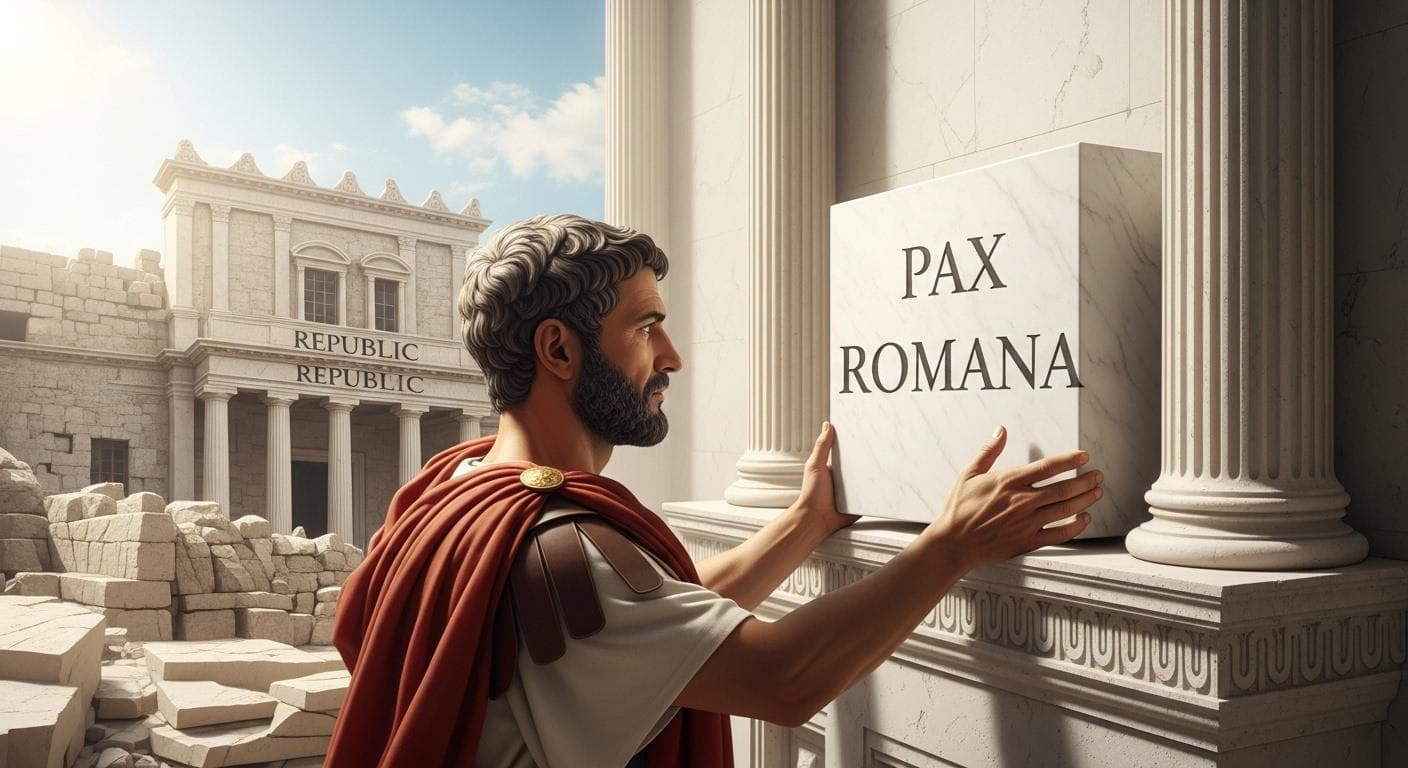
The First Citizen: Augustus's Genius in Masking a Monarchy
Octavian had learned from his great-uncle's fatal mistakes. He knew that Romans would never accept an overt king. So, he embarked on a path of political genius. In 27 B.C., in a carefully staged piece of political theater, he went before the Senate and announced he was restoring the Republic and renouncing all his extraordinary powers. The grateful (and thoroughly intimidated) senators, in turn, begged him to remain and bestowed upon him the new, honorific title of Augustus ("the revered one").
He refused the title of dictator. Instead, he called himself Princeps Civitatis-First Citizen. It was a brilliant illusion. He ensured the Republic appeared to function: the Senate still met, consuls were still elected, and the traditional offices remained. However, Augustus held the real power. He controlled the most important provinces (and therefore most of the legions), had the unwavering loyalty of the army, and held a combination of key republican powers (like the authority of a tribune) that gave him veto power over the Senate and personal immunity. He ruled as an emperor in all but name.
The Augustan Settlement and the Dawn of the Pax Romana
This clever arrangement, known as the Principate or the Augustan Settlement, was the foundation of the Roman Empire. It was a monarchy masterfully disguised as a republic. Augustus gave the Roman elite what they wanted-status, wealth, and the comforting illusion of their traditional roles-while providing the rest of the population with what they craved even more: peace, stability, and an end to a century of devastating civil war. His long and prosperous reign ushered in an unprecedented two-century era of peace and prosperity known as the Pax Romana.
Conclusion: Why the Republic Fell and What It Means Today
The Roman Republic did not fall simply because of the ambitions of Caesar or the cunning of Augustus. It fell because its political and economic institutions, designed for a small city-state, could not cope with the pressures of governing a vast, multicultural empire. Extreme economic inequality, the erosion of political norms, and the privatization of military power created a system so broken that it was ripe for takeover by powerful individuals who promised order in exchange for liberty. This narrative is a key part of the larger story of the Roman Empire's decline and fall.
The story of this transformation is more than just ancient history; it serves as a timeless case study in political science. It demonstrates how easily institutional norms can decay, how economic disparity can fuel political instability, and how a populace, exhausted by chaos and division, might willingly trade democratic freedoms for the promise of stability and security.
What parallels, if any, do you see between the structural problems of the late Roman Republic and the challenges faced by modern nations today? Let us know your thoughts in the comments below.

Comments
We load comments on demand to keep the page fast.