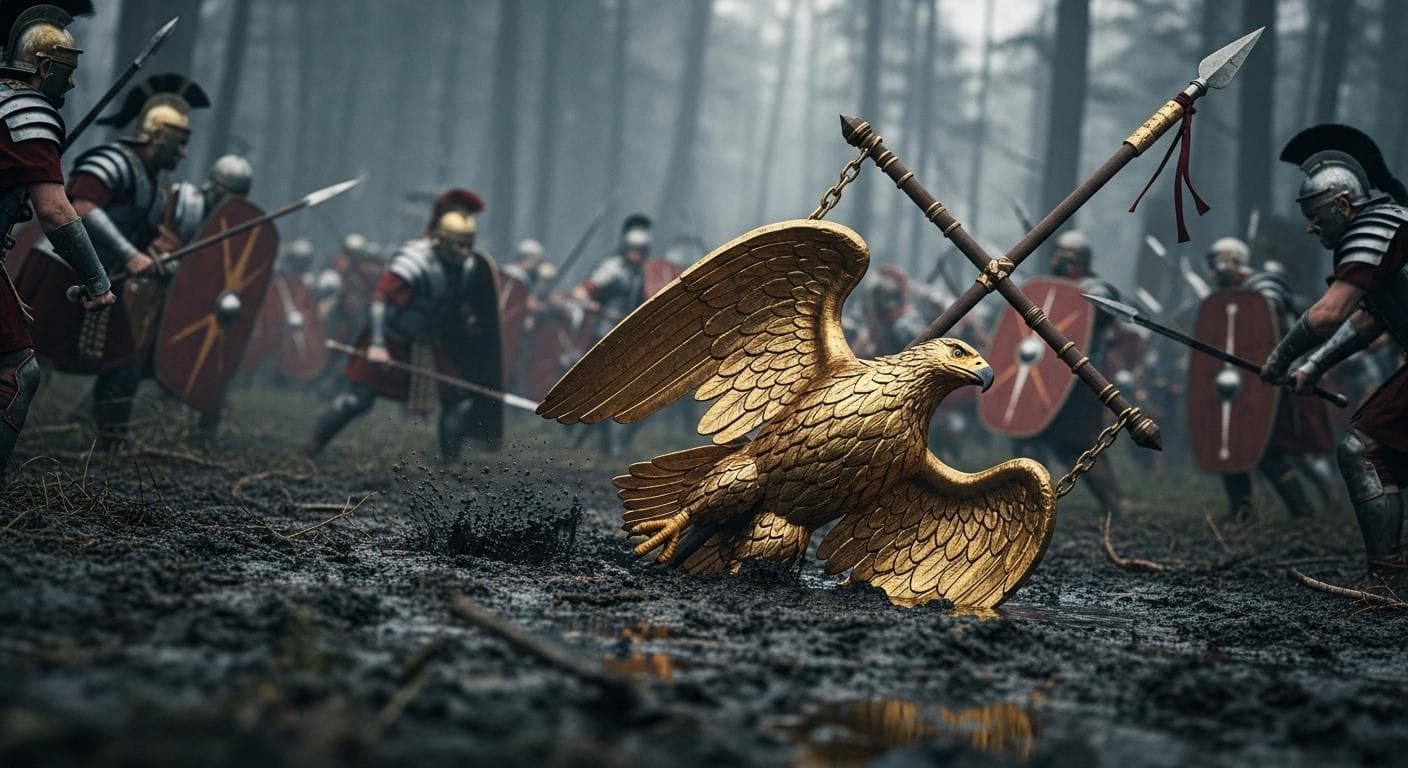
Introduction: More Than a Single Event, A Century-Long Spiral
For centuries, the Roman Empire was the definition of power. Its legions were an unstoppable force, its engineering marvels reshaped the landscape, and its administrative state governed a vast territory from the sands of Egypt to the forests of Britain. At its zenith during the Pax Romana, the empire seemed destined to last forever. Yet, it fell. The question of why has captivated historians for generations, often answered with a laundry list of causes: barbarian invasions, economic collapse, corruption, and overexpansion.
While these factors are all valid, they miss the most critical part of the story. They were not independent problems but interconnected components of a catastrophic, self-reinforcing cycle. The collapse of the Western Roman Empire was not a simple decline; it was a "Doom Loop"- a downward spiral where political instability directly fueled military decay, and that military weakness, in turn, created even more profound political chaos. This article moves beyond the list of causes to reveal the machinery of that collapse, showing how these two forces fed each other until the entire imperial engine ground to a halt. For a comprehensive overview of this era, consult The Ultimate Guide to the Fall of the Roman Empire.
The Imperial Engine: What Made Rome's Political and Military Systems So Dominant?
To understand how the system broke, we must first appreciate how brilliantly it once worked. Rome's dominance was built on a synergistic relationship between its political structure and its military machine.
The Professional Legionary: More Than a Soldier
The classic Roman legionary was the finest soldier of the ancient world. But he was more than that; he was a highly trained, well-equipped, and deeply loyal professional. This was not a militia called up in times of war. The legions were a standing army, and a term of service was a 25-year career that offered citizenship and a pension upon retirement. This professional force was not just skilled in combat but also in engineering, logistics, and construction. They built the roads, aqueducts, and forts that held the empire together. This created a stable, disciplined force loyal to the Roman state, capable of projecting power across thousands of miles.
The Emperor and the Senate: A Delicate (and Deadly) Balance
Politically, the early empire, established by Augustus, maintained a clever fiction. The Emperor held supreme power, particularly over the military, but he ruled in concert with the Senate, preserving the traditions of the old Republic. This balance, while often tense, provided a framework for stable governance, succession, and administration. A strong emperor, backed by loyal legions, could ensure peace and prosperity, which in turn generated the tax revenue needed to pay for those same legions. For nearly two hundred years, this system, despite its flaws, largely worked.
The First Crack: Political Decay During the Crisis of the Third Century
The beginning of the end can be traced to the 3rd century CE, a period of near-constant crisis where the political system fractured, initiating the doom loop.
The "Barracks Emperors": When the Army Ruled Rome
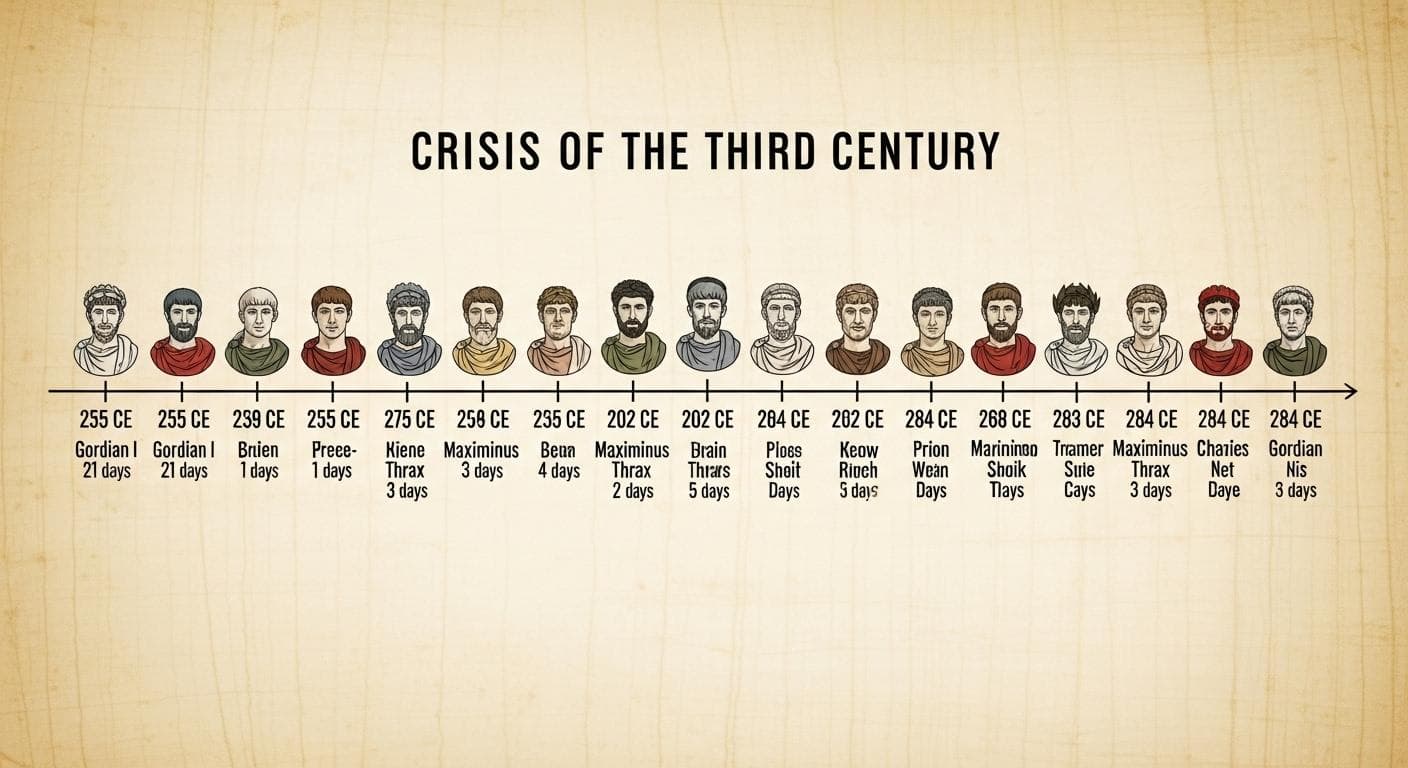
The assassination of Emperor Severus Alexander in 235 CE shattered the established order. What followed was a 50-year period known as the Crisis of the Third Century, where the throne became a prize to be won by the strongest general. Over twenty men were proclaimed emperor in this period, most of whom were provincial army commanders who marched on Rome, seized power, and were subsequently assassinated by their own troops or a rival general. These "Barracks Emperors" had no political legitimacy beyond the swords of their soldiers. Their primary concern was not governing the empire but securing enough plunder and pay to keep their armies loyal, often through devastating civil wars.
The Praetorian Guard: The Emperor's Makers and Breakers
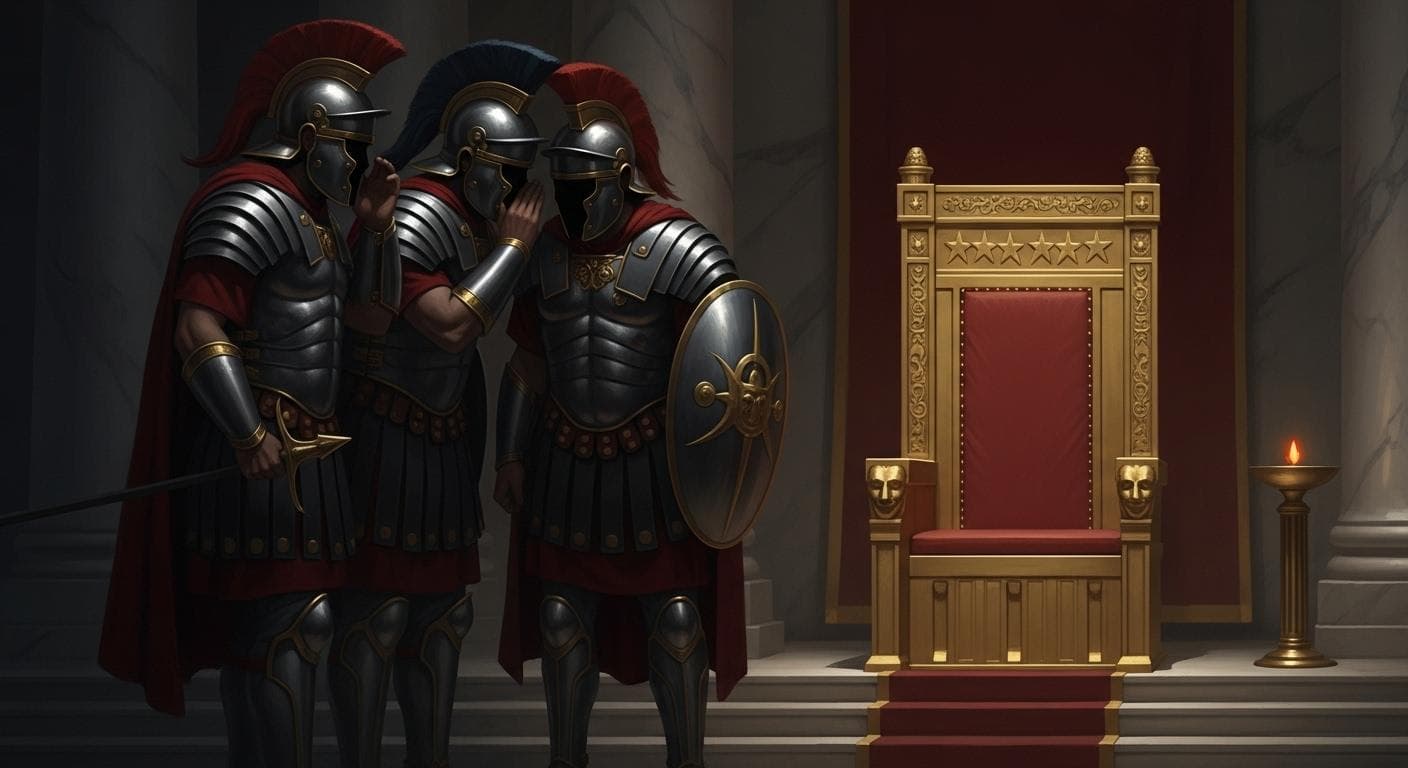
In Rome itself, a more insidious force was at play: the Praetorian Guard. Originally the emperor’s elite bodyguards, they evolved into corrupt kingmakers. They understood that the emperor's life was in their hands, and they used this power to extort, intimidate, and ultimately control the throne. In one infamous incident in 193 CE, they literally auctioned off the imperial title to the highest bidder, Didius Julianus, only to abandon and betray him after a disastrous reign of just 66 days.
Constant Civil War: The True Enemy of the Legions
The ultimate political poison was incessant civil war. Every time a general made a bid for the throne, he would pull his legions away from the frontiers to fight other Roman legions. The empire's best troops were systematically annihilated fighting each other on battlefields in Italy and Gaul instead of defending the Rhine and Danube rivers. This self-inflicted devastation drained the empire of its best manpower and left its borders dangerously exposed.
The Feedback Loop: How Political Chaos Destroyed the Roman Military
This political breakdown didn't just happen alongside military decline; it directly caused it. The constant turmoil starved the military of everything it needed to function: money, manpower, and strategic direction.
The Mercenary Dilemma: Why the "Barbarization" of the Army Failed
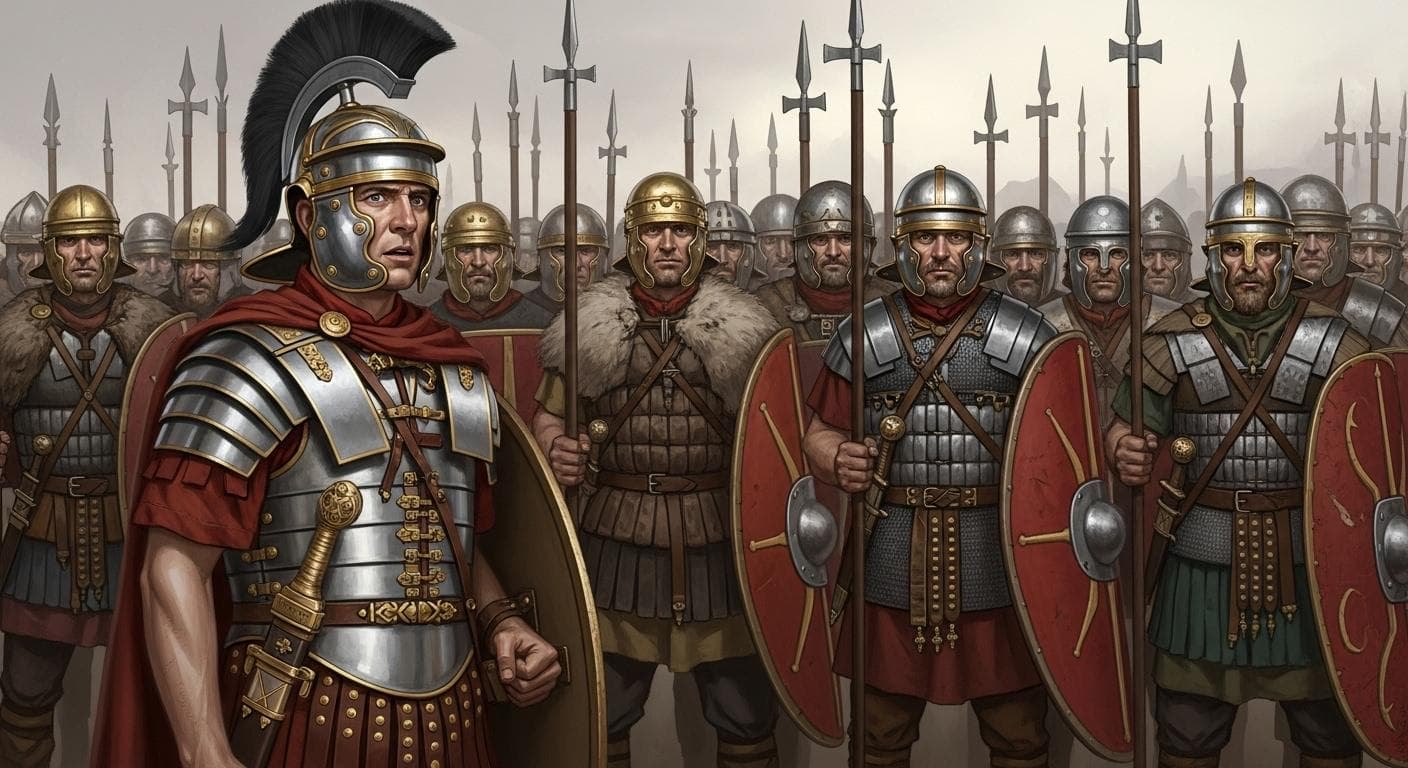
With Roman citizens unwilling to enlist and the best legionaries killed in civil wars, emperors began to rely heavily on foreign mercenaries, often recruited from the very "barbarian" tribes threatening the borders. This is often called the "barbarization" of the army. These troops were skilled warriors, but they were not Roman legionaries. A classic legionary was a citizen-soldier, trained not only in standardized combat but also in engineering and construction. His loyalty was to the state. In contrast, a Gothic or Frankish mercenary was a foederatus- a treaty-ally whose loyalty was to his chieftain and his next paycheck. This shift fundamentally changed the army's character, eroding the engineering skill, logistical capability, and institutional loyalty that defined the classic legions.
Empty Coffers, Unpaid Soldiers: The Economic Cost of Instability
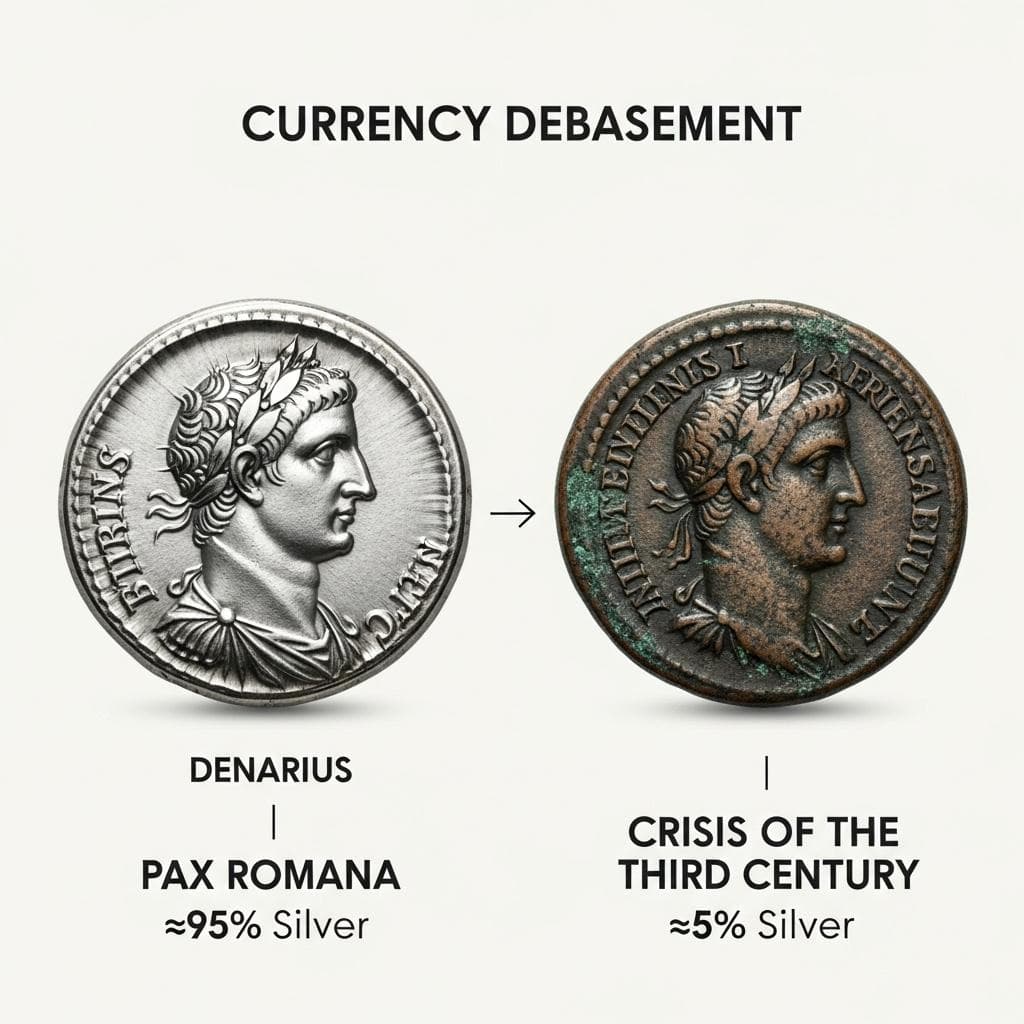
The endless cycle of civil wars was ruinously expensive. To pay troops for their loyalty, emperors repeatedly debased the currency, melting down silver coins and re-minting them with cheaper metals like bronze. This led to hyperinflation, which destroyed the savings of the populace and shattered the tax base. Taxes collected in worthless currency could not pay for an army that needed food, weapons, and supplies. This economic implosion broke the professional army model and forced the state to rely on cheaper, less reliable mercenaries, further fueling the doom loop.
Strategic Paralysis: Defending All Borders, Mastering None
With its massive territory, the empire required a coherent grand strategy to defend its borders. But with emperors changing every few years, long-term strategic planning became impossible. Resources were constantly diverted to fight internal rivals rather than external foes. A commander on the Rhine couldn't rely on reinforcements from the Danube because that army might be marching on Rome to install a new emperor. This strategic paralysis meant Rome was always reactive, plugging holes in a crumbling defensive wall rather than dictating the terms of engagement.
The Great Divide: How Splitting the Empire Sealed the West's Fate
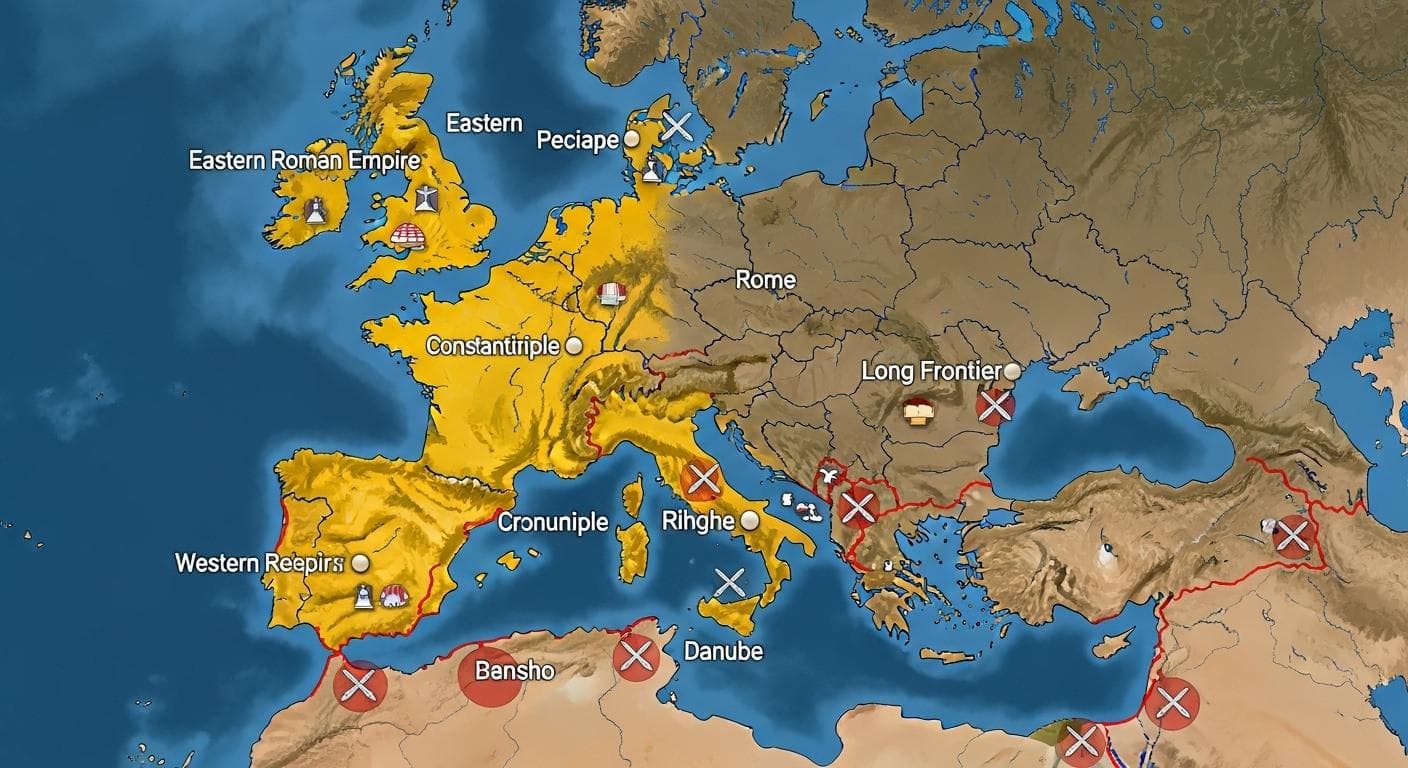
In an attempt to manage the unwieldy empire, Emperor Diocletian and later Theodosius I formalized its division into Eastern and Western halves. While logical on paper, this act ultimately doomed the West.
The Wealthy East vs. The Vulnerable West
The empire's wealth was not evenly distributed. The Eastern Roman Empire contained the rich provinces of Egypt, Anatolia, and the Levant. It had a larger population, a more robust economy, and more easily defensible borders. The Western Roman Empire, by contrast, was more rural, had a smaller tax base, and was saddled with the enormously long and perpetually threatened Rhine-Danube frontier. When the empire split, the West lost access to the wealth and manpower of the East, leaving it to defend the most vulnerable territory with the fewest resources.
A Fractured Command: Fighting Two Different Wars
The split also created two separate strategic and political entities. The Eastern and Western courts often viewed each other with suspicion, competing for resources and influence. Instead of a unified imperial response to threats, the two halves began to act in their own self-interest. The East could pay off invaders to go and attack the West, a strategy it employed more than once. This fractured command structure ensured there would be no coordinated effort to save the empire as a whole.
The Final Blows: When a Weakened State Met Unstoppable Forces
By the late 4th and 5th centuries, the doom loop had rendered the Western Roman Empire a hollow shell. It was in this critically weakened state that it faced a new wave of external pressures it could no longer withstand.
The Gothic Wars: From Refugees to Conquerors
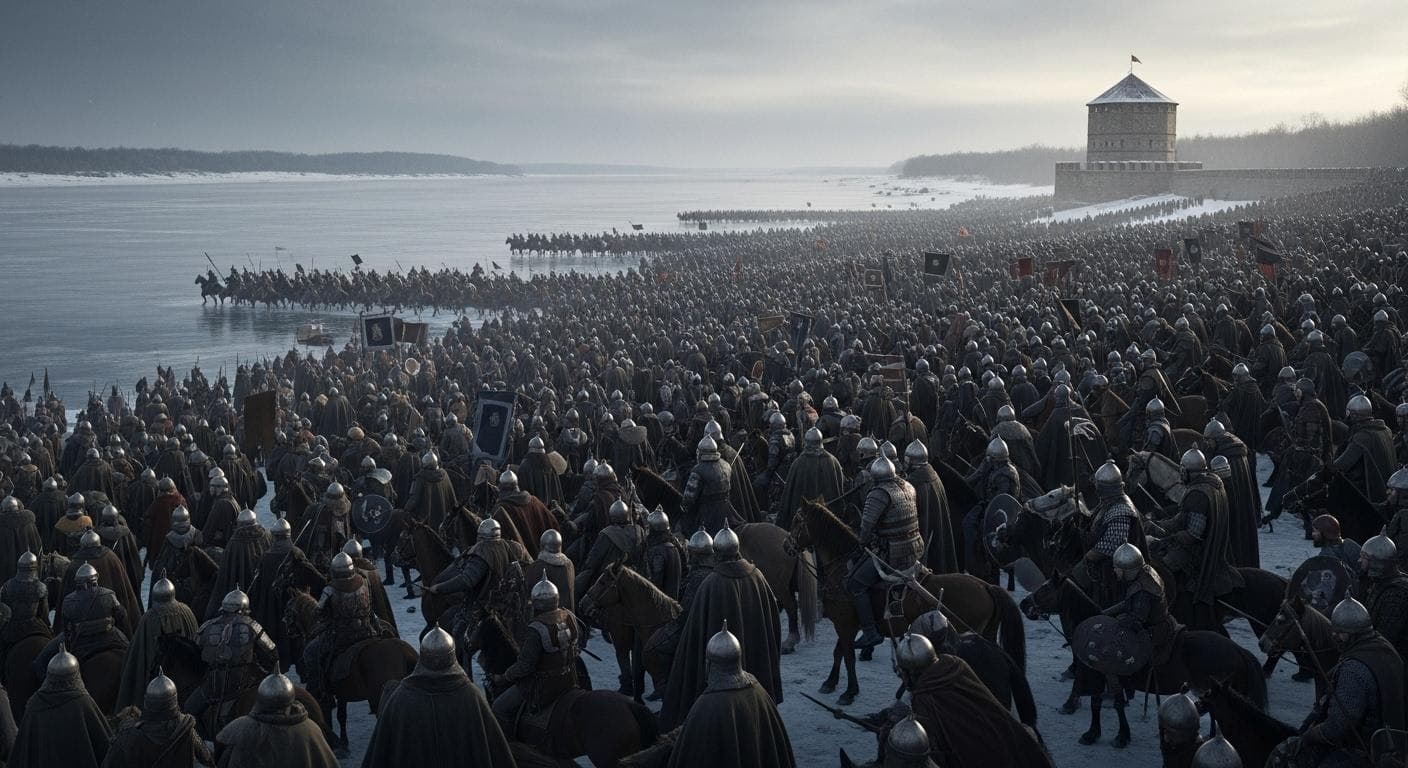
Pushed by the arrival of the Huns from Central Asia, entire Gothic tribes sought refuge across the Danube frontier in 376 CE. A competent Roman state might have integrated these people, turning them into farmers and soldiers. Instead, corrupt local officials exploited and brutalized them, sparking a massive rebellion. The resulting Battle of Adrianople in 378 CE saw a Roman emperor killed and a field army destroyed. This event shattered the myth of Roman invincibility and created a large, hostile, and mobile armed nation within the empire's borders. This period, and its profound impact, is explored in depth in The Barbarian Catalyst: How Gothic Migrations Exposed Rome's Weakness.
Attila's Scourge: The External Shock to a Rotten Core
The campaigns of Attila the Hun in the mid-5th century did not conquer Rome, but they acted as a final, brutal shock to the system. The Huns' raids further drained the West's already depleted treasuries and manpower, pushing more Germanic tribes across the frontiers and creating widespread chaos. The empire was too politically fragmented and militarily weak to mount a sustained defense. The final "fall" in 476 CE, when the barbarian general Odoacer deposed the last Western Roman Emperor, Romulus Augustulus, was less a dramatic conquest and more a quiet end to a process that had been unfolding for two centuries. For a deeper look into the aftermath, read After the Fall: The Enduring Legacy of Rome and the Catholic Church. The empire was already gone; Odoacer was just turning off the lights.
Conclusion: The Inescapable Lessons of Rome's Collapse
The fall of the Western Roman Empire was not the result of a single decisive battle or a fatal flaw. It was a systemic failure, a slow-motion collapse driven by the destructive feedback loop between its political core and its military arm. A state that cannot maintain political stability cannot field a loyal and effective army. An army that is not loyal and effective will, in turn, devour the state from within. Rome's demise serves as a timeless and sobering case study on how internal division is often the most lethal threat to any great power.
What do you think was the critical turning point in Rome's decline? Was it the Crisis of the Third Century, the division of the empire, or the failure to manage the Gothic migrations? Share your thoughts in the comments below.
Frequently Asked Questions (FAQ)
- What was the single biggest political reason for Rome's fall? While many factors contributed, the most critical political reason was the breakdown of a stable succession process for emperors. This led to the Crisis of the Third Century, where near-constant civil war became the norm, paralyzing the government and bleeding the empire of its best soldiers and resources.
- Could a stronger military alone have saved the Western Roman Empire? No. By the 4th and 5th centuries, the problem was systemic. A stronger military would have been impossible to fund and man without a stable political and economic system to support it. Furthermore, a powerful army led by an ambitious general was often as much a threat to the emperor as any external barbarian army.
- How long did it take for the Roman Empire to fall? The process of decline was centuries long. While the final collapse is dated to 476 CE, the underlying causes began much earlier. One could argue the decline started with the end of the Pax Romana around 180 CE, making the fall a process that spanned nearly 300 years.

Comments
We load comments on demand to keep the page fast.