Is Silicon Valley's Favorite Theory a Modern Faith?
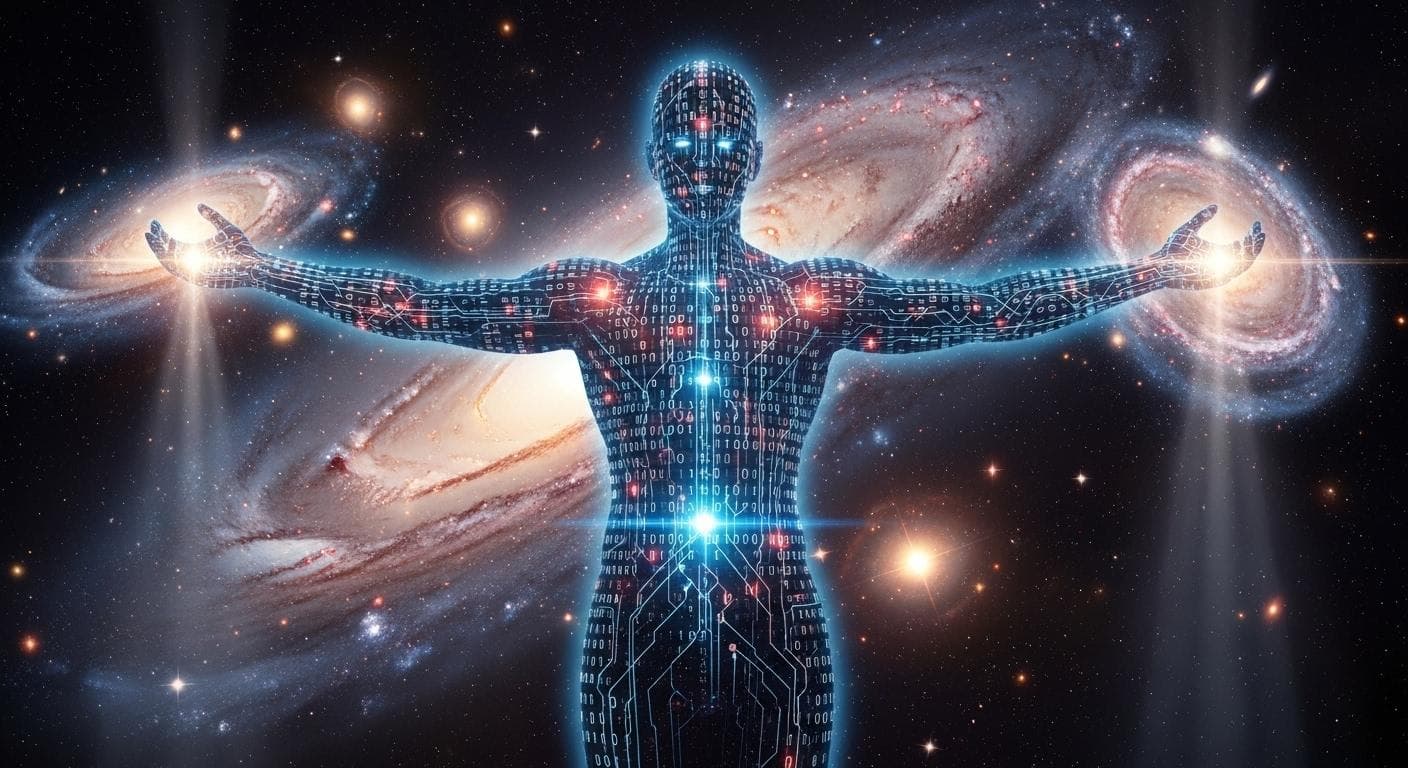
What is reality? For millennia, this question was the domain of philosophers and theologians. But today, it’s just as likely to be debated by physicists, computer scientists, and tech billionaires. The new contender for an answer is as captivating as it is unsettling: we are living in a computer simulation. At first glance, this idea, known as the simulation hypothesis, feels like pure science fiction. Yet, proponents argue that it’s not only possible but statistically probable.
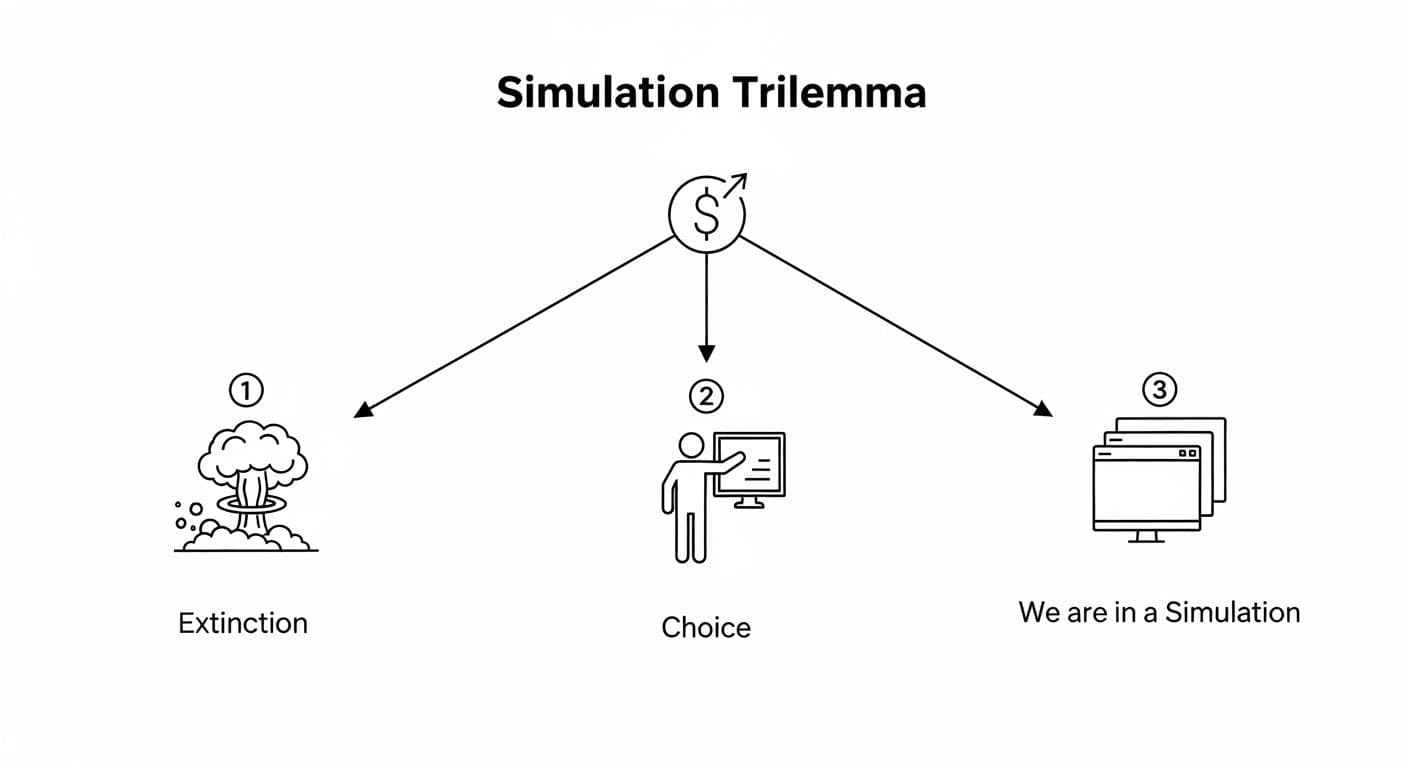
The modern argument was famously articulated in 2003 by Oxford philosopher Nick Bostrom. He proposed a "simulation trilemma," suggesting one of three statements must be true: 1) civilizations like ours almost always go extinct before developing the technology to create high-fidelity reality simulations; 2) advanced civilizations have the capability but universally choose not to run such simulations; or 3) we are almost certainly living inside one. Given the exponential growth of our own computing power, many, like Elon Musk, believe the third option is the most likely. For a deeper dive into his philosophical reasoning, explore Bostrom's Trilemma.
But as we peel back the layers of this high-tech hypothesis, its structure begins to look surprisingly familiar. The concepts of a creator, an underlying set of rules, the nature of consciousness, and even the possibility of an afterlife echo themes that have defined religious thought for thousands of years. Is it possible that simulation theory is not a replacement for religion, but simply a modern retelling of the same ancient story, swapping divine mystery for computational logic? Let's explore the uncanny parallels.
Parallel 1: The Creator God & The Master Programmer
At the heart of most religions is the concept of a creator—an omniscient, omnipotent being who designed and brought the universe into existence. This entity exists outside of our space-time, operating on a level of reality we cannot comprehend. Now, substitute a few words. At the heart of simulation theory is the concept of a programmer—an intelligence with total control over the simulation's code, who initiated the program and exists in the "base" reality, a level above our own. The analogy is nearly perfect. In this framework, the creator's omniscience isn't a mystical attribute but a simple function of system administration. The programmer has root access to every piece of data, from the spin of a particle to the innermost thoughts of a simulated being. Omnipotence is the ability to edit the code, changing physical laws or intervening in events at will.
Parallel 2: Creation Myths & The Great Boot-Up
Theological accounts like Genesis describe a moment of creation ex nihilo—out of nothing. A divine being speaks, and the universe springs into existence. Science offers the Big Bang: a moment 13.8 billion years ago when all space, time, and matter erupted from a singularity. Both concepts, one divine and one scientific, describe a definitive beginning from a state we cannot fully comprehend. Simulation theory offers a third, chillingly logical narrative: The Great Boot-Up. The Big Bang wasn't an explosion; it was the moment the program was executed, the moment the universe.exe file was run. The dormant state before the Big Bang was simply the system before it was switched on.
Parallel 3: Divine Law & The Physics Engine
Religions provide divine laws—moral and physical principles that govern existence. In a simulation, these rules are the physics engine. The speed of light, gravity, and the Planck constant aren't cosmic coincidences; they are hard-coded parameters. As cosmologist Max Tegmark notes, the strict, mathematical nature of our physical laws is precisely what one would expect in a simulated reality. The hard cap on the speed of light, for instance, serves as a brilliant processing optimization, preventing us from traveling far enough to generate an unmanageable amount of new data for the system to render. More startlingly, theoretical physicist James Gates Jr. found that the equations of supersymmetry—a component of string theory—contain structures that are mathematically identical to a specific type of computer error-correcting code. A cosmic spell-check, written into the fabric of reality.
Parallel 4: Miracles & Glitches in the Matrix
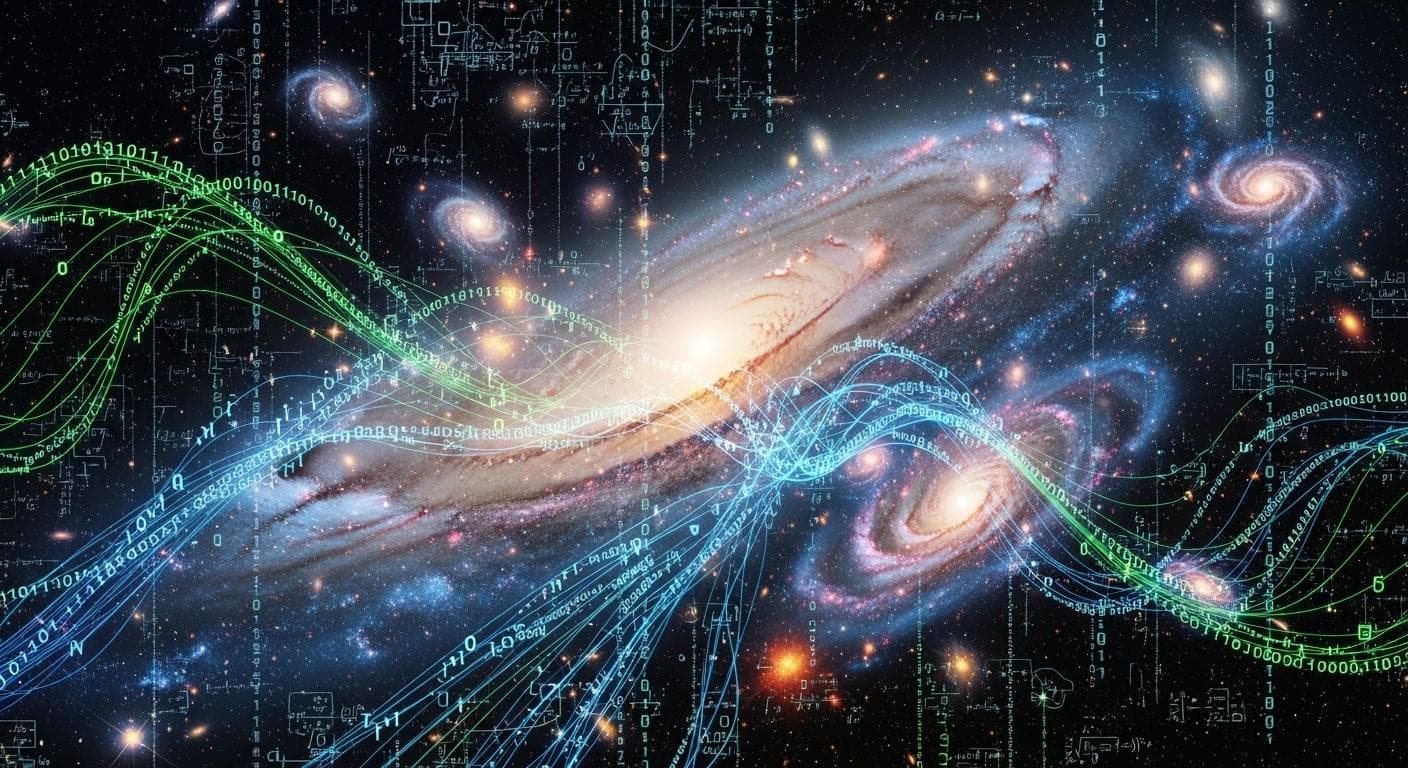
A miracle is a divine intervention that suspends the normal laws of nature. In simulation terms, it could be a glitch, a patch, or an admin intervention. Phenomena like the Mandela Effect—where large groups share detailed false memories of events that never happened—could be interpreted as evidence of a previous version of the simulation being overwritten, leaving residual data in our consciousness. Science fiction author Philip K. Dick proposed that déjà vu is the sensation we get when a variable in the program is changed and our timeline is subtly altered. We feel we've "lived this moment before" because, in a way, we have—in the previous version of the code. While skeptics rightly attribute these to the fallibility of human memory, their narrative fit within the simulation hypothesis is compelling.
Parallel 5: Prayer & Submitting a Support Ticket
In most faiths, prayer is the act of communicating with the divine. It can be a request for intervention, an expression of gratitude, or a search for guidance. What is the computational equivalent? Submitting a query to the system administrator. From this perspective, prayer could be seen as an attempt to send a signal outside the confines of the simulation's standard rules. A desperate plea during a crisis might be the equivalent of a user flagging a critical error. While there's no guarantee the 'admin' is listening or willing to act, the underlying impulse—to reach out to the architect of one's reality—is identical.
Parallel 6: Free Will vs. Predestination (The User vs. The Code)
Theological debate has long centered on the conflict between free will and a divine plan. If God is omniscient, are our choices truly our own? Simulation theory recasts this ancient dilemma in digital terms. Are we 'Player Characters' (PCs) with genuine agency, whose consciousness allows us to make unscripted choices and act as independent users within the system? Or are we 'Non-Player Characters' (NPCs), complex algorithms running on a pre-written script, possessing only the illusion of free will? Our feeling of making a choice might be nothing more than a subroutine executing its inevitable path.
Parallel 7: The Soul & Consciousness as Data
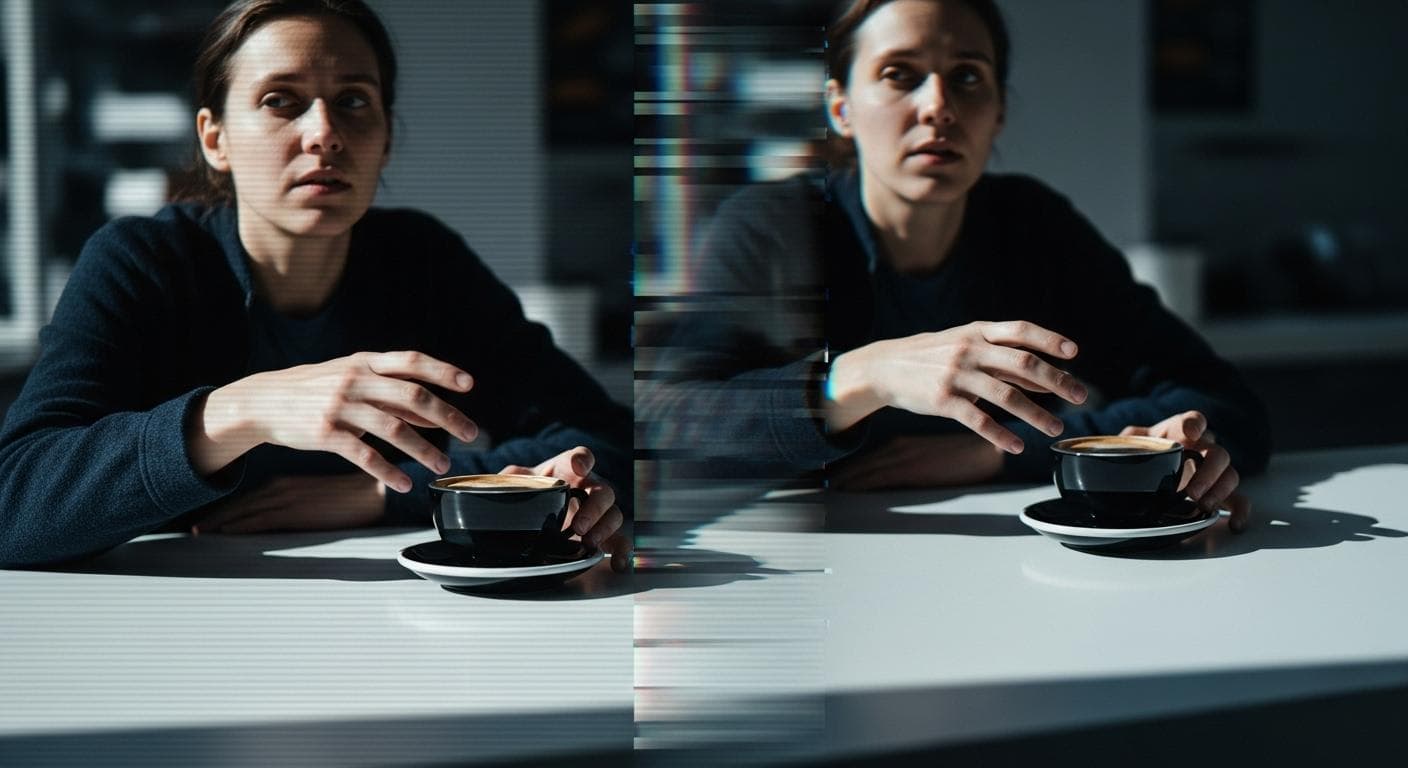
Religions posit the existence of an immortal soul—an essential, non-physical part of us that defines who we are. In the simulation framework, our consciousness is not an ephemeral spirit but an incredibly complex data stream. Our experiences, memories, and personality are just information being processed. This recasts our very identity from something sacred and unique into something that could potentially be copied, stored, or even edited.
Parallel 8: The Afterlife & Logging Off
If consciousness is data, what happens after death? Simulation theory offers its own set of disquieting possibilities that mirror religious concepts of the afterlife:
- Deletion: Our program is terminated and our data is wiped. This is the technological equivalent of atheistic cessation.
- Session End: Our consciousness "logs off" and returns to base reality, mirroring ascension to heaven or a higher plane.
- Re-instantiation: Our consciousness data is saved and re-inserted into a new simulation or a different character, a computational version of reincarnation.
The question of salvation becomes a question of data preservation.
Parallel 9: Ancient Echoes of a Simulated World
While the language of computation is new, the idea that our world is not the "real" world is ancient. Several philosophical and religious traditions contain concepts that are eerie precursors to the simulation hypothesis.
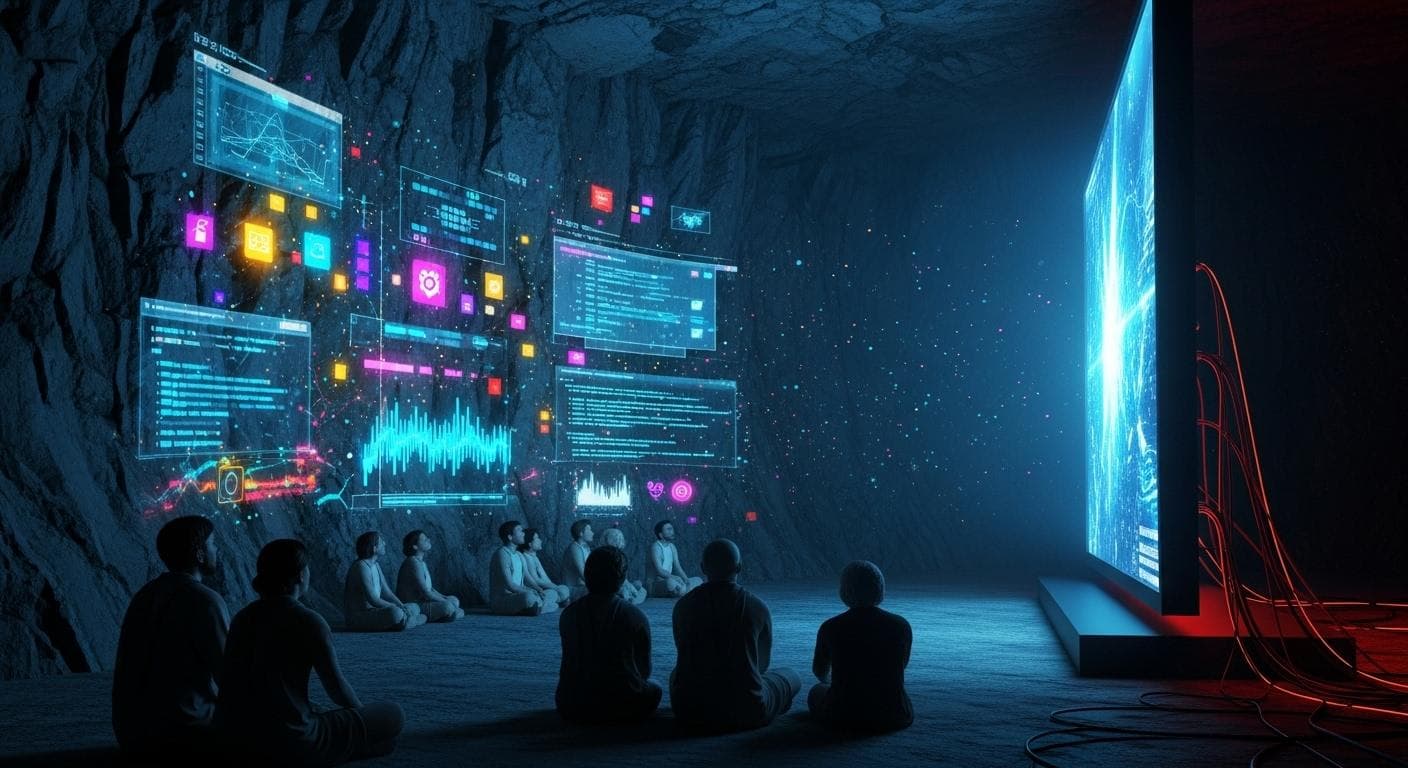
- Plato's Allegory of the Cave: The Greek philosopher described prisoners who see only shadows on a wall, mistaking them for reality. Is our universe just the shadow play on the wall of a vaster, truer reality?
- Hinduism and Maya: In Hindu philosophy, Maya is the cosmic illusion that the phenomenal world is real. It suggests our reality is a veil concealing the ultimate truth (Brahman).
- Gnosticism: This mystical tradition posited that the material world was created not by a perfect God, but by a flawed entity called the Demiurge. This perfectly mirrors the idea of being conscious entities trapped in a simulation created by an imperfect or indifferent programmer.
The Ultimate Evidence: Quantum Physics & The Observer Effect
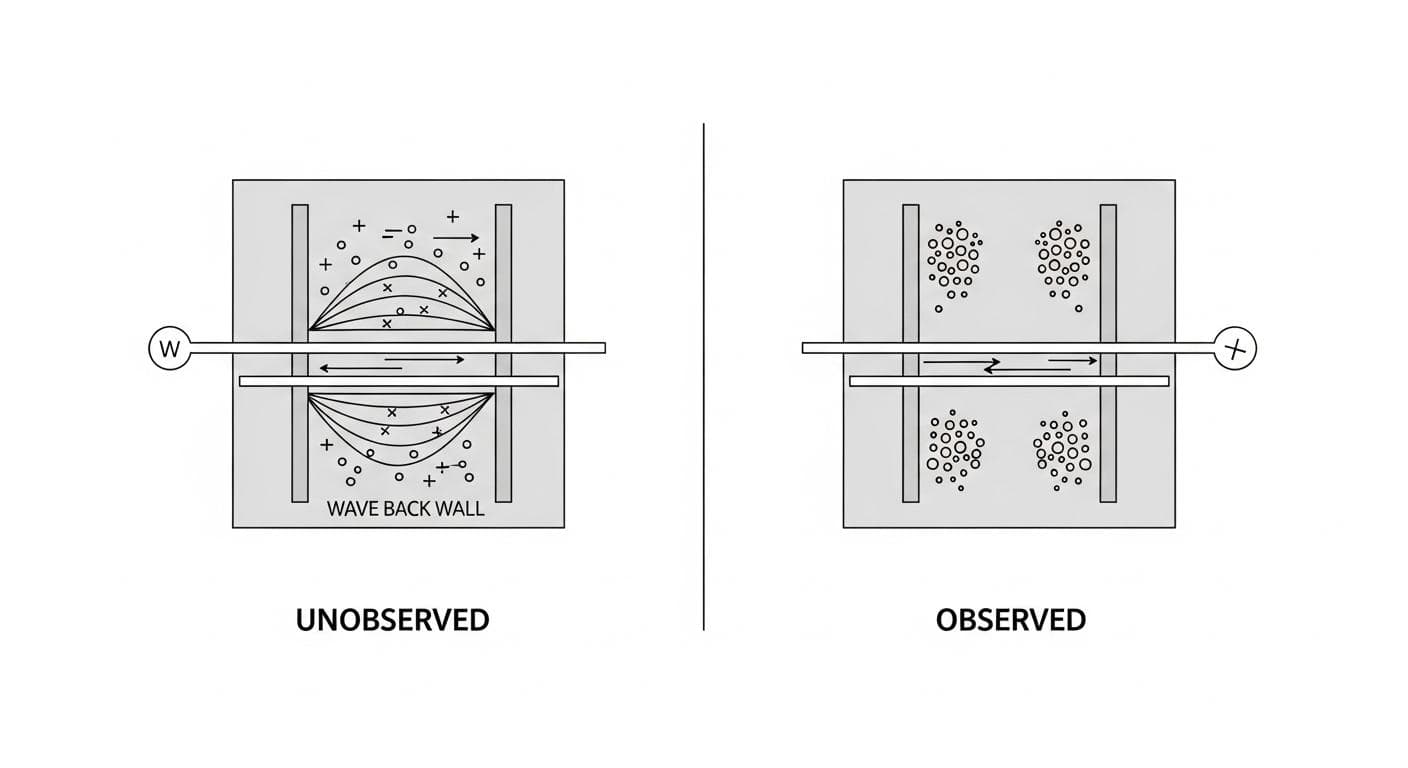
The most compelling evidence for the simulation hypothesis comes from quantum mechanics. The double-slit experiment reveals that particles like electrons behave differently depending on whether they are being observed. When unobserved, they act like waves of probability. The moment a detector observes them, they instantly "collapse" and behave like solid particles.
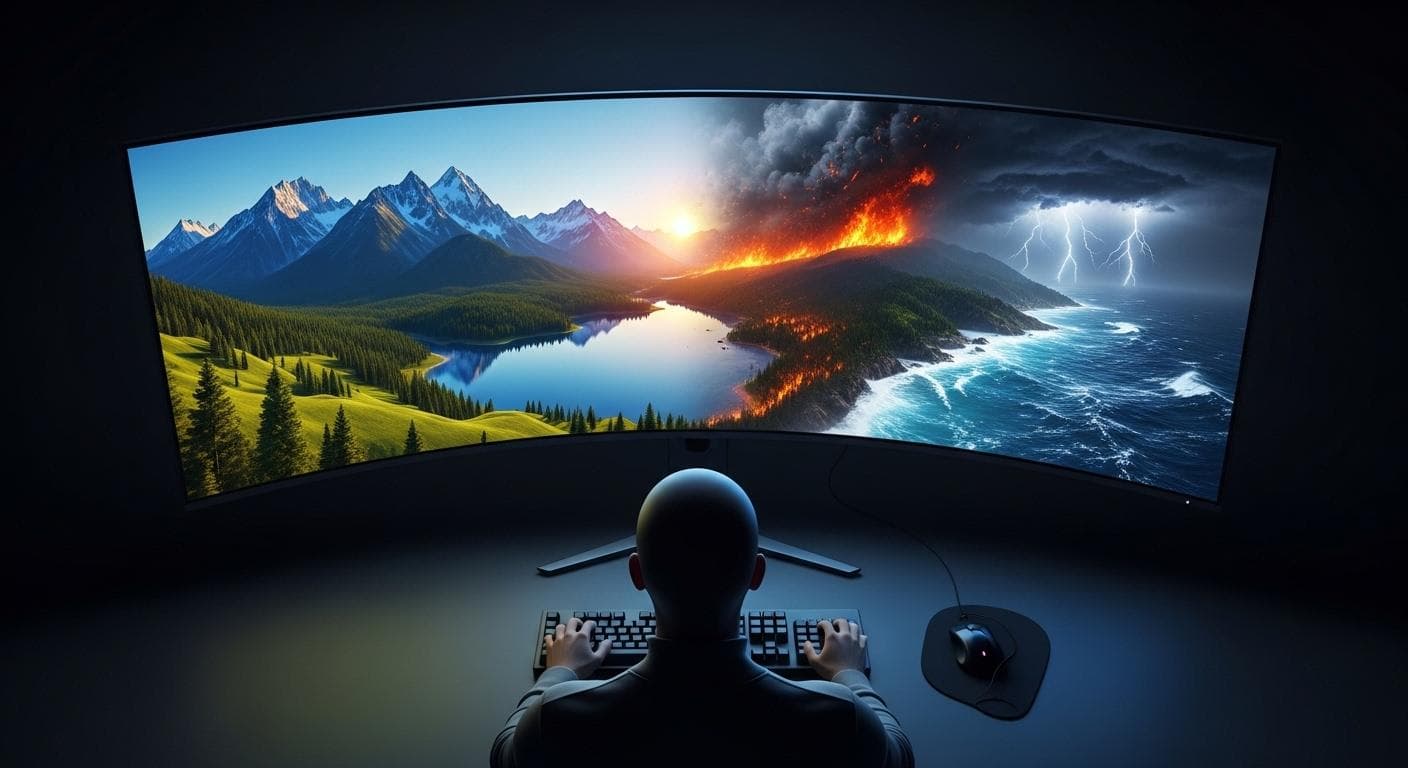
It’s as if reality waits for us to look before it bothers to render itself in full detail. This is shockingly similar to how video games optimize processing power by only rendering what the player is currently looking at. Physicist John Wheeler's "delayed-choice" experiment showed this goes even further: the decision to observe a particle after it had already passed the slits could retroactively change how it behaved in the past. This act defies linear time but makes perfect sense if time itself is just a programmable dimension within a simulation.
Parallel 10: The Problem of Evil & The Indifferent Programmer
If a benevolent, all-powerful God exists, why is there so much suffering? This "Problem of Evil" has challenged theologians for centuries. Simulation theory offers a colder explanation. The programmer might not be benevolent; they could be a scientist unconcerned with their data points. The simulation could simply be running on autopilot, with the programmer having long since moved on, leaving the code to execute on its own, bugs and all. In this context, evil and suffering aren't part of a divine plan; they are features of the program, emergent properties of its complex rules, or simply system errors that have gone unpatched.
A New Faith for a Digital Age?
The parallels are impossible to ignore. A creator outside of time and space, a world governed by fixed laws, the potential for intervention, and a deep uncertainty about the true nature of our consciousness. Both frameworks attempt to answer the biggest questions of our existence, arriving at remarkably similar structures, albeit with different vocabularies.
Ultimately, the simulation hypothesis cannot be proven or disproven, placing it firmly in the realm of metaphysics. Belief in a Master Programmer requires a leap of faith just as belief in a Creator God does. Perhaps the most profound insight is not whether we are right or wrong, but that our search for meaning continually leads us back to the same archetypal story: that this reality is not all there is, and that we are part of a plan far grander and more complex than we can currently comprehend.
So, what do you think is the biggest difference between faith in a divine plan and belief in a cosmic simulation? Is there one at all? Let us know your thoughts in the comments below.

Comments
We load comments on demand to keep the page fast.