What is reality? It's a question philosophers have pondered for millennia, but in the 21st century, it has taken on a startling new dimension. Thanks to science fiction, video games, and high-profile endorsements from figures like Elon Musk, the idea that our universe is a sophisticated computer simulation has rocketed from the fringes of thought into mainstream conversation. But beneath the pop-culture surface lies a powerful and deeply unsettling piece of philosophical reasoning known as the Simulation Argument.
This isn't just a vague feeling that "things don't seem real." It's a structured argument that uses logic and probability to force us into a corner, leaving us with three profoundly strange possibilities for the nature of our existence. And once you understand it, you may never look at the world the same way again.
It's Not Sci-Fi: The Difference Between the Simulation "Hypothesis" and the "Argument"
Before we dive into the logic, it's crucial to separate two related but distinct ideas that are often confused.
The Hypothesis: "We live in The Matrix."
The Simulation Hypothesis is the straightforward, popular claim that our reality is an artificial one. It's the world of The Matrix, where everything we see, touch, and feel is just code running on some unimaginably powerful computer. This is a speculative statement about the state of our world. It might be true, or it might be false, and many scientists point to phenomena like the bizarre rules of quantum mechanics or the universe's apparent mathematical underpinnings as potential clues.
The Argument: "One of three astonishing things MUST be true."
The Simulation Argument is different. It doesn't claim we are in a simulation. Instead, it argues that, based on a few reasonable assumptions about the future of technology, one of three specific propositions must be almost certainly true. It's a logical trap, a trilemma that forces a conclusion regardless of which path you take. The argument doesn't depend on finding "glitches in the Matrix"; it rests entirely on reasoning about civilizations, technology, and probability.
Meet the Architect: Who is Nick Bostrom?
The modern formulation of this powerful idea comes from Nick Bostrom, a Swedish philosopher at the University of Oxford. In his seminal 2003 paper, "Are You Living in a Computer Simulation?", Bostrom laid out the trilemma with academic rigor. His work elevated the concept from a sci-fi trope to a serious topic of philosophical and scientific debate. Bostrom's argument isn't about proving we're simulated; it's about forcing us to confront the logical consequences of our own potential technological trajectory.
Unpacking the Trilemma: A Guided Tour of Humanity's Three Possible Fates
Bostrom's argument begins with the assumption that consciousness can be simulated. If you accept that it's physically possible to recreate a conscious mind within a computer, then one of the following three statements is almost certainly true.
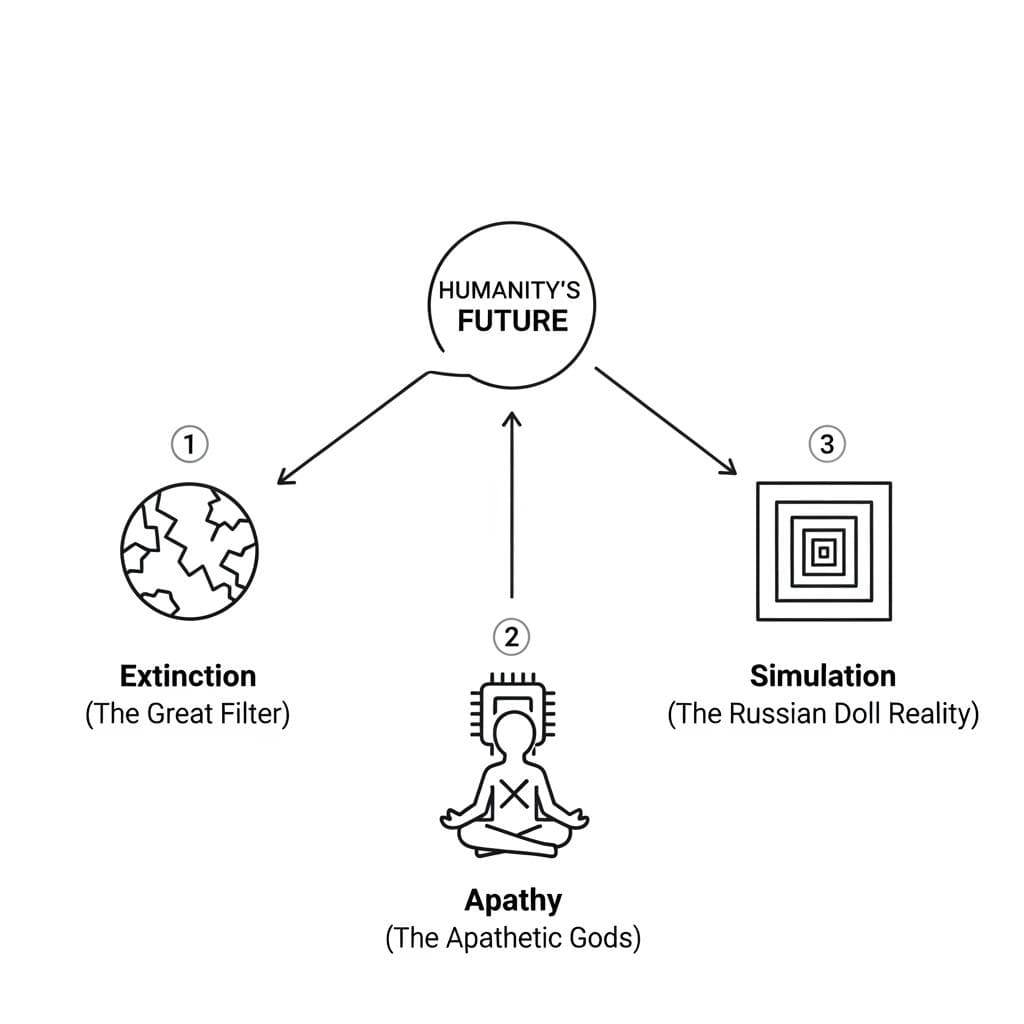
Prong 1: The Great Filter - We Go Extinct Before Becoming "Posthuman"
This is the grim option. The first possibility is that species like ours almost always destroy themselves before they reach a stage of technological maturity Bostrom calls "posthuman." A posthuman civilization would possess technology far beyond our own-mastery of planetary engineering, artificial superintelligence, and, crucially, the computational power to create vast numbers of high-fidelity simulations of their ancestors (that's us).
If this proposition is true, it means there's a "Great Filter" ahead of us. This could be anything from nuclear war or an engineered pandemic to uncontrollable climate change or a hostile AI takeover. It implies that the answer to the Fermi Paradox ("Where are all the aliens?") is that no one ever makes it past our stage. We are, in this scenario, doomed to go extinct before we can ever build the machines that could simulate us.
Prong 2: The Apathetic Gods - We Gain God-Like Power but Lose Interest in Our Past
This is the philosophical option. In this scenario, we (or other civilizations) do survive to become posthuman. We develop the god-like technological power to run countless simulations. However, for some reason, we choose not to. Perhaps posthuman civilizations develop a universal ethical code that forbids simulating conscious beings, viewing it as a form of cosmic slavery. Maybe they simply lose all interest in their evolutionary past, finding it boring, primitive, or irrelevant to their transcendent state of being.
If this is true, it means that nearly 100% of advanced civilizations, despite having the capability, decide against running what Bostrom calls "ancestor simulations." The interest in creating a detailed simulation of 21st-century Earth would be vanishingly small across the cosmos. They could, but they just don't.
Prong 3: The Russian Doll Reality - We Are Almost Certainly Inside a Simulation
This is the mind-bending conclusion. If the first two propositions are false-meaning civilizations don't all go extinct (Prong 1 is false) AND they don't lose interest in simulating their past (Prong 2 is false)-then a startling consequence emerges.
If even a fraction of posthuman civilizations start running ancestor simulations, the sheer number of simulated realities would become astronomically large. A single posthuman civilization could run billions of simulations of its past, each containing billions of simulated conscious beings.
This leads to a simple, brutal numbers game. For every single "base reality" where a civilization first evolves, there would eventually be billions upon billions of simulated realities. If you are a conscious being, the odds that you are in the one, unique base reality become infinitesimally small compared to the odds that you are in one of the countless simulated ones. You are, almost certainly, living inside a simulation.
The Statistical Heart of the Argument: Why Prong 3 Is the Default Conclusion
Bostrom's argument is fundamentally a statistical one. It forces you to choose: either we're doomed, or we'll become ethically enlightened and uninterested in our past, or we're code. There's no fourth option.
Base Reality vs. Simulated Realities: A Simple Numbers Game
Imagine a future where humanity becomes posthuman and decides to run 10,000 detailed ancestor simulations of the 21st century. In this scenario, there is one "real" 21st century (the original one) and 10,000 simulated ones. Every person in every simulation believes their reality is the real one.
Now, pick a random person from this entire set of 10,001 realities. What is the probability that they are from the original, base reality? It's 1 in 10,001, or about 0.01%. The probability that they are in a simulation is 99.99%. As the number of simulations increases, the odds of being in base reality approach zero.
What is an "Ancestor Simulation"?
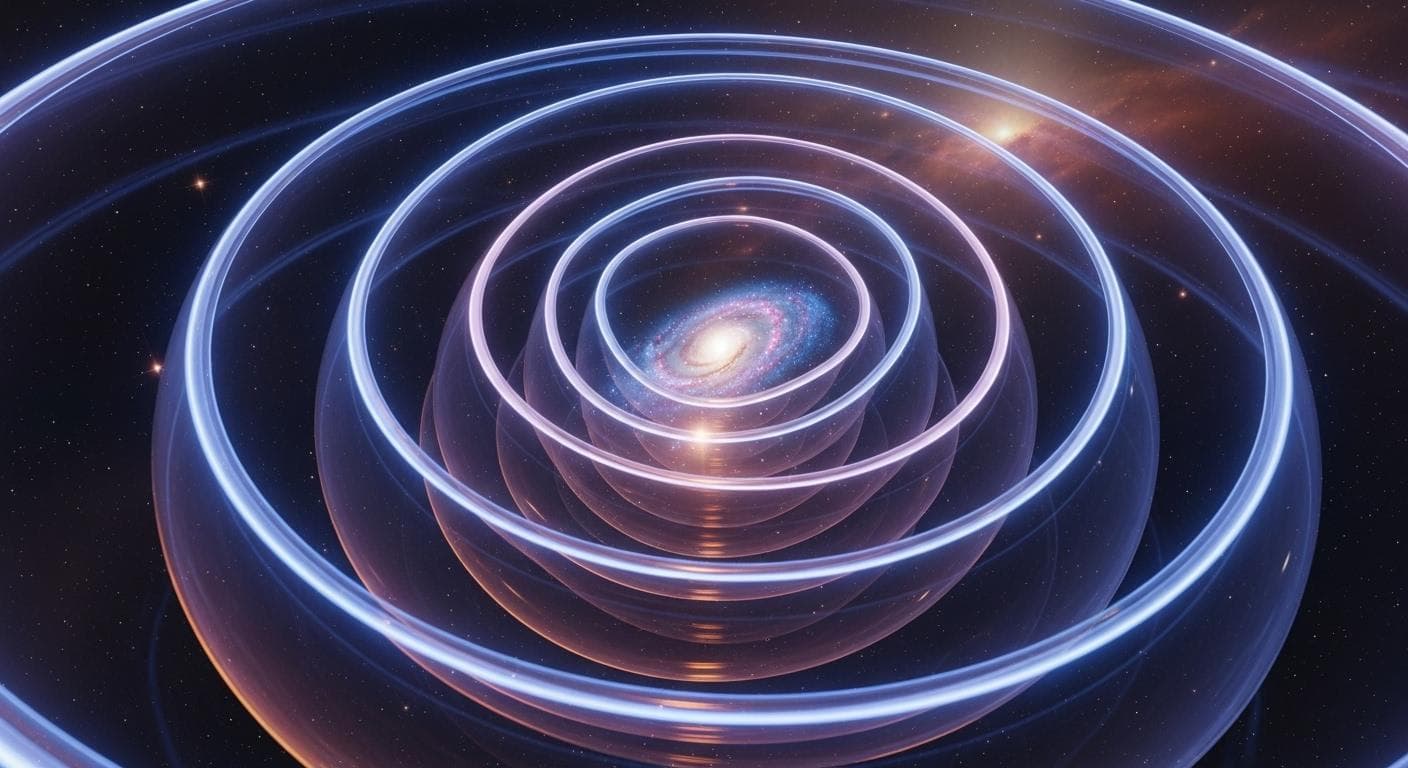
This is a key concept. An ancestor simulation isn't just a video game. It's a high-fidelity simulation of a civilization's own evolutionary history, populated by conscious, self-aware beings who don't know they are simulated. Why would anyone run one?
- Scientific Research: To understand the fundamental laws of sociology, economics, and psychology by running history over and over with different variables.
- Art and Entertainment: The ultimate immersive historical drama or open-world game.
- Digital Afterlife: Perhaps a way to "resurrect" every human who ever lived in a digital utopia (or dystopia).
The motivations are numerous, making the assumption in Prong 2-that no one would be interested-a very strong claim to make.
The Strongest Counterarguments: Why Bostrom Might Be Wrong
Bostrom's argument is logically tight, but it rests on assumptions that can be challenged. Critics have raised several powerful objections.
The Computational Problem: Can a Universe Really Be Simulated?
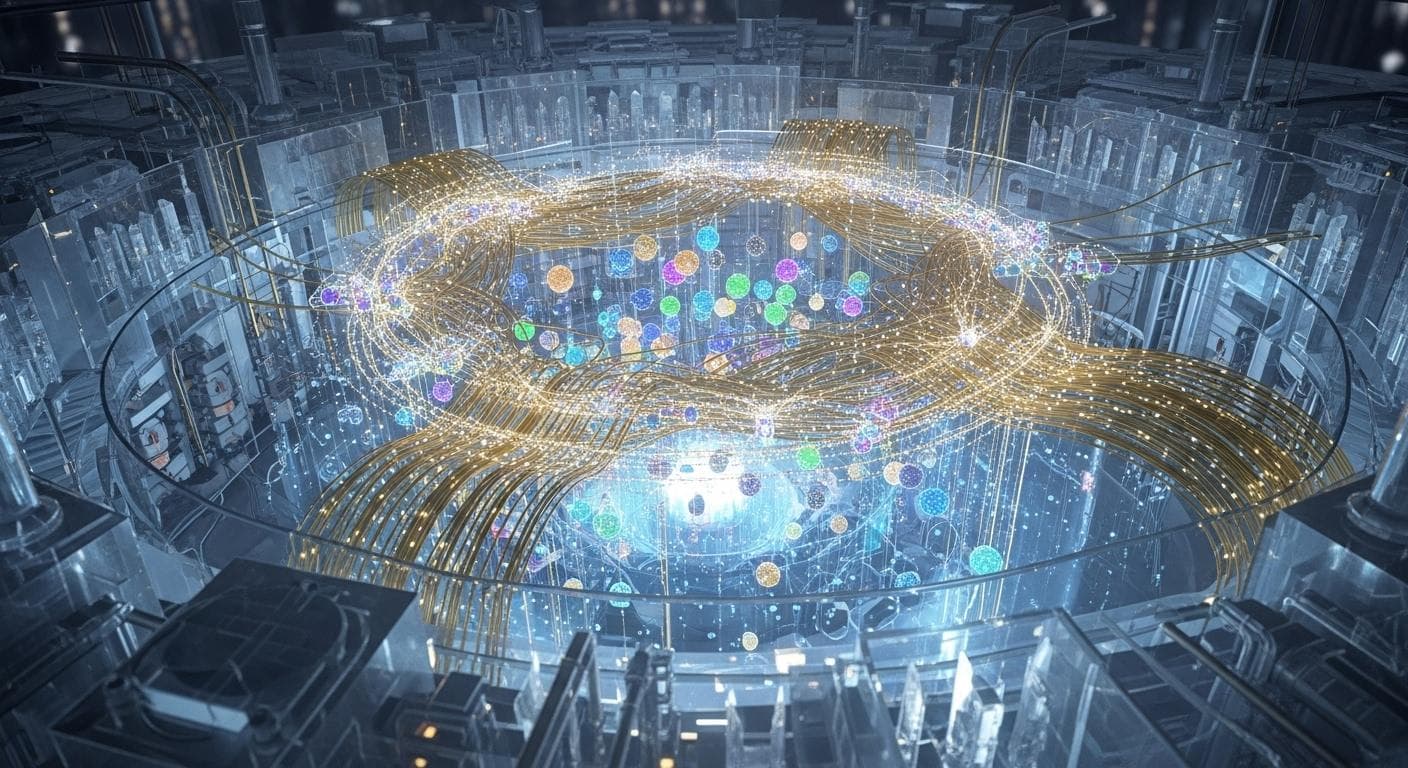
Critics like physicist Michio Kaku argue that the computational resources required to simulate an entire universe down to the quantum level are physically impossible. The number of atoms in the known universe is estimated to be around 10^80. Simulating the state of every single particle would require a computer larger than the universe itself.
However, proponents counter that a simulation wouldn't need to be perfect. Like a video game, it would only need to render the parts of reality that are being observed. The strange behavior of particles in quantum mechanics, which seem to exist in a state of probability until measured, could be interpreted as a form of computational shortcut or "lazy rendering."
The Consciousness Problem: Can You Code a Soul?
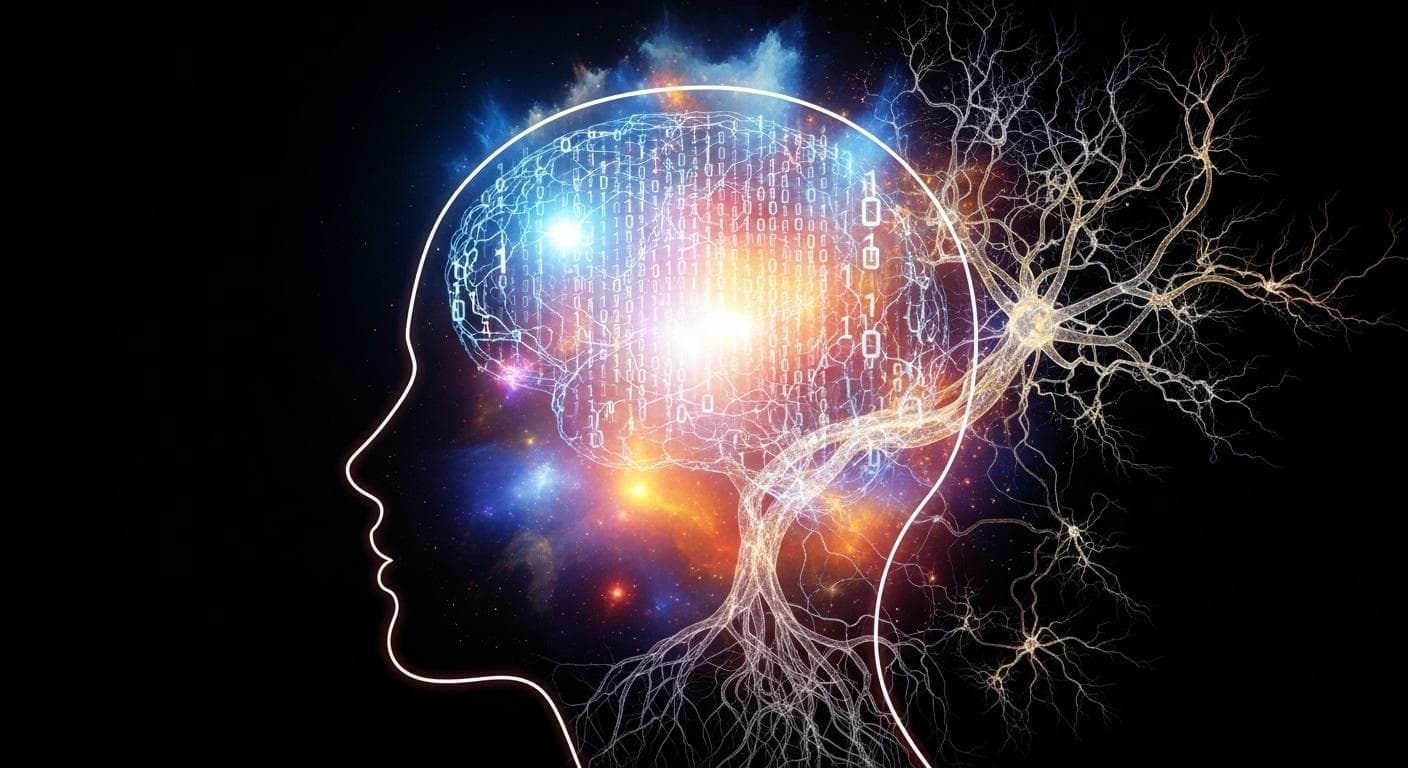
The entire argument hinges on the idea that consciousness is computable-that it's an emergent property of complex information processing that can be replicated in a silicon (or other) substrate. This is far from a settled question. Philosophers and neuroscientists are still grappling with the "Hard Problem of Consciousness": why and how does subjective experience arise from physical processes? If consciousness is non-physical or requires some specific biological property that cannot be simulated, then the entire argument falls apart. No simulated being would be truly conscious, and we, being conscious, would know we are in base reality.
The Motivation Problem: Would Our Descendants Even Bother?
This is a deeper look at Prong 2. Is it really plausible that our vastly more intelligent and powerful descendants would want to simulate us? It's a form of anthropomorphism to assume they would share our current scientific or entertainment-based curiosities. Their motivations might be utterly alien to us. Furthermore, running simulations of suffering beings could be seen as a monstrous ethical crime. Perhaps any civilization wise enough to reach the posthuman stage is also wise enough to not create digital prisons for their ancestors.
Conclusion: What Does Bostrom's Trilemma Mean for Us?
Bostrom's Trilemma is not proof that we are living in a simulation. Rather, it's a profound intellectual tool that forces us to think critically about our place in the cosmos and the potential futures of intelligent life. It reveals that our ordinary, common-sense view of reality is just one of three extraordinary possibilities.
Ultimately, the argument acts as a mirror, reflecting our own technological optimism and our deepest existential fears. Whether we are destined for extinction, for a future as apathetic gods, or are already the digital ghosts of a civilization long past, the trilemma guarantees that the truth about our reality is far stranger than we can comfortably imagine.
What do you think is the most likely of the three prongs? Do you believe humanity is headed for extinction, will lose interest in its past, or are the odds simply in favor of us being a simulation? Let us know your thoughts in the comments below.

Comments
We load comments on demand to keep the page fast.