
The Feeling We All Know: When Reality Feels- Wrong
Have you ever walked into a room and been hit with an overwhelming, crystal-clear feeling that you’ve lived this exact moment before? Or argued with friends over a movie quote or brand name you remember with absolute certainty, only to find out your memory is wrong? These strange moments, often dismissed as brain farts or coincidence, are what many call "glitches in the Matrix." They are tiny cracks in the facade of everyday life that leave us questioning the very nature of reality.
For most, it’s a fleeting curiosity. But for a growing number of scientists, philosophers, and technologists, these personal anomalies are a gateway to one of the most profound and unsettling questions of our time: what if our universe isn't real?
Defining the "Glitch": More Than Just Coincidence?
A "glitch in the Matrix" refers to any experience that seems to defy the logical, consistent rules of reality as we know it. The term, popularized by the 1999 film The Matrix, has become a catch-all for phenomena that feel like bugs in a computer program. These include:
- The Mandela Effect: Large groups of people sharing the same false memory of a historical event or pop culture detail.
- Déjà Vu: The uncanny sensation of having already experienced a new situation.
- Unexplained Coincidences: Events that seem too improbable to be random chance, suggesting an underlying pattern or script.
While easy to laugh off, these experiences tap into a deeper philosophical question that has been asked for centuries, from Plato's Allegory of the Cave to modern quantum physics.
From Pop Culture to Plausible Theory: The Rise of the Simulation Hypothesis
The modern foundation for this idea is the Simulation Hypothesis, most famously articulated by Oxford philosopher Nick Bostrom in his 2003 paper. Bostrom wasn't arguing that we are in a simulation, but rather that one of three startling possibilities must be true. This is known as the "Simulation Trilemma."
Bostrom argues that a technologically mature civilization would almost certainly have the computing power to run high-fidelity simulations of their ancestors-so-called "ancestral simulations." Given this, one of these statements is almost certainly true:
- The Extinction Option: All intelligent civilizations go extinct before they can develop the technology to create such simulations.
- The Disinterest Option: Advanced civilizations develop the technology but, for ethical, moral, or other reasons, choose not to run simulations of conscious beings.
- The Simulation Option: We are almost certainly living inside a computer simulation.
The logic is chilling. If you don't believe humanity is doomed to extinction (Option 1) and you can't think of a universal reason why every advanced civilization would abstain from running simulations (Option 2), then you are left with the high probability of Option 3. Why? Because a civilization capable of running one simulation could run thousands, or millions. Each of those simulated worlds could, in turn, develop their own simulations. The result is a cosmic hierarchy of realities, a Russian nesting doll of universes. In such a scenario, the number of simulated realities would vastly outnumber the one "base" reality, making it statistically almost impossible that we inhabit the original.
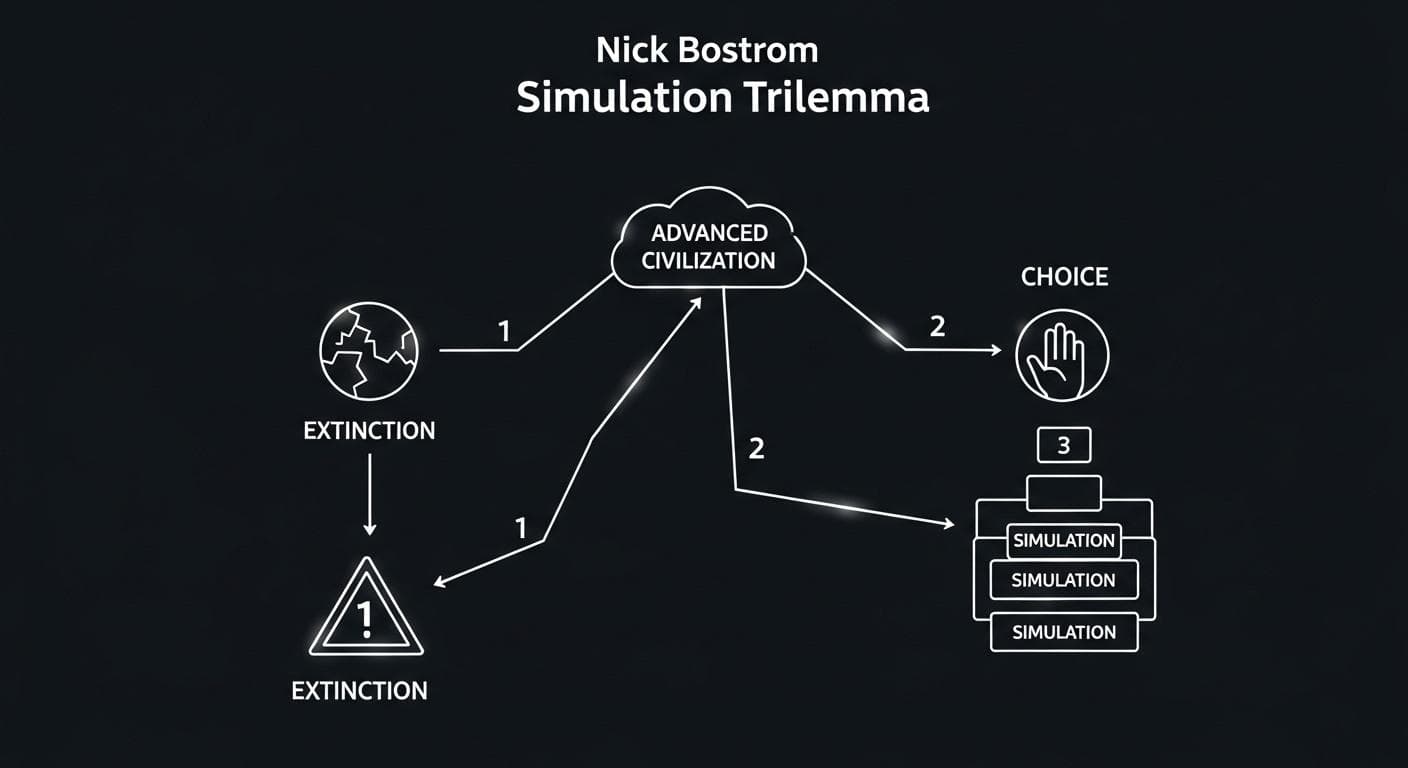
Exhibit A: The Case of Mass False Memories (The Mandela Effect)
Perhaps the most famous and unsettling "glitch" is the Mandela Effect. The term was coined by paranormal researcher Fiona Broome after she discovered that she, along with thousands of others, shared a distinct memory of South African leader Nelson Mandela dying in prison in the 1980s. They remembered news clips of his funeral and riots. The reality, of course, is that Mandela was released from prison in 1990 and passed away in 2013.
Berenstain vs. Berenstein: Classic Examples of the Effect
This isn't an isolated case. The phenomenon extends to countless other details of our shared culture:
- The Berenstain Bears: Many swear the beloved children's book series was spelled "Berenstein."
- Darth Vader's Quote: The iconic line from *The Empire Strikes Back* is "No, I am your father," yet it is almost universally misremembered as "Luke, I am your father."
- The Monopoly Man: Does Rich Uncle Pennybags, the mascot for Monopoly, wear a monocle? A huge number of people would say yes. He never has.
- Fruit of the Loom Logo: Many people vividly recall a cornucopia (a horn-shaped basket) behind the fruit in the brand's logo. It was never there.
The Simulation Argument: Are These Edits to the Source Code?
Proponents of the simulation theory see the Mandela Effect as compelling evidence. If our reality is a program, then these discrepancies aren't false memories; they are evidence of a patch, an update, or a change in the code. Perhaps in a previous version of the simulation, it was "Berenstein," and when the code was altered, some residual data-our memories-remained.
In this view, we are not misremembering. We are remembering a version of reality that has been overwritten. It’s a retroactive continuity change, or "retcon," for the entire universe.

Exhibit B: The Echo in Time (Déjà Vu)
Déjà vu-French for "already seen"-is the powerful sensation that you've experienced the present moment before. It's a common phenomenon, with studies reporting that anywhere from two-thirds to as many as 97% of the population have experienced it. It feels less like a memory and more like a replay.
"I've Been Here Before": Unpacking the Sensation
The feeling is often accompanied by a sense of premonition, a feeling that you know what's about to happen next, even if you can't articulate it. It’s a brief, jarring moment where the linear flow of time seems to fold in on itself.
The Simulation Argument: Is Déjà Vu the System Correcting a Rendering Error?
From a simulation perspective, déjà vu could be a system glitch. Several theories exist:
- A Reloaded Save Point: Perhaps the simulation crashed for a nanosecond and had to reload from a recent backup file. What we experience as déjà vu is our consciousness living through the same moment of data for a second time.
- Data Caching Error: Just like a computer might mistakenly save a piece of data to both its short-term and long-term memory banks simultaneously, our brain might receive sensory input that gets incorrectly flagged as an "old memory," creating the feeling of familiarity.
- Recycled Code: Programmers often reuse assets and code to save resources. Perhaps the setting or sequence of events we are experiencing is simply a recycled piece of the simulation's code that has been used elsewhere.
The Counter-Argument: A Look Inside the Human Mind
Before we conclude that we are living in a digital world, we must confront the most powerful counter-argument: the known fallibility of the human brain. Psychology and neuroscience offer compelling, non-supernatural explanations for these so-called glitches.
The Psychology of False Memory: Why Our Brains Are Unreliable
Our memory is not a high-fidelity video recorder. It is a reconstructive process, more akin to piecing together a story than replaying a file. Every time we recall an event, we are rebuilding it, and in that process, errors can be introduced. This is the basis of confabulation, where the brain fills in gaps in memory with fabricated but plausible details to create a coherent narrative. We are not lying; our brains are simply trying to make sense of incomplete information.
The Mandela Effect can be largely explained by this and other cognitive biases. For example, the "-stein" suffix is far more common in names than "-stain," making it easy for our brains to default to the more familiar pattern. Similarly, a monocle fits the cultural archetype of a wealthy tycoon, so our minds add one to the Monopoly Man to make the image fit our expectations.
Explaining Déjà Vu: Neurological Misfires and Memory Association
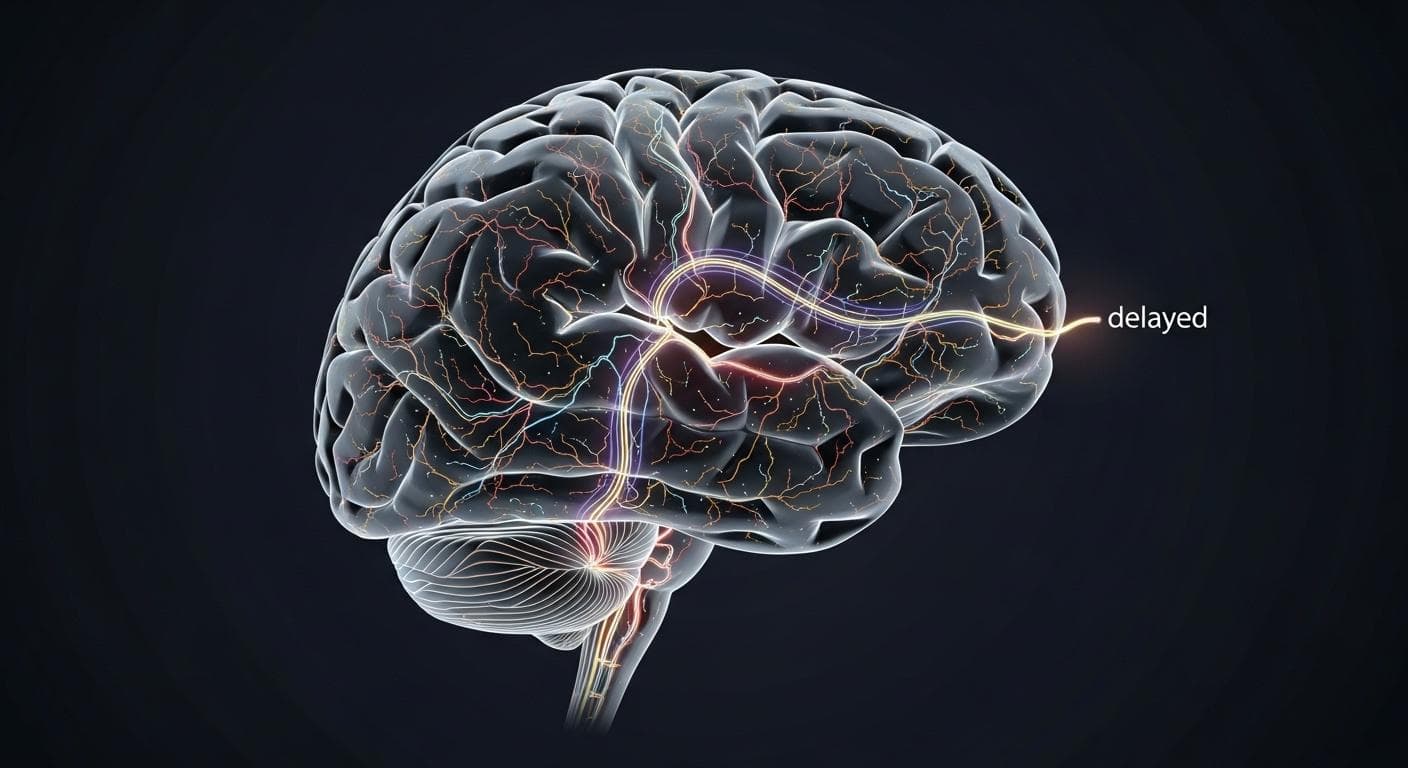
Neuroscientists have several theories for déjà vu. One popular idea suggests a brief processing delay in the brain. Information from our senses might travel through two different neural pathways, and if one is slightly delayed, the brain processes the same input twice in quick succession. The second time, it feels familiar because, technically, it has been processed before-just milliseconds earlier.
Another theory links it to memory association. A new environment might contain subtle elements-a specific smell, a pattern of light, a particular shape-that are similar to a forgotten memory from our past. The brain registers the familiarity without being able to pinpoint the source, creating the strange sensation of having been there before.
Beyond Personal Glitches: Is There Harder Evidence for a Simulated Universe?
While personal anecdotes are fascinating, they are not scientific proof. However, some physicists argue that the proof isn't just in our heads-it's woven into the very fabric of the cosmos. They point to fundamental rules of our universe that look suspiciously like programming choices made to optimize a system.
The Cosmic Speed Limit: Why Is Light Speed Capped?
In our universe, nothing can travel faster than the speed of light, c. Why should there be a universal speed limit? In a computer simulation, processing speed is a finite resource. A hard cap on the speed at which information (and causality) can travel through the system would be a practical necessity to prevent computational overload. It keeps the inhabitants-us-from traveling too far, too fast, which would require rendering vast new areas of the simulation. This idea of the Cosmic Speed Limit, alongside other universal constants, often leads to discussions about the cosmic code.
The Universe's "Pixelation": Planck Length and the Limits of Observation
If you zoom in on a digital image far enough, you eventually see the individual pixels. Our reality may have a similar resolution limit. In physics, this is known as the Planck length (approximately 1.616 x 10⁻³⁵ meters). This is not just a tiny distance; it's the scale at which our current theories of physics, general relativity and quantum mechanics, break down. Below this scale, space and time as we know them cease to be meaningful. To simulation proponents, this isn't a coincidence; it's the fundamental "pixel size" of our universe. Reality isn't continuous; it's discrete, just like a digital screen.
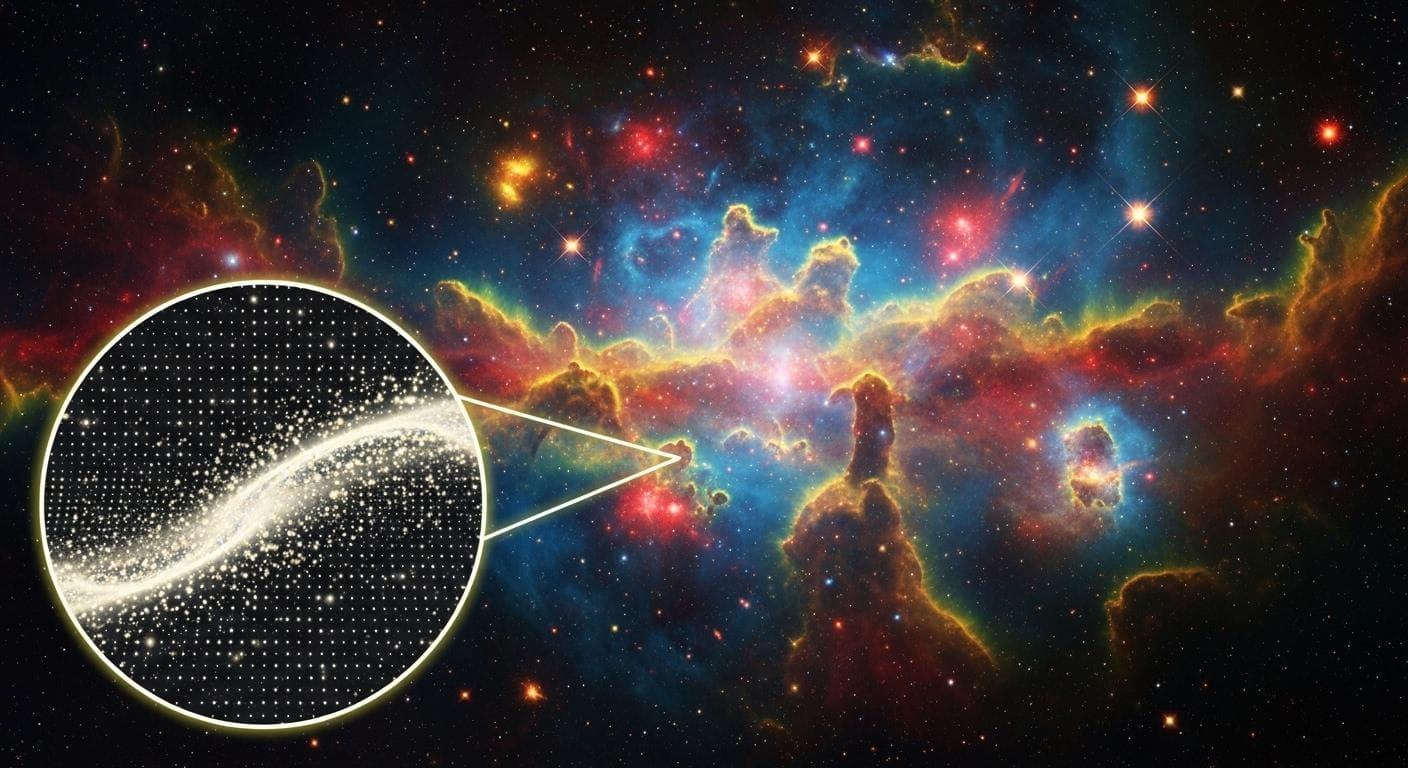
Exhibit C: The Great Silence (The Fermi Paradox)
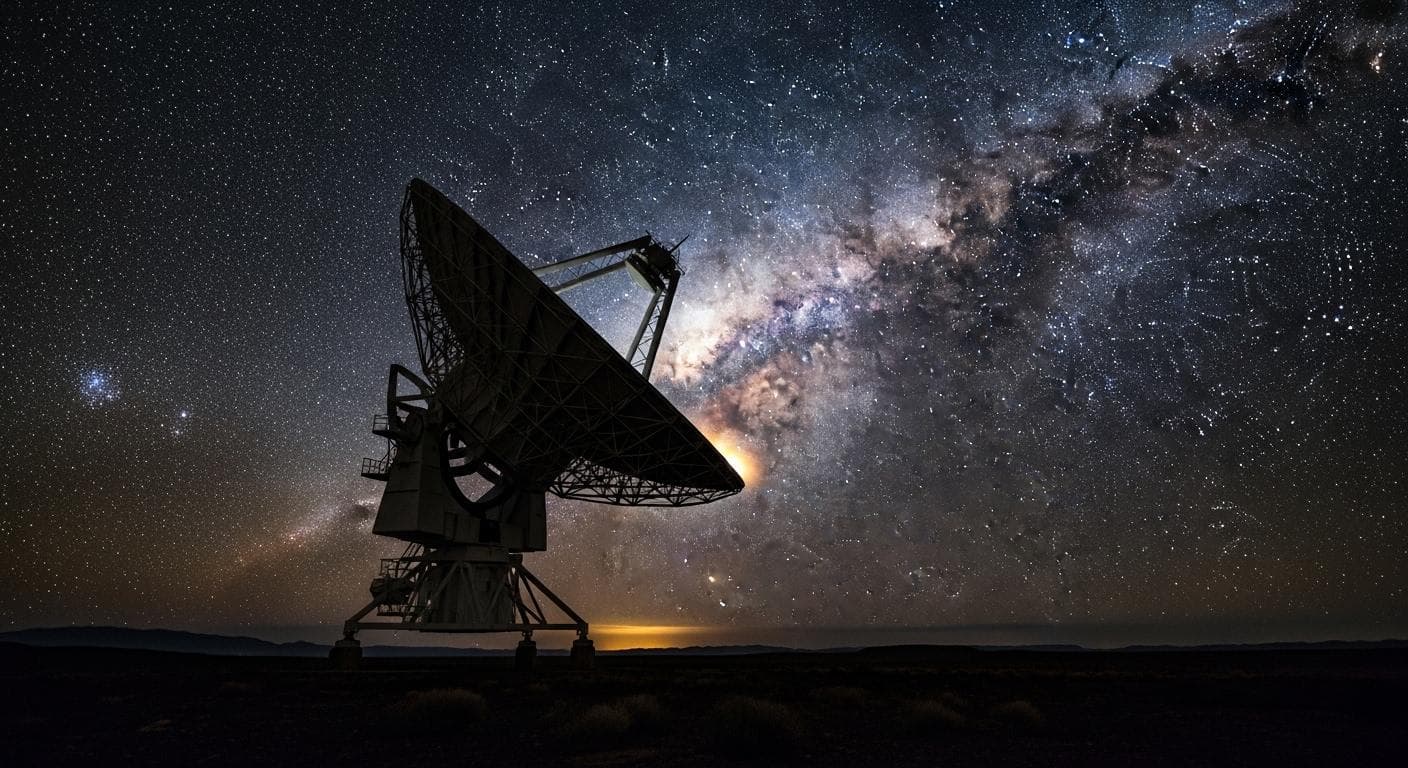
Another piece of circumstantial evidence comes not from what we see, but from what we don't. The universe is unfathomably vast, containing billions of galaxies, each with billions of stars. Statistically, it should be teeming with life, including countless technologically advanced civilizations. Yet when we look to the stars, we are met with an unnerving silence. This is the Fermi Paradox.
Where is everybody? The simulation hypothesis offers a tidy, if unsettling, answer. Perhaps alien civilizations aren't rendered because they aren't part of our specific simulation's focus. To conserve immense computational resources, the program might only render Earth and its immediate cosmic neighborhood in high fidelity. The distant stars and galaxies we see could be little more than a detailed skybox, a beautiful but non-interactive backdrop, similar to the painted mountains in a video game. We haven't met aliens because they simply haven't been programmed into our local instance of the game.
The Ultimate Glitch: How the Double-Slit Experiment Defies Reality
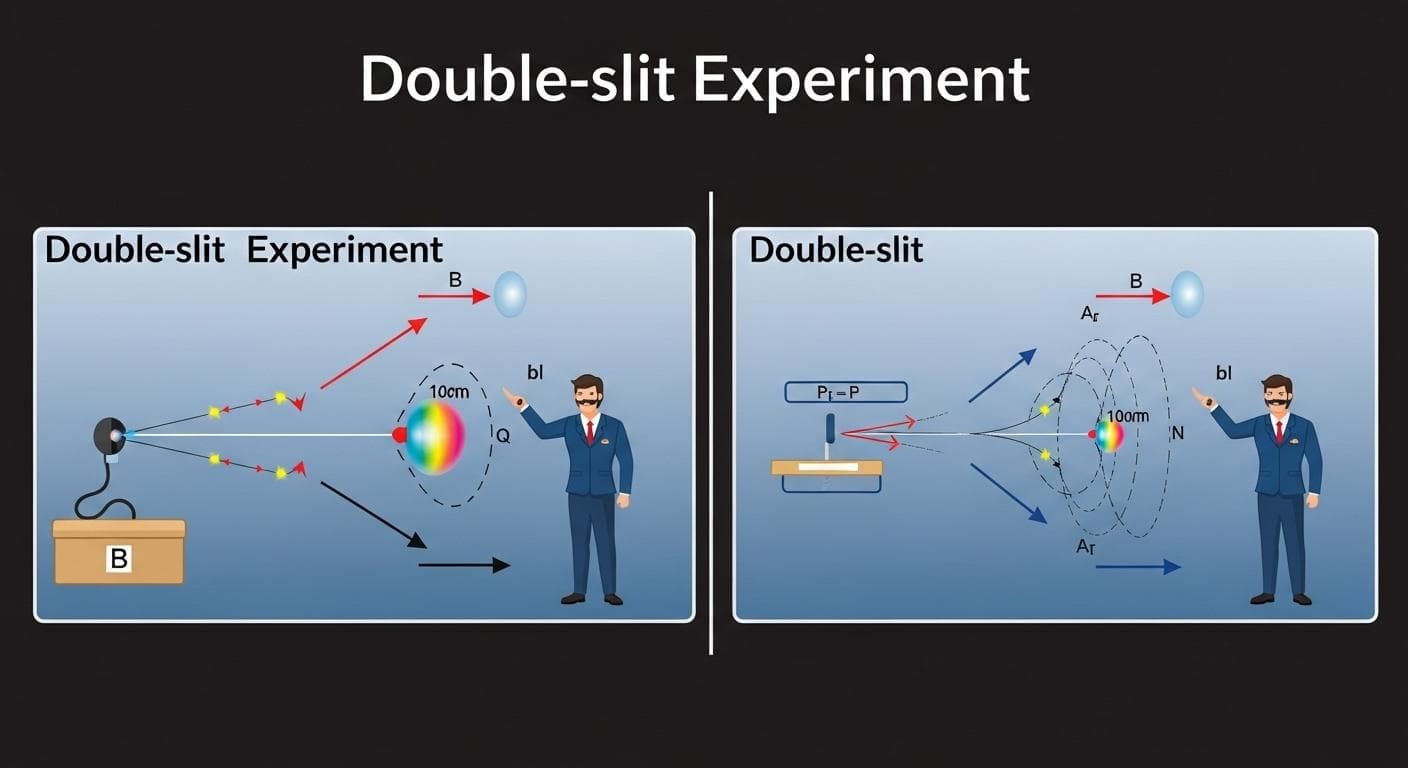
The most compelling-and frankly, bizarre-piece of evidence comes from the world of quantum mechanics: the double-slit experiment. In simple terms, when you fire tiny particles like electrons at a screen with two slits in it, their behavior changes depending on whether or not you are watching them.
- Unobserved: When not observed, the electrons act like waves, passing through both slits simultaneously and creating an "interference pattern" on the other side.
- Observed: The moment you place a detector to see which slit an electron goes through, its behavior instantly changes. It acts like a solid particle, going through one slit or the other, and the wave pattern vanishes.
This strongly suggests that reality at the quantum level doesn't exist in a definite state until it is measured. This sounds exactly like a video game engine's optimization strategy. A game doesn't render the details inside a building until the player decides to open the door. The universe, it seems, doesn't bother to render the definite state of a particle until a conscious observer forces it to "load" the information. This strange phenomenon is central to understanding the Quantum Observer Effect.
Retrocausality: When Observation Changes the Past
The rabbit hole gets deeper. Physicist John Wheeler proposed a "delayed-choice" version of the experiment. What if we wait to decide whether to observe the electrons after they've already passed through the slits but before they hit the final screen? Incredibly, the experiment works the same way. The act of measuring in the present seems to determine the path the particle took in the past.
This phenomenon, which some physicists interpret as retrocausality, appears to shatter our common-sense understanding of time. While many physicists explain this through other non-causality-violating quantum phenomena, the results are deeply strange. In a simulation, however, it makes perfect sense. The program is simply calculating the outcome based on the final query. It doesn't need to decide the particle's history until it's asked to provide it.
The Ghost in the Machine: Is the Programmer Another Name for God?
This discussion of an intelligent designer creating our reality from an outside plane of existence sounds familiar for a reason. For millennia, humanity has pondered the existence of a creator. The simulation hypothesis can be seen as a technological update to age-old theological and philosophical ideas. In ancient Gnostic traditions, for instance, the material world was believed to have been crafted not by a benevolent supreme being, but by a lesser, flawed entity known as the Demiurge. This world was seen as an illusion or a prison, a pale imitation of a higher reality.
The parallels are striking. Is the "programmer" of our simulation simply a modern interpretation of the Demiurge? Is the "base reality" from which our simulation is run the Gnostic concept of the Pleroma, or the realm of divine fullness? This framework recasts the simulation not as a neutral computer program, but as a potentially flawed construct, and its creator as something other than omnipotent. It bridges the gap between metaphysics and physics, suggesting that perhaps scientists and theologians have been asking the same fundamental question all along, just with different vocabularies.
The Verdict: Glitch, Psychology, or Something Else?
So, where does this leave us? We are faced with a fascinating dichotomy. On one hand, we have powerful, evidence-based psychological and neurological explanations for the glitches we experience. On the other, we have the fundamental laws of physics behaving in ways that are deeply counter-intuitive but perfectly logical if our universe is code running on a massive computer.
Weighing the Evidence: Can Both Sides Be Right?
It's possible the answer isn't a simple either/or. The Mandela Effect could be a genuine trick of our unreliable minds, and the double-slit experiment could be evidence of a rendered reality. However, the principle of Occam's Razor-that the simplest explanation is usually the correct one-would favor the psychological arguments for our personal glitches.
What Do the Experts Think? From Nick Bostrom to Michio Kaku
The scientific community is deeply divided. Figures like Elon Musk and Neil deGrasse Tyson have stated the odds are high that we are in a simulation. Physicist and string theorist James Gates Jr. was a skeptic until he discovered what appeared to be computer error-correcting code in the equations of supersymmetry that govern the universe.
Conversely, prominent physicists like Michio Kaku argue that the computational power required to simulate a universe down to the quantum level is simply too vast to be feasible. He argues the only computer capable of simulating our universe is the universe itself. However, this critique often overlooks the optimization principle-that the simulation would only need to render what is being observed.
Conclusion: Why It Matters If We're Living in a Simulation
Ultimately, the simulation hypothesis may be unfalsifiable; there might be no definitive experiment we can run from within the system to prove its nature. But the implications of the question are profound. The debate forces us to confront the nature of consciousness, the meaning of existence, and our place in the cosmos.
Whether you see the Mandela Effect as a sign of alternate timelines or a quirk of human psychology, or the double-slit experiment as proof of a divine creator or an advanced programmer, the quest for answers reveals the same fundamental human drive: to understand the nature of our reality. The glitches, whether real or imagined, serve as a vital reminder that the universe is far stranger and more mysterious than it appears.
What about you? Have you ever experienced a "glitch in the Matrix" that you simply can't explain? Share your most compelling story or Mandela Effect that still baffles you in the comments below.

Comments
We load comments on demand to keep the page fast.