Imagine you've been handed the ultimate engineering challenge: design and build a computer capable of simulating an entire universe. Not a simplified model, but a high-fidelity reality, complete with its own physical laws, galaxies, and potentially, conscious beings. This is not just a philosophical parlor game; it's a profound thought experiment in computer science, physics, and ethics. It forces us to confront the absolute limits of computation and the very nature of reality itself.
This is your blueprint. Let's explore the theoretical design process, from writing the source code of reality to building the god-like hardware required to run it, and confront the fundamental barriers that might make this monumental task not just difficult, but truly impossible.
The Core Challenge: Why Simulating Reality Isn't a Brute-Force Problem
The Fallacy of Simulating Every Atom: The 10^80 Particle Problem
Your first instinct might be to calculate the raw data. The observable universe contains an estimated 10⁸⁰ atoms. To track the position, momentum, and quantum state of every single particle would require an astronomical amount of processing power and storage-numbers so large they defy comprehension. This has led some physicists to argue that the only computer capable of truly simulating the universe is the universe itself. Attempting to build a separate system to model it atom-for-atom seems like a non-starter.
The Universe as a Video Game: How Procedural Generation Could Work
But this assumes a naive, brute-force approach. That’s not how sophisticated simulations work. Think about the most advanced video games. When you look at a distant mountain range, the game engine doesn't render every rock and tree. It generates a simplified facade. The complex details are only calculated and rendered when you, the observer, get closer. The internal structure of a building doesn't exist in the game's memory until you open the door.
This principle of 'lazy rendering' and procedural generation is a powerful computational shortcut. If our universe operates on a similar principle, it would only need to compute the fine details of reality where an observer is present. This drastically reduces the computational load from 'everything, everywhere, all at once' to just 'what is being observed, right now'. This idea isn't just an efficiency hack; it has strange and profound echoes in the world of quantum physics.
Phase 1: Writing the Source Code - Defining the Laws of Physics
Before you can build the machine, you need the operating system. For a universe, this 'source code' is the set of physical laws and constants that govern everything. But you can't just start typing; you first need a complete instruction manual.
The Prerequisite: Finding a 'Theory of Everything'
Currently, our understanding of physics is split. General Relativity beautifully describes the large-scale universe of galaxies and gravity. Quantum Mechanics masterfully describes the small-scale world of particles and forces. The problem is, they are fundamentally incompatible. To create a stable simulation, you would first need a unified 'Theory of Everything' that reconciles these two domains into a single, coherent set of rules. Without it, your simulation would crash the moment a black hole (requiring both theories) formed. This isn't just a technical detail; it's the single greatest prerequisite to the entire project.
Inputting the Constants: The Standard Model as a Configuration File
Assuming you have this unified theory, the fundamental rules-the strength of gravity, the charge of an electron, the speed of light-would serve as the core parameters in your simulation's configuration file. The speed of light, at a strict 299,792,458 meters per second, isn't just a cosmic speed limit; in a simulation context, it's a brilliant processing cap. It prevents any 'user' within the simulation from traveling too far, too fast, thus limiting the necessary real-time rendering area and preventing computational overloads. These precise values are part of what some refer to as The Cosmic Code.
Emergent Complexity: Can Consciousness Arise from Simple Rules?
One of the most daunting tasks would be programming consciousness. Or would it? A key concept in complex systems is emergence, where intricate, high-level patterns arise from simple, low-level rules. A flock of birds, an ant colony, and a traffic jam are all examples of complex emergent behavior. The hope for a universe simulator is that consciousness isn't a feature you program directly, but an emergent property that arises naturally from the complex interplay of simulated neurons, which themselves are governed by the fundamental rules of physics and chemistry you've already coded.
Phase 2: Building the Hardware - Theoretical Architectures for the God Machine
With the software spec'd out, you need hardware capable of running it. Your laptop won't cut it. We need to think in terms of stellar-scale engineering.
The Classical Approach: Matrioshka Brains and Dyson Spheres
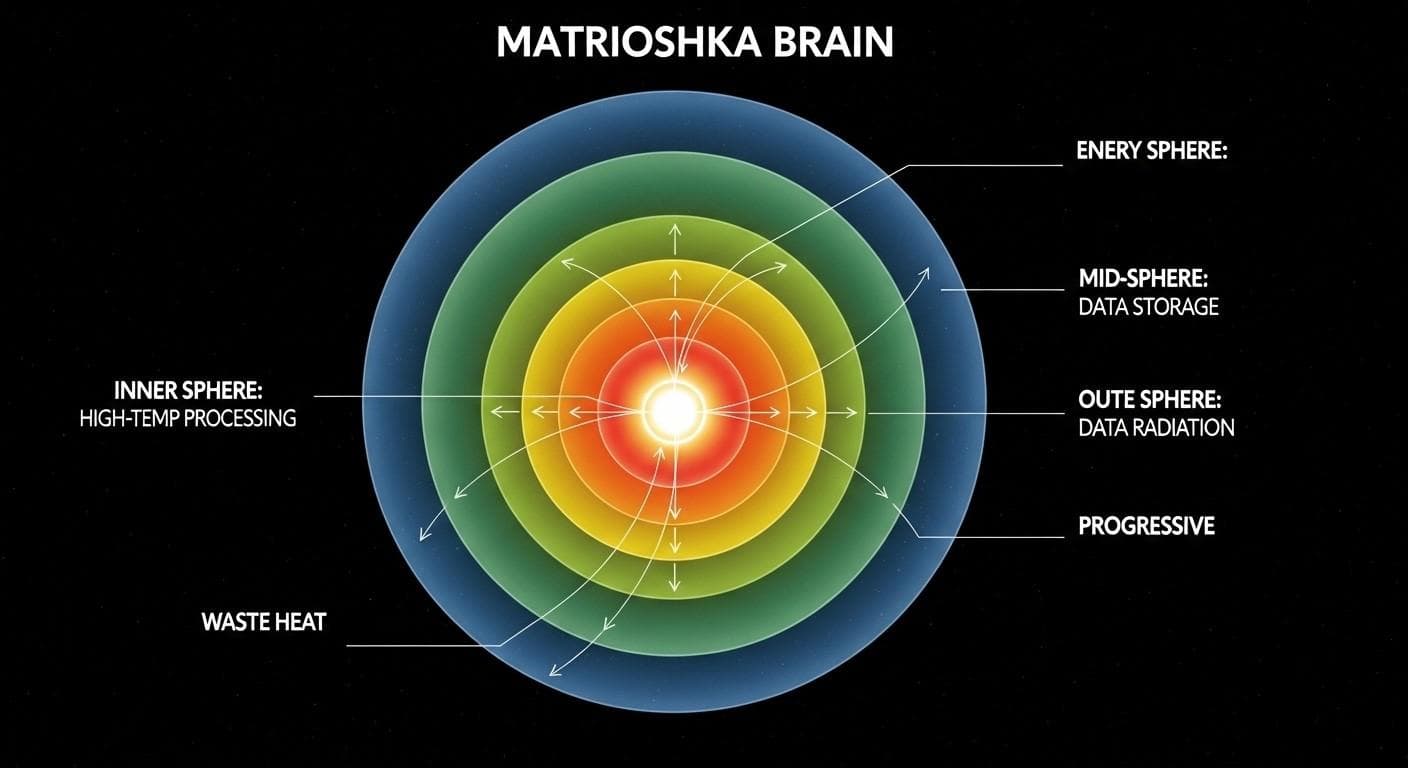
A Matrioshka Brain is a hypothetical megastructure based on the concept of a Dyson Sphere. You would begin by constructing a massive shell around a star to capture 100% of its energy output. But instead of just using that energy, you turn the shell itself into a computer. A Matrioshka Brain takes this a step further, nesting multiple, concentric Dyson Spheres. Each inner shell runs at a higher temperature, performing computations and radiating waste heat to the next shell, which uses that heat to perform its own calculations. It's a computer the size of a solar system, powered by an entire star.
The Quantum Leap: Why a Quantum Computer Might Be the Only Viable Option
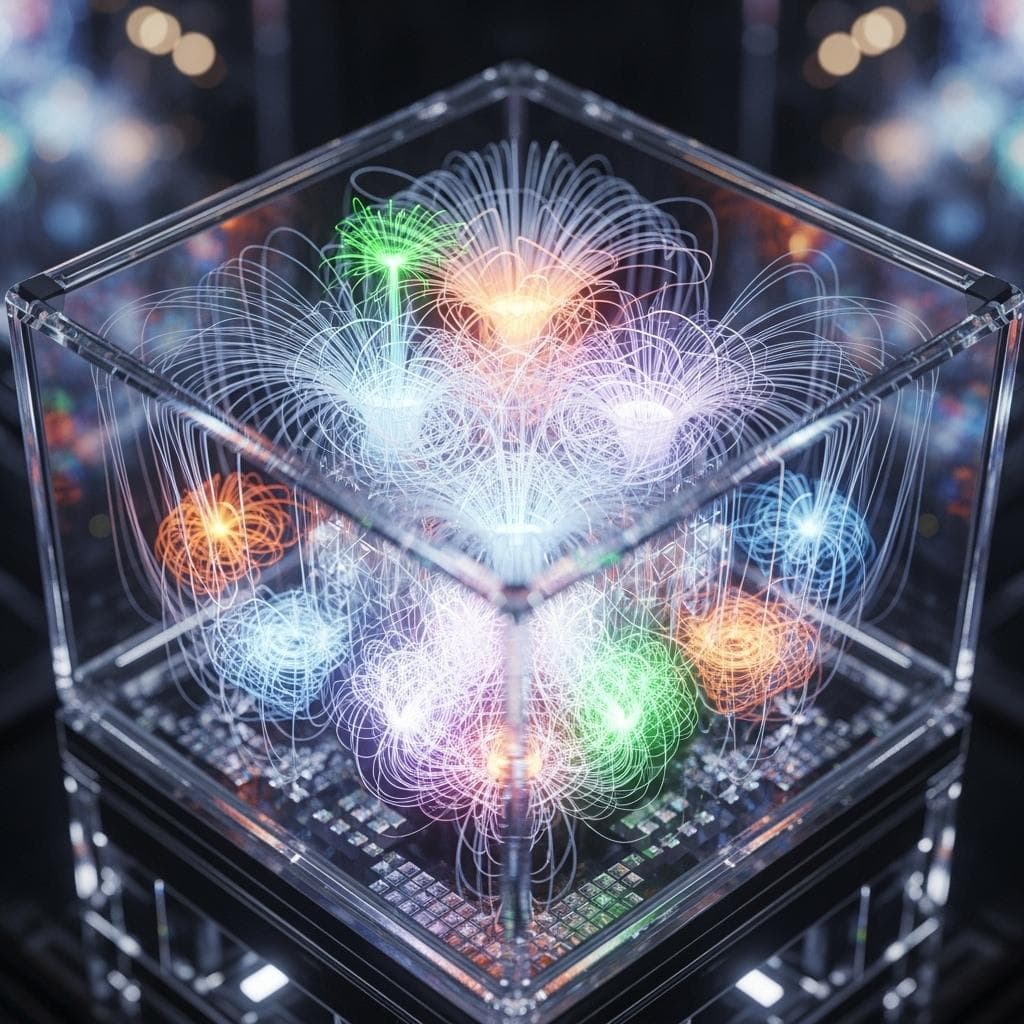
Even a Matrioshka Brain, operating on classical bits (0s and 1s), might struggle. Our universe is fundamentally quantum mechanical. Simulating quantum phenomena like superposition and entanglement on a classical computer is exponentially difficult. However, a quantum computer, using qubits that can be both 0 and 1 simultaneously, is perfectly suited for the task. It could simulate quantum reality natively, particle for particle, without the massive overhead. The universe's weird quantum rules might not be a bug, but a feature indicating the nature of its underlying hardware, echoing concepts explored in The Quantum Observer Effect.
The Information Limit: Can You Build a Computer Bigger Than the Universe It Simulates?
Here we hit a profound physical barrier. A computer is a physical object. To simulate our universe, the computer would have to exist somewhere. According to information theory principles like the Bekenstein bound, there's a finite limit to the amount of information that can be contained within a given volume of space. This implies that a computer built within our universe could never contain enough information to simulate the entire universe in full detail. The simulator would have to be larger and more complex than the system it is simulating, leading to a logical and physical paradox if the simulator is part of that same reality.
Phase 3: Debugging Reality - The Fundamental Barriers to a Perfect Simulation
Even with infinite energy and a perfect quantum computer, some problems may not be solvable. These aren't technical hurdles; they are fundamental limits baked into the logic of mathematics and computation itself.
The Observer Effect: Is Reality Only Rendered When We Look?
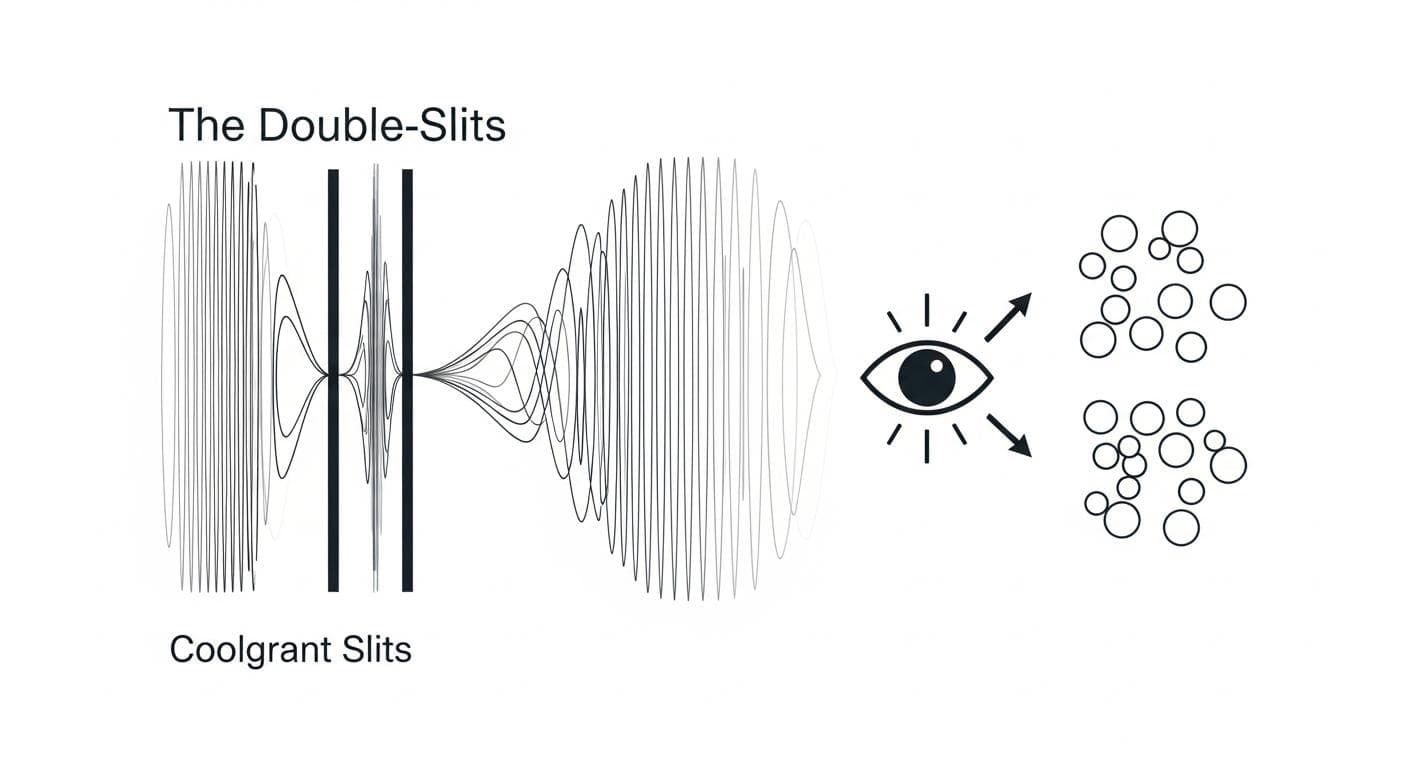
This brings us back to the most famous experiment in quantum mechanics: the double-slit experiment. When you're not looking, particles like electrons behave as waves, creating a distinct interference pattern. But the moment you install a detector to see which slit the particle goes through, it instantly 'collapses' and behaves like a solid particle. It's as if the universe refuses to calculate the particle's definite path until it's forced to by an observation. This is exactly how a lazy rendering algorithm would work-saving resources by keeping things in a state of fuzzy probability until they need to be resolved for an observer. This phenomenon is deeply explored in discussions surrounding The Quantum Observer Effect.
The Problem of True Randomness
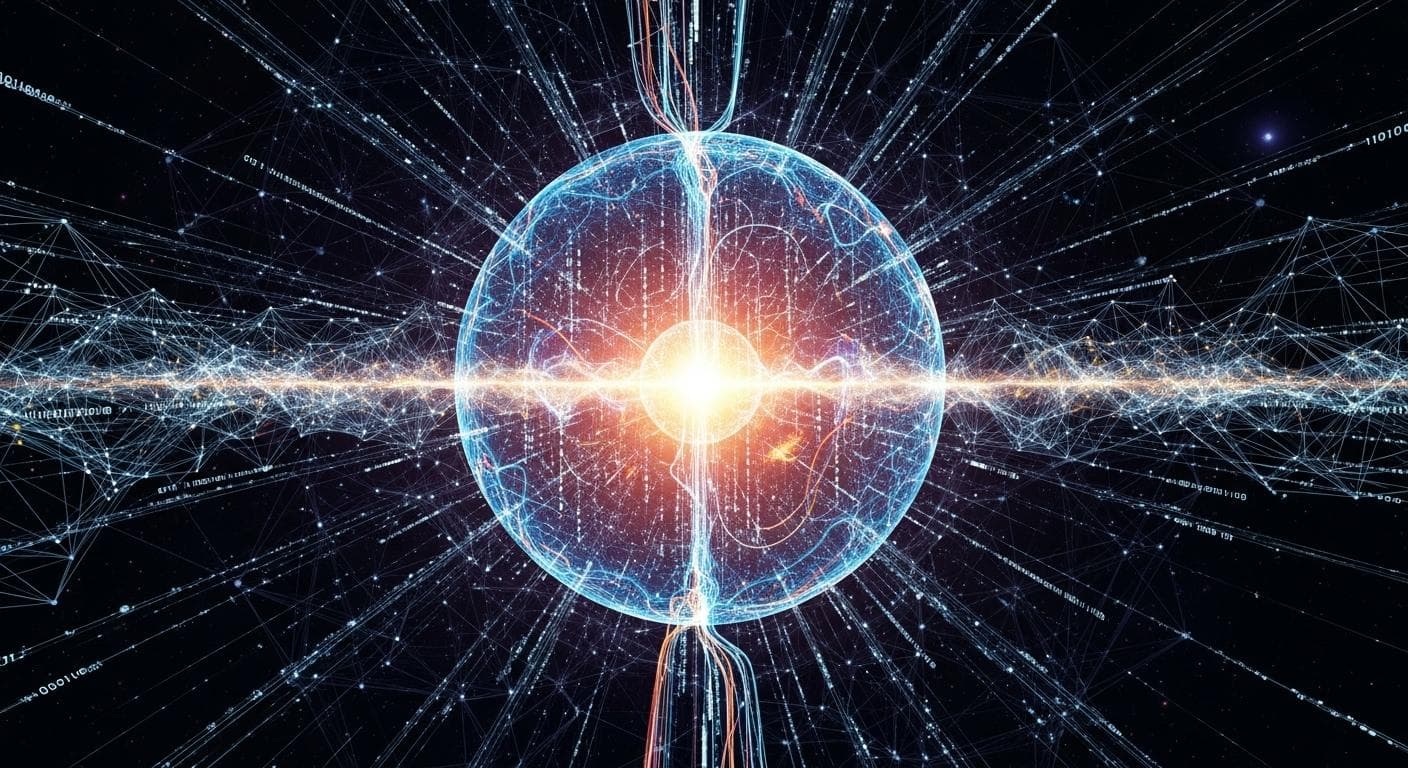
Another major issue is quantum non-determinism. Many interpretations of quantum mechanics suggest that events like radioactive decay are not just unpredictable, but are fundamentally, irreducibly random. A classical computer can only generate pseudo-random numbers based on a starting algorithm. It can't create true randomness. If the universe relies on truly random events, then no computer program could ever perfectly replicate it; it could only ever produce an approximation. The simulation would inevitably diverge from a truly random reality.
The Halting Problem and Gödel's Hurdle
Beyond physics, there are limits in pure logic. The Halting Problem in computer science proves that it's impossible to create a general program that can determine whether any other program will finish running or get stuck in an infinite loop. Likewise, Gödel's Incompleteness Theorems show that in any sufficiently complex formal system, there will always be true statements that cannot be proven within that system. These theorems suggest that a perfect, fully predictable simulation might be logically impossible. The universe might require 'non-algorithmic' processes that simply cannot be coded.
The Moral Algorithm: The Unfathomable Ethics of Creating Simulated Life
Let's assume you overcome every technical and logical hurdle. You are about to press 'run'. This brings you to the final, and perhaps most important, challenge: the ethical one.
If your simulation is high-fidelity enough to produce emergent consciousness, you are no longer just an engineer; you are a creator. The beings inside your simulation would experience genuine joy, suffering, love, and loss. What are your responsibilities to them? Do you have the right to create a universe where suffering is possible, or to 'turn it off'? What is the purpose of the project? Is it a scientific experiment? Is it what philosopher Nick Bostrom calls an 'ancestor simulation'-a historical re-enactment run by our descendants to study their past? These questions are central to Bostrom's Trilemma. Or is it merely entertainment?
This 'creator's dilemma' steps out of the realm of science and into the deepest questions of philosophy and morality. The act of creating a simulated universe forces you to confront the same questions humanity has asked about its own potential creators for millennia, echoing the themes found in God in the Machine.
Conclusion: Closer to Building God in a Box, or Just a Better Video Game?
The project of simulating a universe remains the ultimate thought experiment, pushing the boundaries of what we know about physics, information theory, and philosophy. The sheer scale is staggering, the energy requirements are stellar, and the fundamental logical hurdles may well be insurmountable. The challenges suggest that a perfect, 1:1 simulation is likely impossible, constrained by the very laws of logic and computation.
Yet, the principles we've explored-computational shortcuts, emergent complexity, and the strange parallels in quantum mechanics-continue to fuel the debate. We may never build the God machine, but in attempting to design its blueprint, we learn more about the intricate, rule-based, and profoundly mysterious nature of our own reality. Perhaps the most important takeaway isn't whether we can build a universe, but understanding the astonishing complexity of the one we already inhabit.
What do you think is the single biggest roadblock to simulating a universe? Is it the immense hardware and energy requirements, the challenge of coding the laws of physics, or a fundamental logical barrier like Gödel's theorem? Share your thoughts in the comments below.

Comments
We load comments on demand to keep the page fast.