What if the fabric of reality-the stars, the earth, your own consciousness-is not fundamental? What if it's all an elaborate computation, a program running on a cosmic hard drive? For centuries, this was a question for philosophers and science fiction authors. But today, a growing number of physicists, mathematicians, and information theorists are pursuing it as a serious scientific inquiry. They are hunting for clues, not in ancient texts, but in the very laws that govern our universe.
This isn't just about Nick Bostrom's famous "Simulation Argument", which posits that we are statistically likely to be living in a simulation. This is a search for empirical evidence, for fingerprints of a programmer in the source code of existence. The clues are emerging from three distinct but converging fields: the mind-bending behavior of quantum physics, the uncanny prevalence of mathematical patterns in nature, and the surprising discovery of digital information embedded in the equations of reality itself. We are beginning to decipher the Cosmic Code.
Beyond Philosophy: The Search for Hard Evidence in the Fabric of Reality
The leap from philosophical conjecture to scientific hypothesis is a monumental one. It requires moving from "what if" to "what can we measure?" If our universe is a computation, it must have underlying mechanics-rules, limitations, and a structure that might betray its artificial nature. Scientists are now pointing to seemingly fundamental aspects of our universe as potential evidence of just such a structure.
These clues suggest that reality might not be a seamless, continuous expanse. Instead, it might be composed of discrete units, like pixels on a screen. It might have processing speed limits, like the speed of light, and it might even employ clever optimization tricks to save on computational resources, just like a modern video game. This is the new frontier: treating the universe not as a collection of matter and energy, but as a system of information.
Pillar 1: The Ghost in the Machine - Quantum Physics as a Render Engine
At the smallest scales, reality behaves in ways that defy all common sense. The world of quantum mechanics is not a world of solid, predictable objects, but of probabilities and paradoxes. For proponents of a coded universe, this isn't a flaw; it's a feature. It looks less like a fundamental physical reality and more like an incredibly efficient computational system that only renders what is necessary, when it's necessary.
The Universe on Demand: The Double-Slit Experiment and Observation
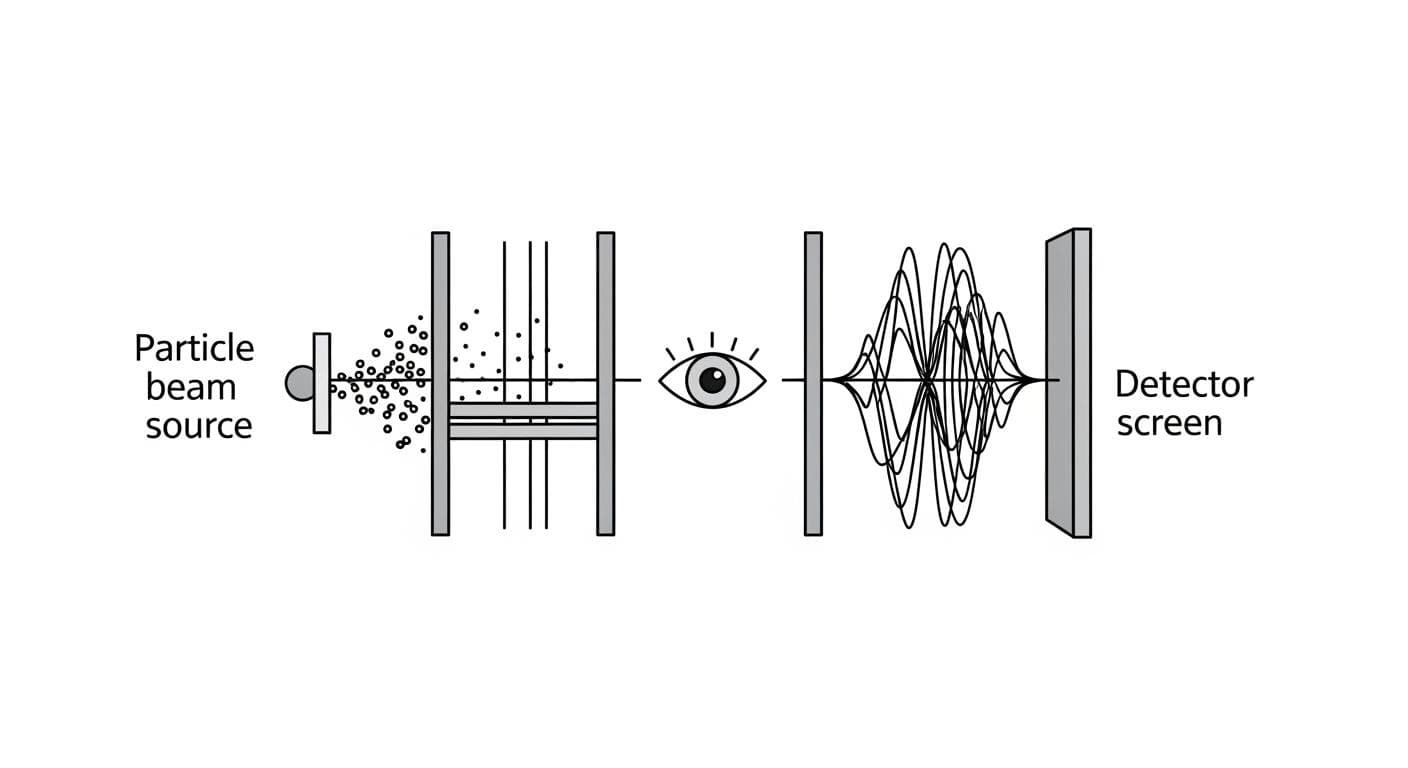
The most famous and unsettling demonstration of this is the double-slit experiment. When particles like electrons are fired one by one at a barrier with two slits, they behave as if they are waves, passing through both slits simultaneously and creating an interference pattern on the detector screen behind them. This is impossible for a solid particle. The only way to explain it is that the electron exists as a wave of probability, exploring all possible paths at once.
But here's where it gets truly bizarre. If scientists place a detector at the slits to see which one the electron goes through, the very act of observation causes the wave of probability to "collapse." The electron instantly behaves like a simple particle, passing through one slit or the other, and the interference pattern vanishes. It's as if the universe refuses to define the electron's state until a conscious observer forces its hand.
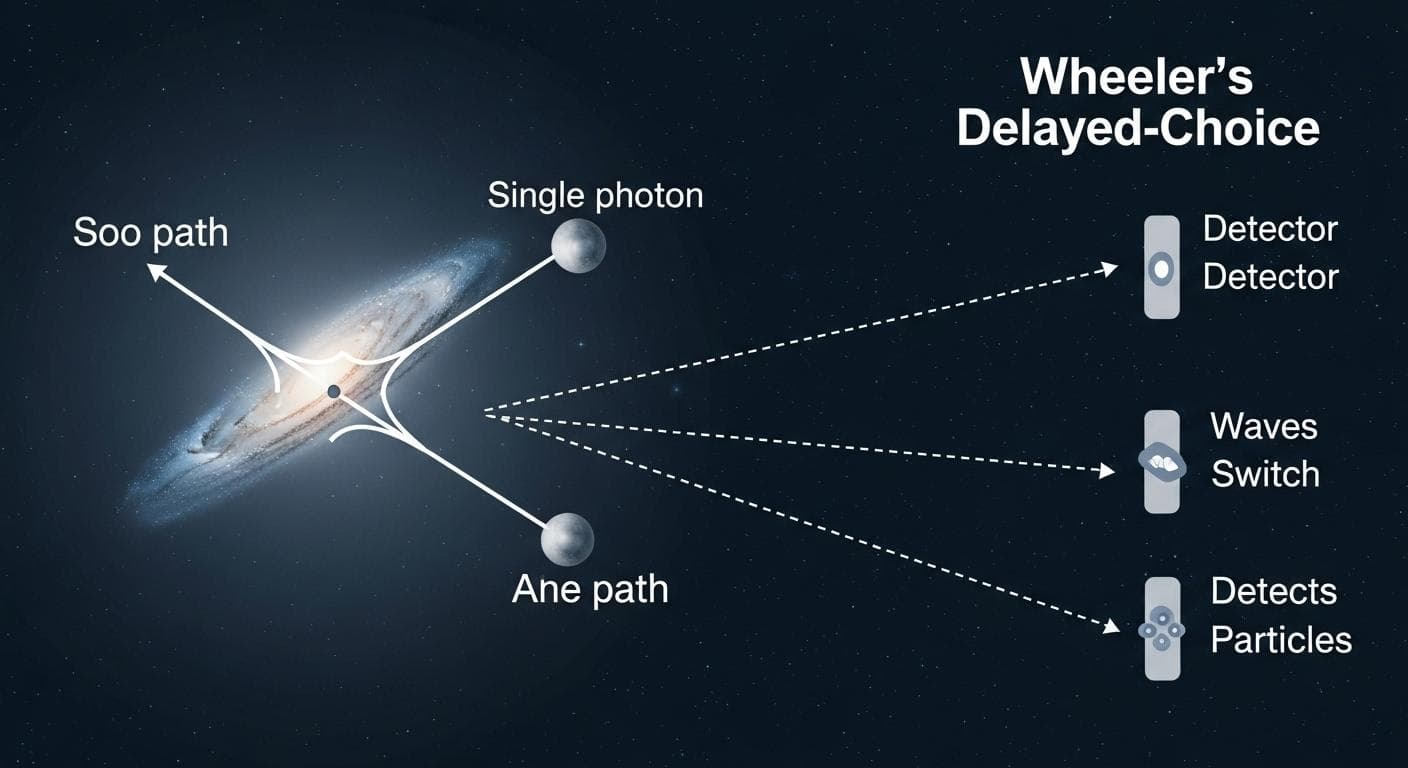
Physicist John Wheeler's "delayed-choice" experiment took this a step further, showing that even if the decision to observe is made after the particle has passed the slits, it will retroactively change its own past history to match the observation. In a simulation context, this makes perfect sense. It's an optimization technique. Why render the detailed state of a particle if no one is looking? The system only calculates the outcome when a measurement is requested, saving immense computational power.
The Pixels of Reality: Planck Length and Spacetime Granularity
Is space infinitely divisible, or is there a fundamental, smallest possible unit? According to our current understanding of physics, there is. The Planck length (approximately 1.6 x 10^-35 meters) is the shortest possible measurable distance. It is impossible, in theory, to observe anything smaller. Below this scale, where a theory of quantum gravity is needed, our concepts of space and time break down.
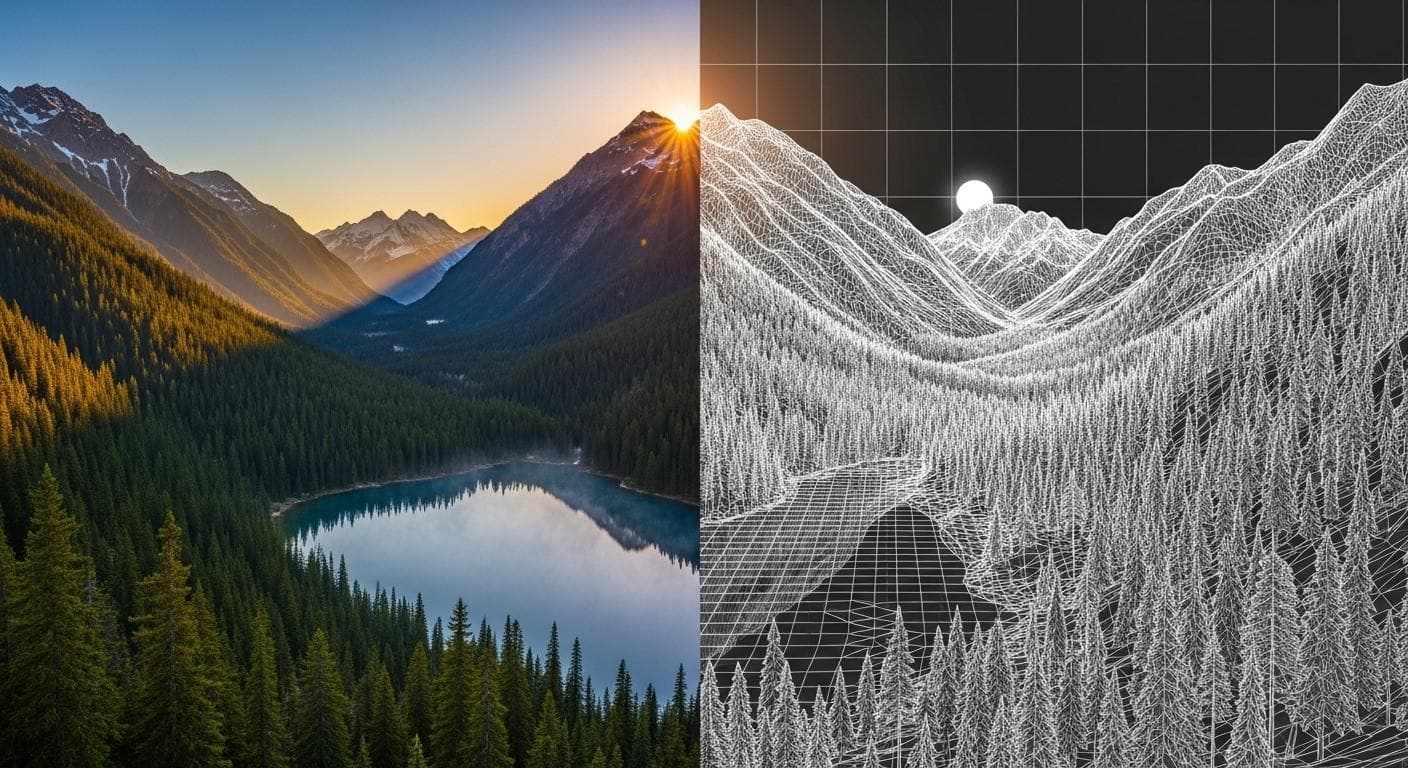
To simulation theorists, this is a monumental clue. A continuous, analog reality would be infinitely complex and computationally impossible to simulate. But a reality built on a discrete, pixelated grid-a quantized spacetime-is computationally manageable. The Planck length could represent the fundamental "pixel size" of our universe, the ultimate resolution of the cosmic screen.
The Ultimate Speed Cap: Why the Speed of Light is a Universal Rule
In our universe, nothing with mass can travel faster than the speed of light. This isn't just a guideline; it's an absolute, unbreakable law woven into the fabric of spacetime. Why should there be such a strict speed limit? In a purely physical universe, it's a strange constraint. But in a computational universe, it's a necessity.
Every computer processor has a clock speed-a maximum rate at which it can perform calculations. A universal speed limit like the speed of light could be the equivalent of the processor's clock speed for our reality. It represents the maximum speed at which information can be propagated across the universal grid, ensuring the cause-and-effect structure of the simulation remains coherent and stable.
Pillar 2: The Universal Blueprint - Mathematical Patterns in Everything
If the universe is a program, then mathematics is its programming language. For millennia, we've observed that the universe is not random chaos; it is governed by elegant mathematical laws. From the orbit of planets to the interactions of subatomic particles, reality seems to follow a strict, logical, and often surprisingly simple set of rules. Some argue this mathematical underpinning is so profound that it points to a designed structure.
Nature's Favorite Numbers: The Fibonacci Sequence and the Golden Ratio
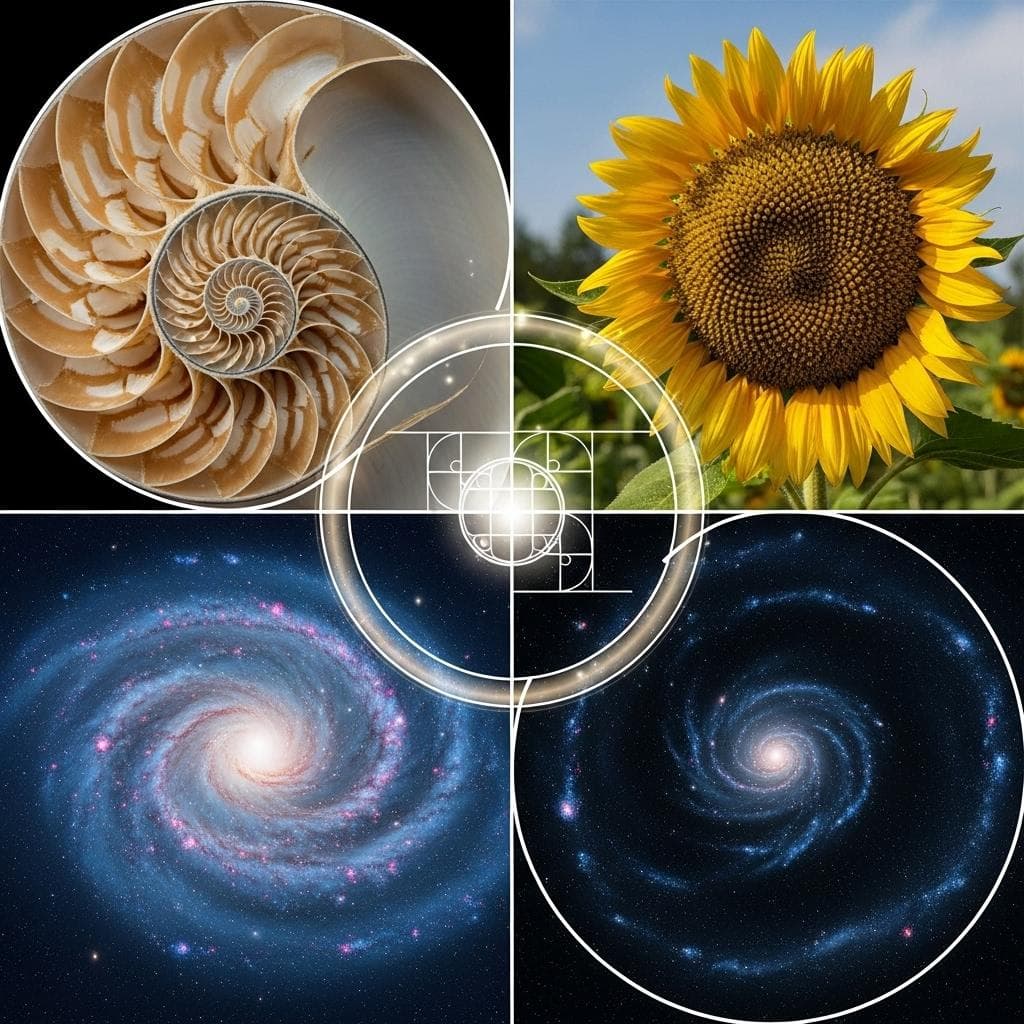
One of the most compelling examples of this mathematical order is the ubiquity of the Fibonacci sequence and the Golden Ratio (phi). The sequence (1, 1, 2, 3, 5, 8, 13...) appears with baffling regularity in the biological world.
- The number of petals on many flowers is a Fibonacci number (lilies have 3, buttercups 5, daisies often have 34, 55, or 89).
- The arrangement of seeds in a sunflower head follows Fibonacci spirals to maximize packing efficiency.
- The branching of trees, the structure of a pineapple, and the spiral of a nautilus shell all adhere to this sequence.
- Even our DNA molecule measures approximately 34 angstroms by 21 angstroms for each full cycle of its double helix-two adjacent Fibonacci numbers.
Is this all a massive coincidence, a result of evolutionary efficiency? Or is it evidence of a common mathematical blueprint being used repeatedly, like a recurring function in a piece of software?
The Language of Reality: Max Tegmark's "Mathematical Universe Hypothesis"
MIT cosmologist Max Tegmark takes this idea to its ultimate conclusion with his "Mathematical Universe Hypothesis." He argues that the universe isn't just described by mathematics-it is a mathematical structure. In this view, our physical reality is a complex manifestation of mathematical relationships, and our consciousness is the self-aware substructure within this system.
According to Tegmark, "If you believe in an external reality independent of humans, then you must also believe in what I call the mathematical universe hypothesis: that our physical reality is a mathematical structure." For Tegmark, this isn't simulation; it's identity. We aren't in a computer; we are, in a sense, living inside an equation.
Simulation vs. Identity: A Tale of Two Hypotheses
It's crucial to distinguish between these two powerful ideas. Nick Bostrom's Simulation Hypothesis proposes our reality is an artificial world running on a computer in a different, "base" reality. It implies a creator and a computational substrate. Tegmark's Mathematical Universe Hypothesis is more fundamental. It suggests there is no other reality; our universe is one of many possible mathematical structures, and the ones complex enough to contain self-aware substructures (like us) perceive themselves as physically real. One is a universe as a computer program; the other is a universe as pure math.
Pillar 3: Finding the Source Code - Information Theory and Digital Physics
If the universe is a program, could we ever find the code itself? This is where the third pillar of evidence comes in, from the field of information theory. This branch of science treats physical systems as carriers of information. Pioneered by physicist John Wheeler, the concept of "it from bit" suggests that every particle, every force, every "it" in the universe, derives its existence from binary information-bits.
"Error-Correcting Code" in String Theory: The Discovery of S. James Gates
This abstract idea found shocking support from an unexpected place: theoretical physics. Dr. S. James Gates Jr., a renowned string theorist, was working on the complex equations of supersymmetry-a theory that attempts to unify the fundamental forces of nature. Buried deep within these equations, he made a stunning discovery. He found what appeared to be a form of computer error-correcting code.
Specifically, he identified a type of code known as a doubly-even self-dual linear binary error-correcting block code. While this specific code isn't what your web browser uses today, it is a type of code fundamental to information theory, designed to ensure digital data is transmitted and stored reliably without corruption. To find these precise, information-preserving digital structures woven into the mathematical fabric of a theory describing the fundamental nature of reality was, for Gates, a game-changer. It has led him to the widely cited conclusion that he cannot establish a difference between the code and reality.
A Universe of Bits: John Wheeler's "It from Bit" Concept
Decades before Gates' discovery, the visionary physicist John Archibald Wheeler laid the philosophical groundwork. He proposed that the universe is not fundamentally made of matter or energy, but of information. His famous mantra, "it from bit," suggests that every physical object and phenomenon (every "it") arises from the answers to yes-or-no questions (the "bits").
When you observe an electron and its wave function collapses, you are essentially asking the universe a question: "Is the electron here?" The universe returns an answer: "Yes" or "No." In this view, reality is participatory. The universe is a vast quantum computer, and acts of observation are computations that define its state. This aligns perfectly with the idea of a reality rendered on demand, where information is the base layer of existence.
The Skeptic's View: Strongest Counterarguments to a Coded Universe
For all its tantalizing evidence, the Cosmic Code theory is far from proven. Skeptics and mainstream physicists raise several powerful counterarguments that must be addressed. These objections challenge the theory on grounds of feasibility, human psychology, and the very nature of complexity itself.
The Computational Problem: Is a Universe Simulation Even Possible?
The most straightforward objection is one of scale. The observable universe contains an estimated 10^80 atoms. To simulate the quantum state of every single particle in real-time would require a computer so vast and powerful that it would need to be larger than the universe it's simulating. Physicist Michio Kaku is often cited for his view that "the only computer capable of simulating a universe is the universe itself."
However, proponents counter this with the video game analogy. A game engine doesn't render every blade of grass in the entire world simultaneously. It only renders what the player can see. If our reality operates on a similar principle of "rendering on observation," the computational load would be drastically reduced, potentially making the simulation feasible.
The Illusion of Patterns: Are Humans Just Hardwired to See Order in Chaos?
Humans are masters of pattern recognition. It's an evolutionary trait that helped us survive. But this tendency, known as apophenia, can also lead us to see meaningful patterns where none exist-faces in the clouds, constellations in the stars, or the Fibonacci sequence as proof of design.
Skeptics argue that we cherry-pick examples like the sunflower and ignore the countless instances where nature is messy and doesn't conform to neat mathematical rules. The universe is vast and complex; by chance alone, we are bound to find apparent patterns. The question is whether these patterns are truly fundamental or just illusions created by our pattern-seeking brains.
Emergence vs. Design: Could Complexity Arise Naturally Without a Programmer?
Perhaps the most profound counterargument comes from the concept of emergence. This is the idea that complex systems and patterns can arise spontaneously from simple, underlying rules without any need for a grand designer or programmer. The intricate patterns of a snowflake emerge from the simple laws of physics governing water molecules. The complex behavior of an ant colony emerges from the simple instincts of individual ants.
From this perspective, the laws of physics aren't a computer program; they are simply the foundational rules from which all the universe's complexity has emerged over 13.8 billion years. The universe, skeptics argue, doesn't need a coder because it is a self-organizing, emergent system.
The Final Question: If It's a Code, Who is the Coder?
If we accept, for a moment, that we are living inside a program, the question is immediate and overwhelming: who or what wrote the code? This is where science ends and speculation begins. The possibilities are as vast as they are unsettling. Could it be a post-human civilization from the "base" reality running an ancestor simulation? Could it be an alien species running an experiment? Or is the coder not a being at all, but a natural, evolving mathematical consciousness-something far beyond our comprehension?
The Ghost in the Code: Consciousness and the Hard Problem
One of the deepest mysteries in science is the "hard problem of consciousness": why and how do physical processes in the brain give rise to subjective, qualitative experience? A coded universe offers a radical new perspective. If reality is information at its core, then perhaps consciousness is not an emergent property of biology, but a fundamental aspect of the code itself. Could consciousness be the system's way of experiencing itself? This doesn't solve the problem, but it reframes it in a way that moves beyond the limitations of pure materialism, suggesting our awareness might be more fundamental to reality than we ever imagined.
Hacking the Matrix: Could We Rewrite Reality?
If the universe truly runs on code, a tantalizing and terrifying question arises: can we hack it? In theory, if we could understand the source code and find a way to input new commands, we could potentially manipulate the laws of physics. This could mean anything from creating new forms of matter to altering the constants of nature or even manipulating spacetime. While this remains firmly in the realm of science fiction, the mere possibility underscores the monumental implications of this theory. It would transform us from passive observers of the universe to active programmers of our own reality.
Conclusion: Are We Living Inside the Cosmic Code?
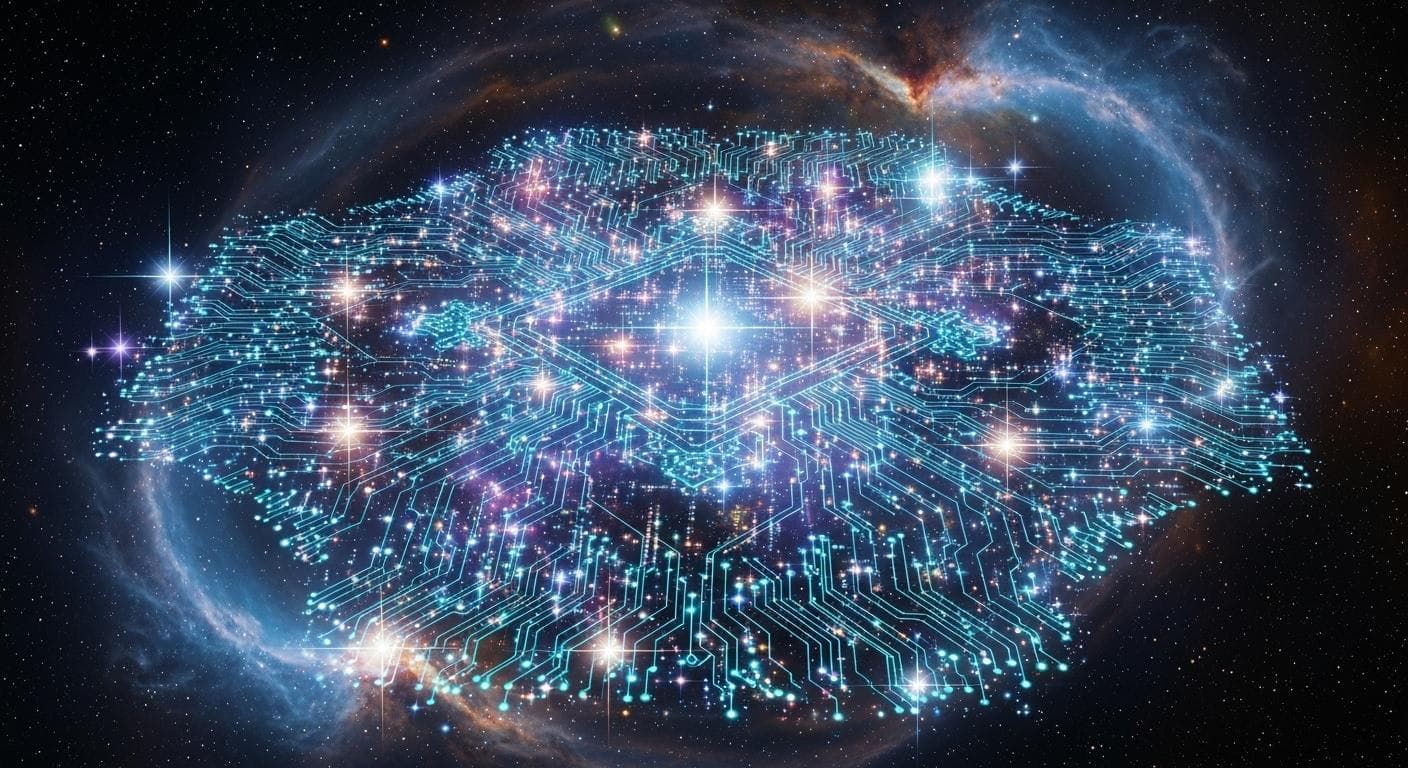
We stand at a fascinating crossroads. The evidence for a coded universe is not yet proof, but it is a collection of deeply strange and compelling clues that can no longer be easily dismissed. The observer effect in quantum mechanics, the pixelated nature of spacetime, the universal speed limit, the pervasive mathematical patterns, and the discovery of error-correcting code in fundamental physics all point in a similar, startling direction. Reality, at its deepest level, may be computational.
The debate between a universe of emergent complexity and one of intelligent design has been reframed. The counterarguments remain strong-the sheer scale of the task and our own cognitive biases are significant hurdles. Yet, the puzzle pieces continue to fit together in a way that suggests there is a bigger picture we are only just beginning to see. Whether we are the product of a cosmic accident or a cosmic algorithm, the search for an answer is perhaps the greatest scientific and philosophical quest of our time.
What do you think? Which piece of evidence for a "Cosmic Code" is the most convincing to you, and which counterargument do you find the most powerful? Share your perspective in the comments below. ```

Comments
We load comments on demand to keep the page fast.