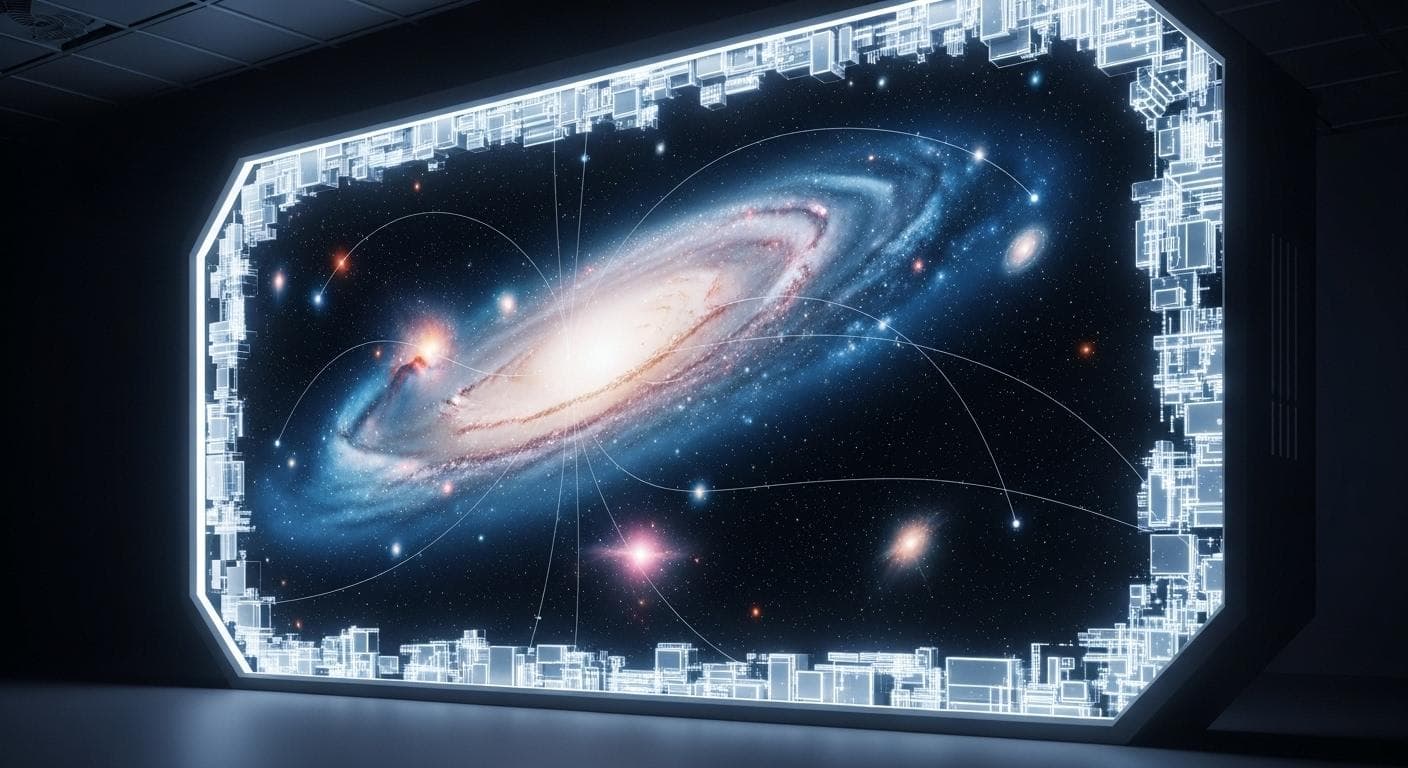
Take a look around you. The screen you're reading this on, the chair you're sitting in, the very air you're breathing-it all feels undeniably real. But what if it isn't? What if everything you know, every person you've met, every star in the sky, is part of an incredibly sophisticated computer program? This is the core of the Simulation Hypothesis, a concept that has migrated from the pages of science fiction to the serious discussions of physicists, philosophers, and technologists.
It's a staggering idea, suggesting that our universe is not the fundamental, or "base," reality, but rather an artificial one. Supporters believe it’s not just possible, but statistically probable. As we peer deeper into the fabric of the cosmos and the strange rules of quantum mechanics, we find clues that seem to point not to chaos, but to code. This guide will take you on a comprehensive journey through one of the most profound questions ever asked: Is our reality real?
What Is the Simulation Hypothesis? A Simple Explanation
At its heart, the Simulation Hypothesis proposes that our perceived reality is a simulation, created by a more advanced intelligence. Think of the most realistic, open-world video game you can imagine, with complex physics and non-playable characters who believe they are real. Now, imagine that technology advancing for thousands, or even millions, of years. The hypothesis suggests our universe could be one such simulation, indistinguishable from reality for those living inside it.
The Core Idea: Base Reality vs. Simulated Reality
This concept hinges on a simple distinction:
- Base Reality: The fundamental, physical universe where the simulators-our creators-exist. This is the reality that is not itself a simulation.
- Simulated Reality: Our universe. A program running on a computer in base reality. The beings within it (us) would likely be unaware of their artificial nature.
Just as a character in The Sims doesn't know it's being controlled by a player, we would have no innate knowledge that our world is constructed. All the laws of physics, from gravity to the speed of light, would simply be the programmed rules of our simulation.
From Plato's Cave to The Matrix: A Brief History of Questioning Reality
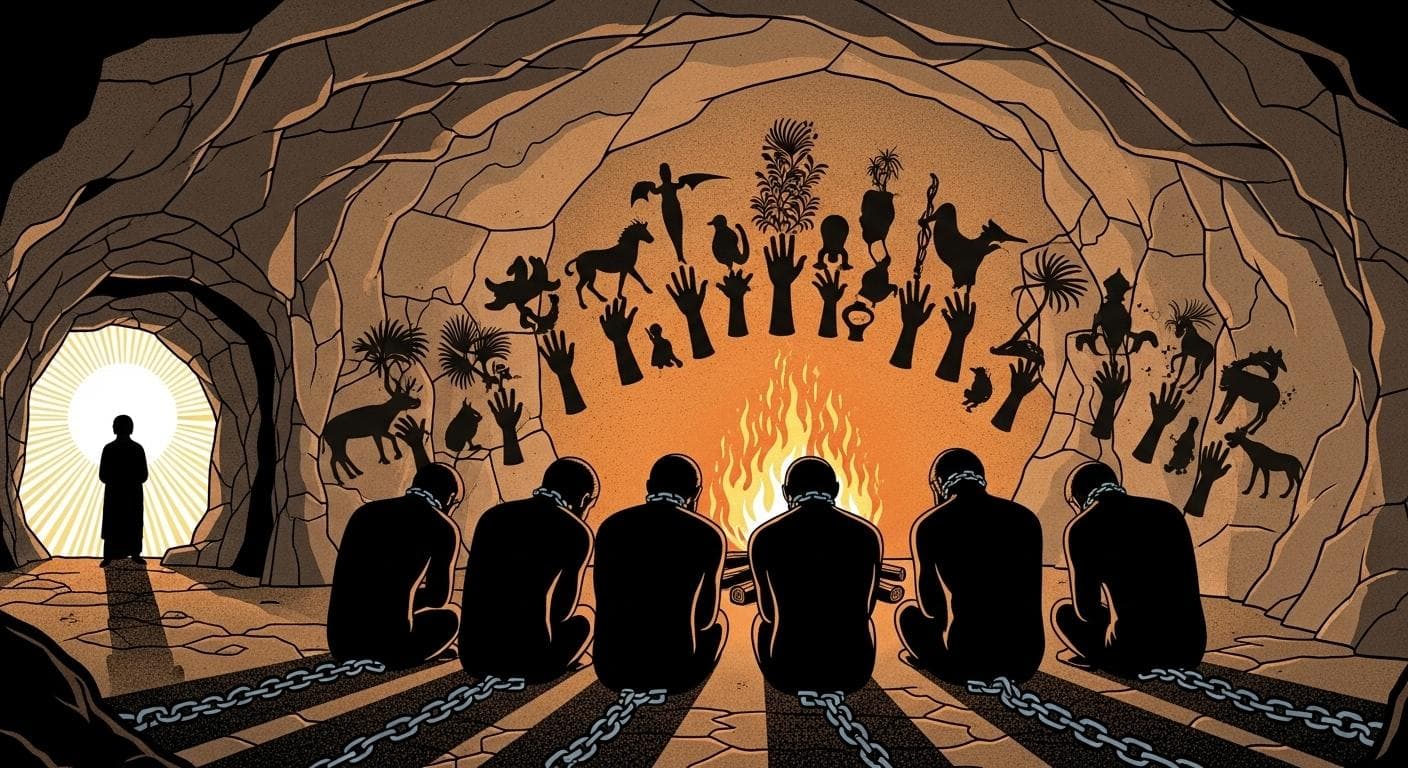
While the modern, technology-focused version of this idea is new, the underlying suspicion that our reality is an illusion is ancient. Over 2,000 years ago, the Greek philosopher Plato conceived his Allegory of the Cave. He imagined prisoners chained in a cave, able to see only shadows projected on a wall. To them, these shadows would be their entire reality, and they would have no concept of the true world outside causing them.
In the 17th century, René Descartes famously questioned everything he could possibly doubt, leading to his foundational thought experiment: what if an evil demon was deceiving him, creating a complete illusion of the external world? These philosophical seeds found fertile ground in the digital age, blossoming into the Simulation Hypothesis we debate today, popularized by films like The Matrix.
The Foundational Argument: Nick Bostrom's "Simulation Trilemma"
The idea was formalized in 2003 by Oxford philosopher Nick Bostrom in a paper that rocked both philosophical and scientific communities. Bostrom didn't argue that we are in a simulation, but rather that one of three very specific possibilities must be true. This is known as the Simulation Trilemma.
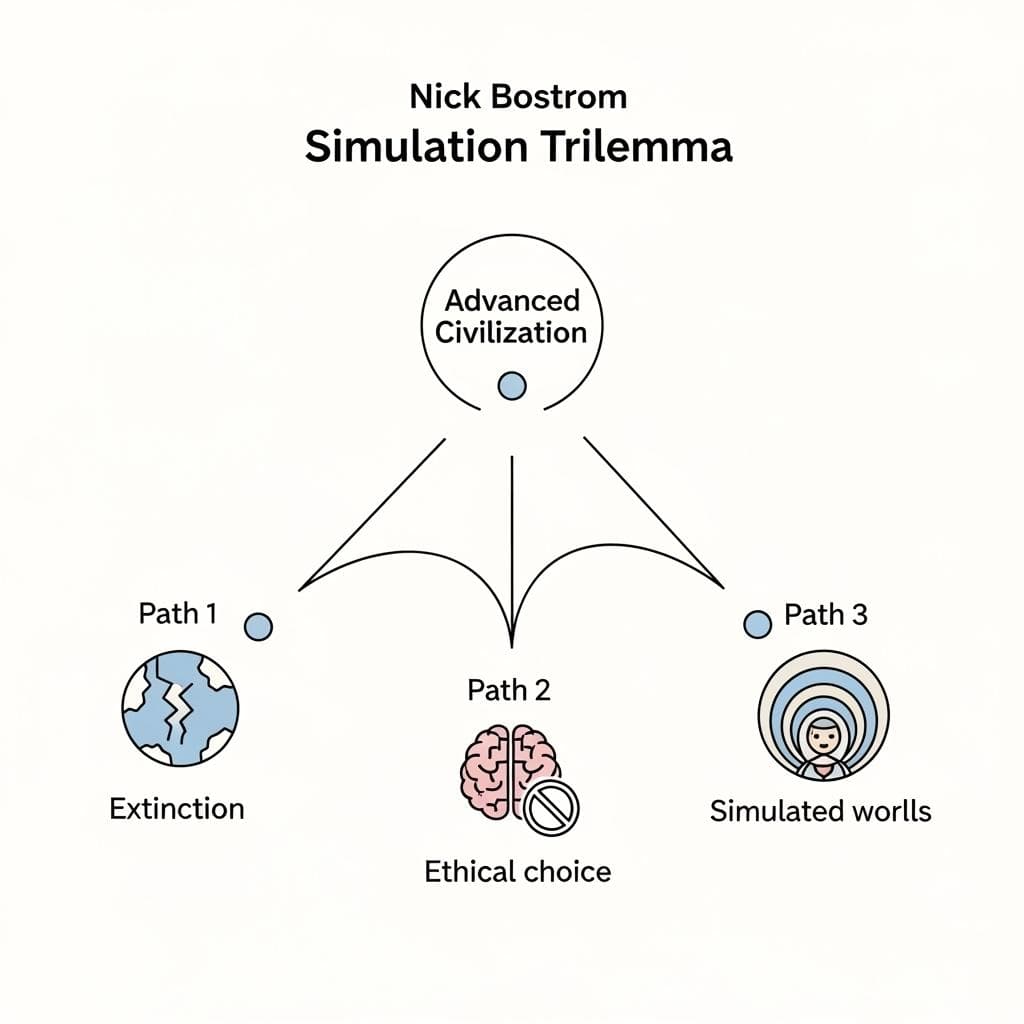
Assuming a civilization can reach a state of technological maturity capable of creating conscious, simulated worlds (what Bostrom calls "ancestor simulations"), one of the following must be true:
Option 1: The Great Filter (Civilizations Go Extinct)
This is the pessimistic option. It states that the fraction of human-level civilizations that reach a "posthuman" stage (one capable of running high-fidelity ancestor simulations) is virtually zero. In short, civilizations like ours almost always destroy themselves through war, climate change, or some other catastrophe before they can ever develop simulation technology. If this is true, then simulations are never created, and we are not in one.
Option 2: The Lack of Interest (Civilizations Choose Not to Simulate)
This option posits that posthuman civilizations could exist, but they have almost no interest in running ancestor simulations. Perhaps they consider it unethical, boring, or a waste of immense computational resources. If nearly all advanced civilizations make this choice, then very few simulations exist, making it unlikely we are in one.
Option 3: We Are Almost Certainly in a Simulation
If the first two options are false-meaning civilizations do survive to a posthuman stage and they are interested in running simulations-then the conclusion is almost unavoidable. An advanced civilization would likely run billions or even trillions of such simulations. Those simulated worlds might, in turn, create their own simulations, creating a cascade of realities. In this scenario, the number of simulated realities would vastly outnumber the one and only "base reality." Therefore, based on simple probability, we are almost certainly living in one of those countless simulations.
Prominent figures have weighed in, with Elon Musk famously stating the odds we are in base reality are "one in billions." Astrophysicist Neil deGrasse Tyson is more conservative, placing the odds at 50-50.
The Evidence: 5 Intriguing Clues That Our Universe Is Coded
While the hypothesis is philosophical, proponents point to several aspects of our universe that seem strangely consistent with a simulated reality.
Clue 1: The "Pixels" of Reality (Quantum Mechanics & The Double-Slit Experiment)
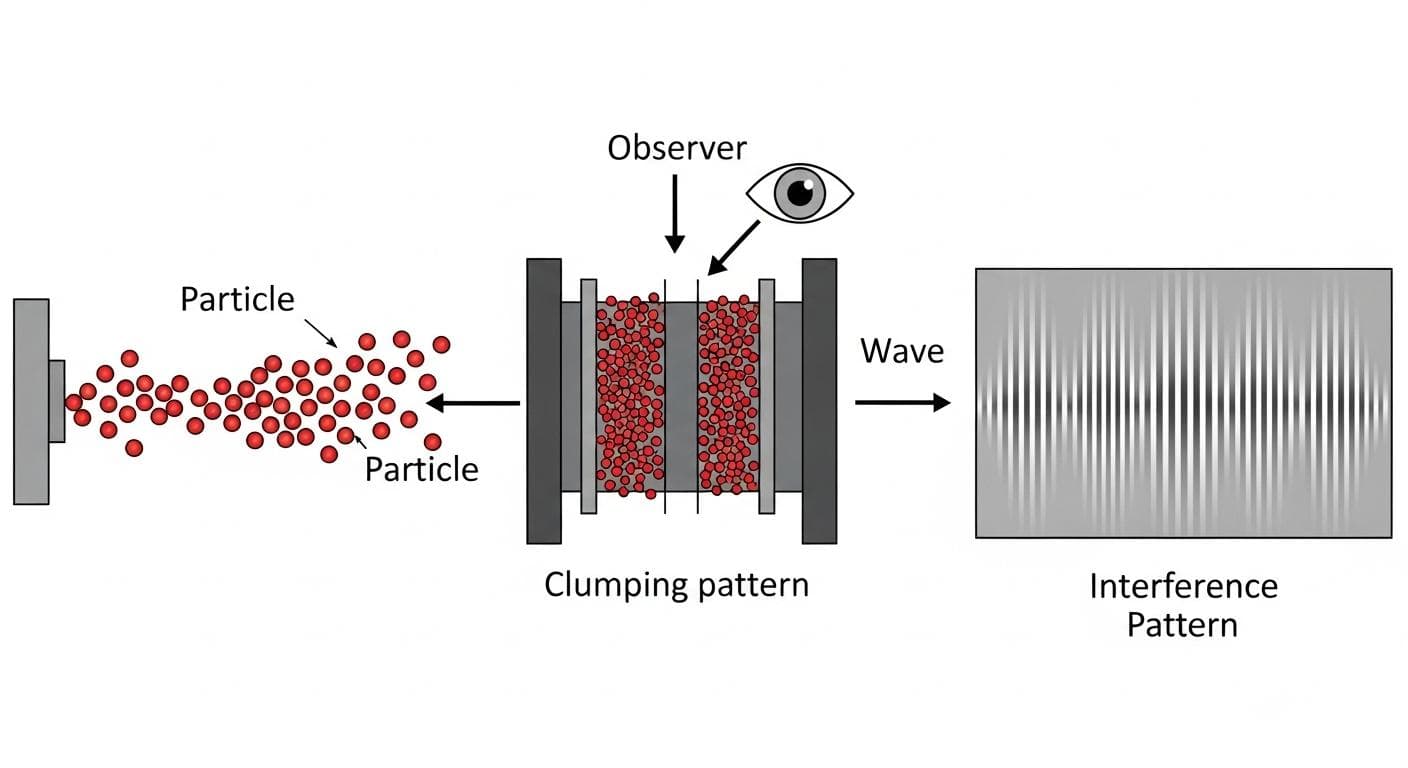
The world of quantum mechanics is notoriously bizarre and counterintuitive. One of its most famous experiments, the double-slit experiment, provides what many consider to be the strongest clue. Here's a simplified breakdown:
- When you fire particles (like electrons) at a screen through two slits, they don't create two simple bands as you'd expect. Instead, they create an "interference pattern," acting like waves that have passed through and interfered with each other.
- This is strange enough, but it gets weirder. When scientists place a detector to observe which slit each electron goes through, the very act of observation changes the outcome. The interference pattern vanishes, and the electrons behave like normal particles again, creating two distinct bands.
It's as if the universe doesn't bother rendering a definitive state for a particle until a conscious observer looks at it. This is strikingly similar to how video games optimize performance. A game engine doesn't render the detailed contents of a building far in the distance; it only renders what the player is currently looking at to save processing power. Could our reality be doing the same thing at the quantum level? To learn more, delve into The Quantum Observer Effect: How the Double-Slit Experiment Challenges Reality.
Clue 2: The Universal Speed Limit (The Speed of Light)
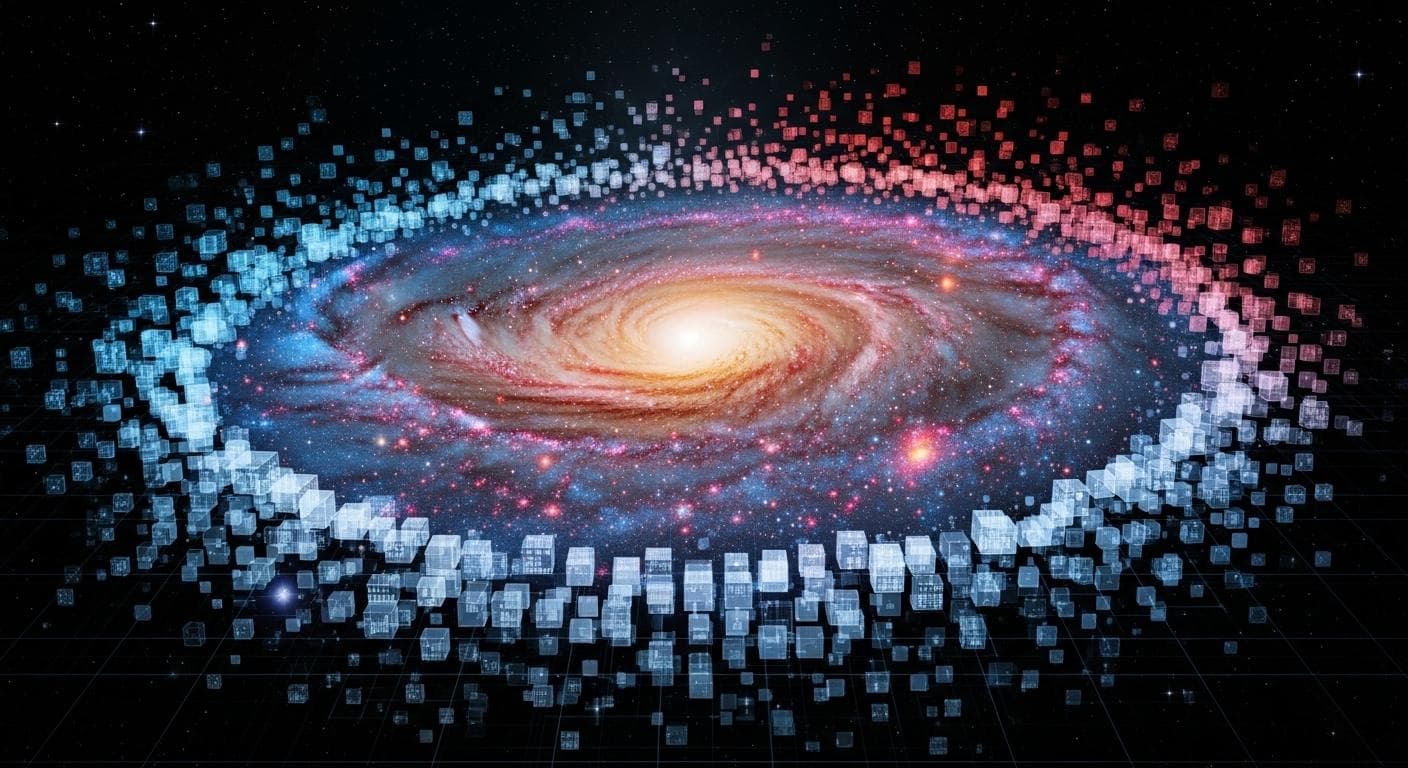
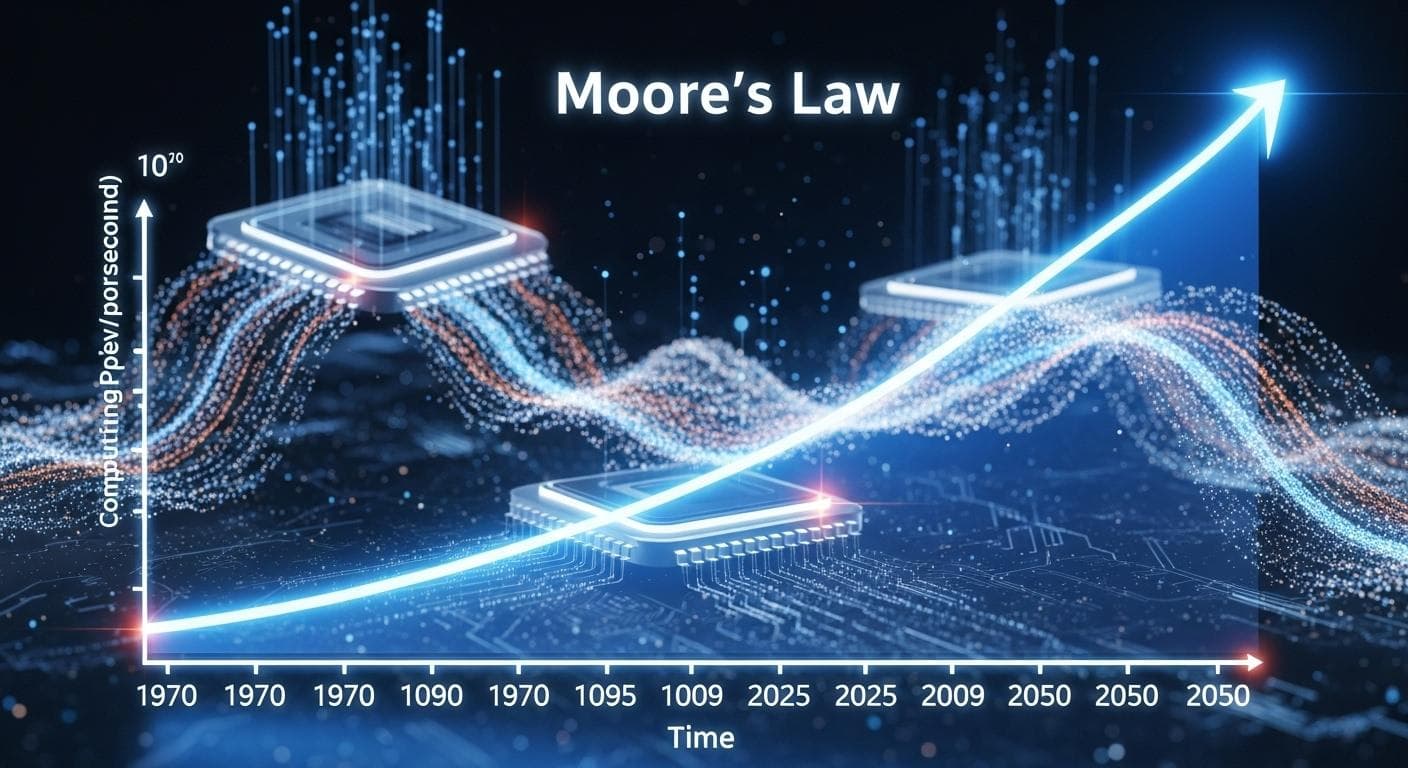
In our universe, nothing with mass can travel faster than the speed of light. It's an absolute, unbreakable rule. In a physical universe, why should there be an ultimate speed limit? But from a computational perspective, it makes perfect sense. A processor in a computer can only handle calculations at a certain maximum speed. A universal speed limit could be the equivalent of our simulation's "processor speed," a built-in constraint to prevent the system from being overloaded.
Clue 3: The Mathematical Fabric (The Unreasonable Effectiveness of Math)
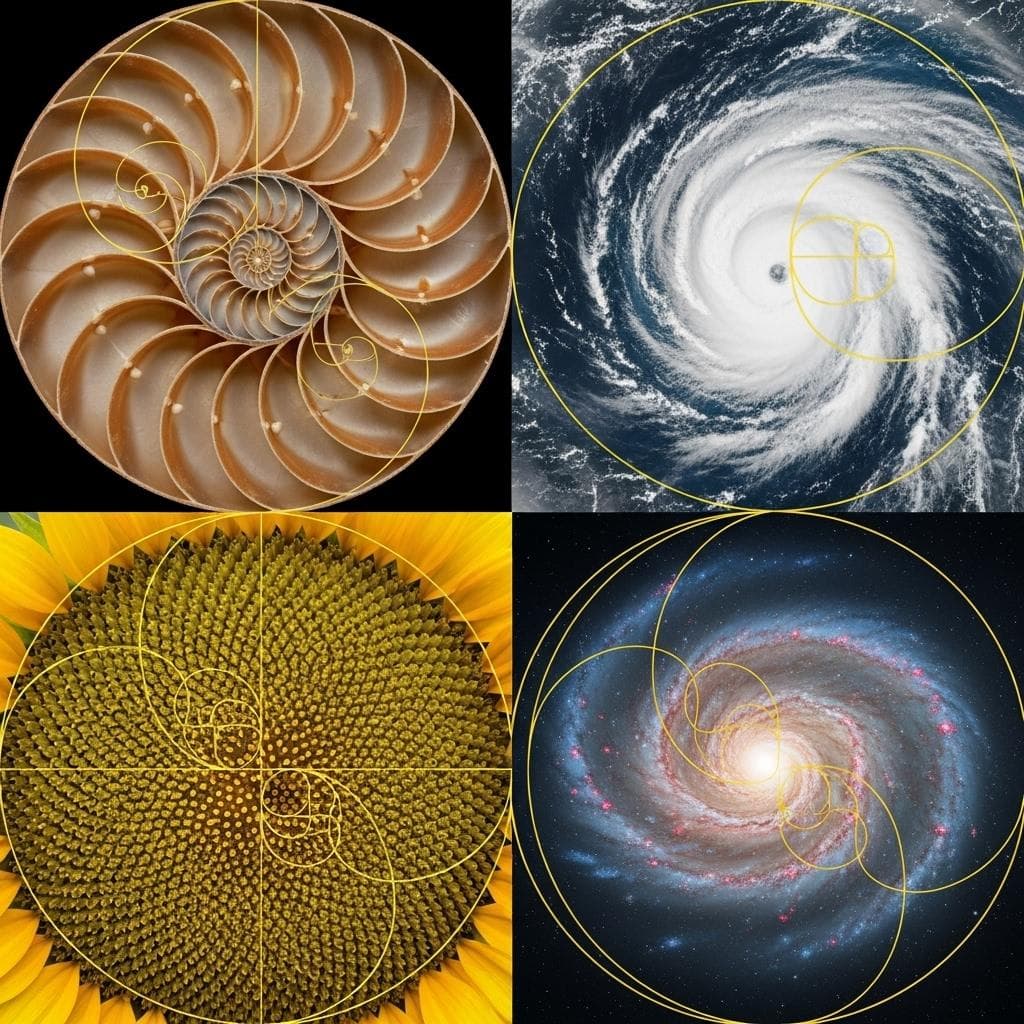
Physicists have long been amazed by how perfectly the universe can be described by elegant mathematical equations. From Einstein's E=mc² to the complex formulas of string theory, the cosmos seems to operate on a deep, underlying mathematical structure. This has led some, like MIT cosmologist Max Tegmark, to propose that the universe isn't just described by math-it is a mathematical structure. If reality is fundamentally information and rules, it's a short leap to imagining it as a computer program.
Physicist James Gates Jr. took this a step further, claiming to have found what appears to be error-correcting code-the same kind used in computer browsers-embedded within the equations of supersymmetry. This fascinating discovery suggests a deeper connection between the laws of physics and computational principles, as explored further in The Cosmic Code: Finding Math and Computer Code in the Fabric of the Universe.
Clue 4: Glitches in the Matrix? (Déjà Vu and The Mandela Effect)
This is more speculative, but many point to strange psychological phenomena as potential "glitches." Déjà vu, the uncanny feeling of having already experienced a moment, could be a simulation correcting itself or reloading a previous state. The Mandela Effect, where large groups of people share false memories (like remembering Nelson Mandela dying in prison in the 1980s), could be evidence of a patch or update to the simulation's history, with our memories being relics of a previous version. Dive deeper into these strange phenomena in Glitches in the Matrix: Is the Mandela Effect and Déjà Vu Proof of a Simulation?.
Clue 5: The Great Silence (Solving the Fermi Paradox)
The Fermi Paradox asks: If the universe is teeming with billions of stars and planets, where are all the aliens? Despite decades of searching, we've found no evidence of other technologically advanced civilizations. The Simulation Hypothesis offers a simple, if chilling, answer. Perhaps the simulation was created only to model humanity, and the vast, empty cosmos is just an efficient, unpopulated backdrop designed to keep us contained. There are no aliens because they were never programmed into our instance of the simulation. This idea is further explored in Solving the Fermi Paradox: Are Cosmic Limitations a Feature of Our Simulation?.
The Counterarguments: 3 Major Scientific Reasons for Skepticism
For all its intriguing clues, the Simulation Hypothesis faces significant scientific and logical hurdles. Many physicists remain deeply skeptical.
The Computational Problem: Is It Even Possible to Simulate a Universe?
Critics like physicist Michio Kaku argue that the sheer scale of the computation required is impossible. The universe contains an estimated 10⁸⁰ atoms. To track the position, velocity, and state of every single particle from the Big Bang to the present would require a computer larger than the universe itself. The energy requirements would be astronomical, potentially requiring multiple Dyson Spheres (megastructures built around stars to capture all their energy). This challenge is extensively detailed in The Ultimate Computer: The Science and Challenges of Simulating an Entire Universe.
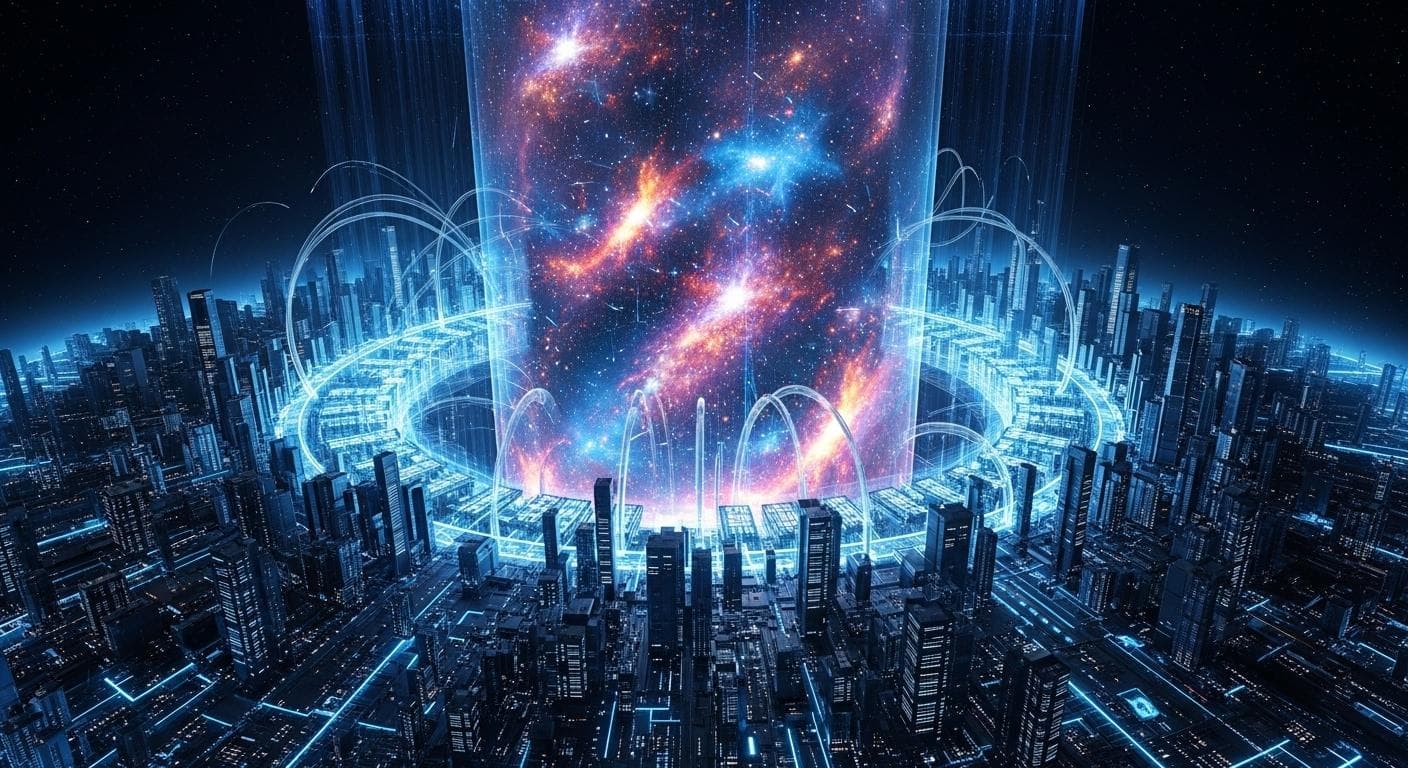
While proponents counter with the "video game optimization" argument (only render what's observed), skeptics argue this doesn't fully solve the problem, as the underlying simulation must still account for the potential interactions of every particle, even unobserved ones.
The Complexity Problem: Quantum Systems Are Too Hard to Model
Even simulating a single complex molecule at the quantum level is a task that pushes the limits of our most powerful supercomputers. To simulate the quantum interactions of everything in the universe simultaneously is a challenge of a different order of magnitude entirely. Some physicists argue that the nature of quantum mechanics is fundamentally non-computable, meaning it simply cannot be simulated on any classical (or even quantum) computer as we understand them.
The Self-Defeating Argument: If It's True, We Can't Trust Our Science
This is a potent philosophical counter. The entire Simulation Hypothesis is built upon our observations of physics, logic, and probability. But if we are in a simulation, the creators could be feeding us false or misleading laws of physics. Our entire process of reasoning, including the logic that leads to Bostrom's Trilemma, could be an implanted artifact of the simulation. If the hypothesis is true, it undermines the very tools we used to arrive at it, creating a logical paradox.
Simulation Hypothesis vs. Holographic Principle
It's important not to confuse the Simulation Hypothesis with another mind-bending concept from physics: the Holographic Principle. While they sound similar, they are fundamentally different.
- The Holographic Principle is a theory from string theory and quantum gravity. It suggests that all the information contained within a volume of space (like our 3D universe) can be described by a theory on the boundary of that space (a 2D surface). It's a statement about how information is stored in the universe, not that the universe is a computer program.
- The Simulation Hypothesis is the claim that our reality is an artificial construct running on a computer.
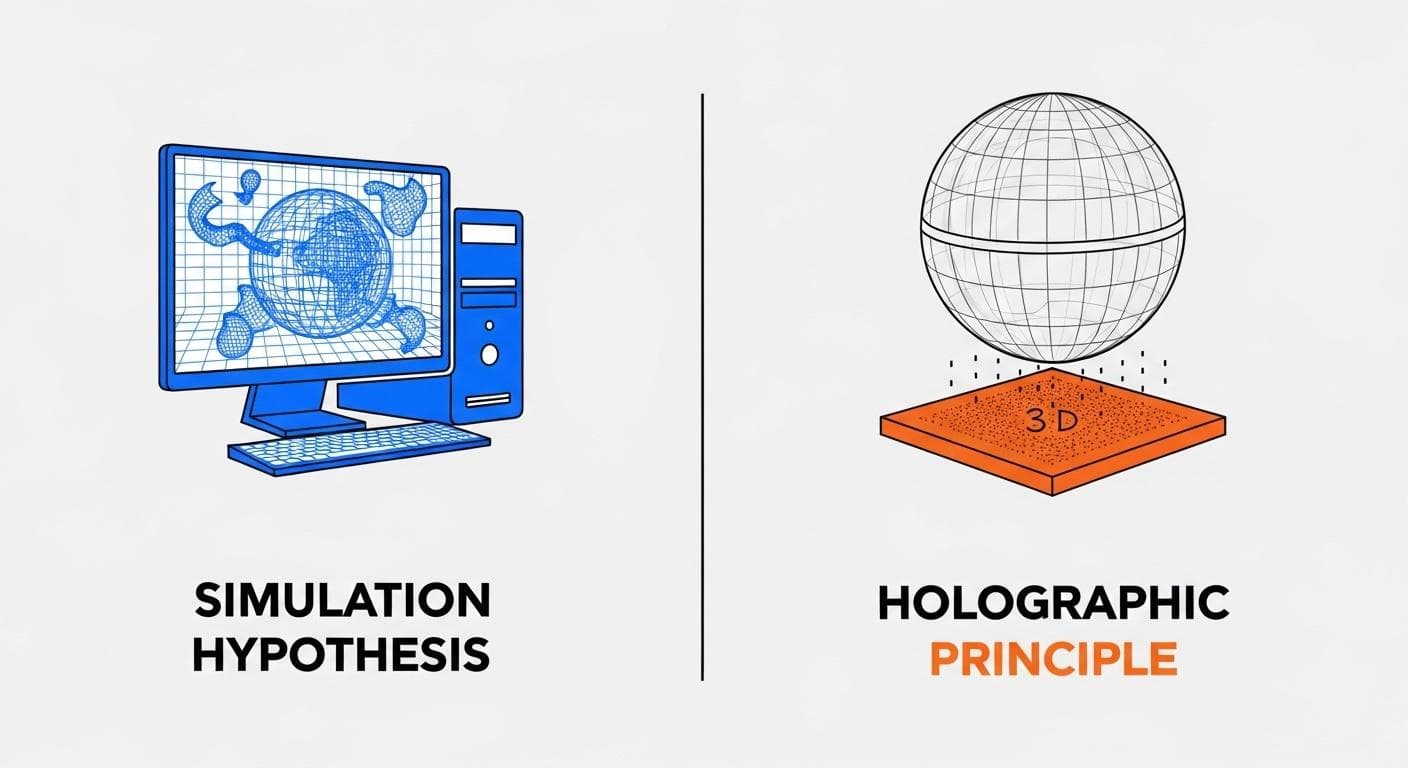
In essence, the Holographic Principle is a potential law of our universe's physics, while the Simulation Hypothesis proposes that our universe's physics are themselves the product of a computer program.
How Would We Prove It? The Search for the "Source Code"
So, could we ever find definitive proof? While it seems impossible, scientists have proposed several theoretical avenues for investigation.
Are There Active Experiments?
There are no large-scale, funded experiments to prove the simulation hypothesis, but there are proposed observational tests. One prominent idea involves searching for signs of the underlying "resolution" of the universe. If spacetime is discrete (like pixels on a screen) rather than continuous, we might be able to detect this. A proposed method is to observe the behavior of very high-energy cosmic rays. If spacetime is a grid, these cosmic rays should not travel equally in all directions; their path might show a slight preference along the axes of the grid. So far, no such evidence has been found, but our instruments are constantly improving.
What Would "Proof" Actually Look Like?
Definitive proof would likely come from discovering a mathematical anomaly or a physical observation that is completely inexplicable under the known laws of physics but makes perfect sense as a computational shortcut or limitation. Imagine finding a "bug" in the physics engine of reality, or discovering that a physical constant, thought to be universal, subtly changes in a way that suggests a rounding error in a massive calculation. This would be the equivalent of finding the "source code."
The Ultimate Hurdle: Is the Hypothesis Falsifiable?
Here we encounter a major philosophical problem. A cornerstone of the scientific method, championed by philosopher Karl Popper, is the principle of falsifiability. For a theory to be considered scientific, there must be a potential observation or experiment that could prove it false. The Simulation Hypothesis struggles with this. Any lack of evidence can be explained away: we haven't found the spacetime grid because the resolution is too high; we haven't found a bug because the code is too good. If the simulators are intelligent enough, they could actively hide any evidence from us. Because it may be impossible to design an experiment that could definitively disprove the theory, many argue it lies outside the realm of science and firmly in metaphysics.
What If It's True? The Philosophical and Ethical Implications
The confirmation of the Simulation Hypothesis would be the single most profound discovery in human history, forcing us to re-evaluate everything we thought we knew about existence, purpose, and God.
Does Life Still Have Meaning?
Many fear that if this reality is "not real," then life becomes meaningless. But philosophers argue this isn't necessarily so. The pain, joy, love, and suffering we experience are real to us. Our reality is the only one we have, and our actions within it still have consequences for ourselves and others. Just because a game is running on a computer doesn't make the experience of playing it meaningless to the player. In fact, one could argue it places even more importance on ethics and kindness, as we are all participants in this shared experience.
Simulation Theory vs. Religion: A New Kind of Creator?
Interestingly, the hypothesis reframes ancient religious questions in a technological context. The "creator" of the simulation would be an omniscient intelligence existing outside our space and time, capable of setting the laws of physics and observing our world. This sounds remarkably similar to the definition of God in many religions. Does this theory provide a scientific backdoor to deism? Or is it a modern, secular retelling of an ancient creation myth? It forces us to confront the possibility that the line between creator and programmer is thinner than we ever imagined. Explore these profound connections further in God in the Machine: Exploring the Parallels Between Simulation Theory and Religion.

Conclusion: The Ultimate Question Without an Answer
The Simulation Hypothesis is one of the most compelling and unsettling ideas of our time. It forces us to confront the fundamental nature of reality itself. While the evidence is circumstantial and the counterarguments are strong, the question persists because it taps into a deep human intuition that there might be more to reality than meets the eye. For now, it remains a tantalizing thought experiment, a fusion of ancient philosophy and cutting-edge science.
Ultimately, whether we are biological beings in a physical universe or strings of code in a cosmic computer, our experience remains the same. The quest for knowledge, the capacity for love, and the search for meaning are just as important. The simulation, if it is one, is our reality, and it's the only one we've got. It is up to us to make it a good one.
What do you think? If you discovered for certain that we were living in a simulation, how would it change your perspective on life, if at all? Let us know your thoughts in the comments below.

Comments
We load comments on demand to keep the page fast.