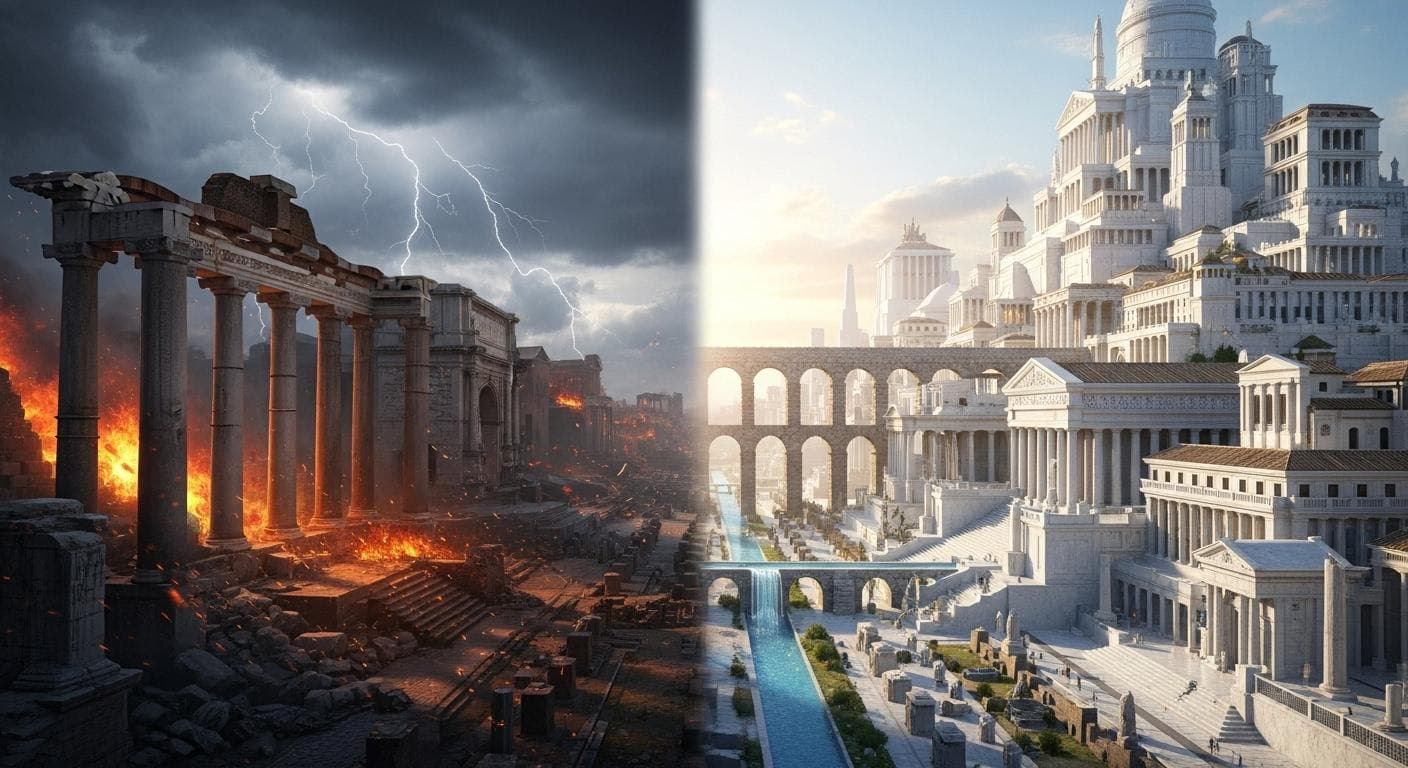
By the middle of the third century CE, the Roman Empire was not dying; it was already dead. The glorious superpower that had dominated the known world for centuries had fractured into pieces, its economy was in a death spiral, and its throne had become a death sentence. The era we now call the Crisis of the Third Century was a 50-year storm of civil war, plague, barbarian invasion, and economic collapse. It was a complete system failure.
From this smoldering wreckage, two of history's most consequential leaders rose to perform the ultimate turnaround. Diocletian, the stern architect, and Constantine, the visionary builder, did not simply patch up the old empire. They dismantled its crumbling remains and engineered a new, more resilient, and far more autocratic state. Their reforms were a set of radical political technologies designed to solve catastrophic problems. This is the story of how they didn't just save Rome, but reinvented it, setting the stage for the next thousand years of history.
The Fire This Time: Why Rome Was on the Brink of Collapse (The Crisis of the Third Century)
To understand the sheer scale of Diocletian and Constantine's achievement, one must first grasp the abyss into which Rome had fallen. The "Pax Romana," the two centuries of relative peace and prosperity, was a distant memory. The empire was tearing itself apart from the inside out, crippled by three core existential threats.
Decades of Chaos: Runaway Emperors and Endless Civil War
The most glaring problem was the complete breakdown of political succession. The position of Emperor became a blood sport. In the 49 years between 235 and 284 CE, at least 26 men claimed the title of emperor, and almost all of them died violently. These "Barracks Emperors" were generals proclaimed by their legions, who would then march on Rome, kill the previous emperor, and rule for a few months or years until they, too, were assassinated by a rival. This constant churn meant there was no stability, no long-term planning, and no loyalty beyond the sword.
Economic Meltdown: Hyperinflation and a Worthless Currency
To pay the soldiers who kept them in power, emperors resorted to a disastrous economic policy: debasing the currency. They continuously reduced the amount of precious metal, like silver, in their coins, replacing it with cheaper metals like bronze or copper. The Roman denarius, once a trusted silver coin, became a silver-washed piece of junk. People lost all faith in money. The result was runaway hyperinflation. Prices for everyday goods skyrocketed, trade ground to a halt as bartering returned, and the state's ability to collect taxes in a worthless currency evaporated.
A Shattered Realm: Barbarian Invasions and Breakaway Empires
With the central government in chaos and legions busy fighting each other, the empire's vast borders became porous. Germanic tribes like the Goths and Alamanni surged across the Rhine and Danube rivers, while the powerful Sassanian Empire in Persia pressed from the east. The crisis became so severe that the empire itself broke apart. For over a decade, the Gallic Empire (comprising Gaul, Britain, and Hispania) and the Palmyrene Empire (ruling Egypt and the Levant) operated as independent states, taking with them the empire's richest provinces and a huge portion of its army.
The Architect of Order: Diocletian's Radical Blueprint for Survival (284-305 CE)
Into this vortex stepped Gaius Aurelius Valerius Diocletianus, a brilliant general of humble origins who seized power in 284 CE. He understood that the old system, the "Principate" founded by Augustus, was broken beyond repair. He instituted a new system, the "Dominate," where the emperor was no longer the "first citizen" but an absolute monarch, a divine figure set far apart from the masses. His reforms were a top-to-bottom re-engineering of the Roman state.
Taming the Chaos: The Tetrarchy and the "Rule of Four"
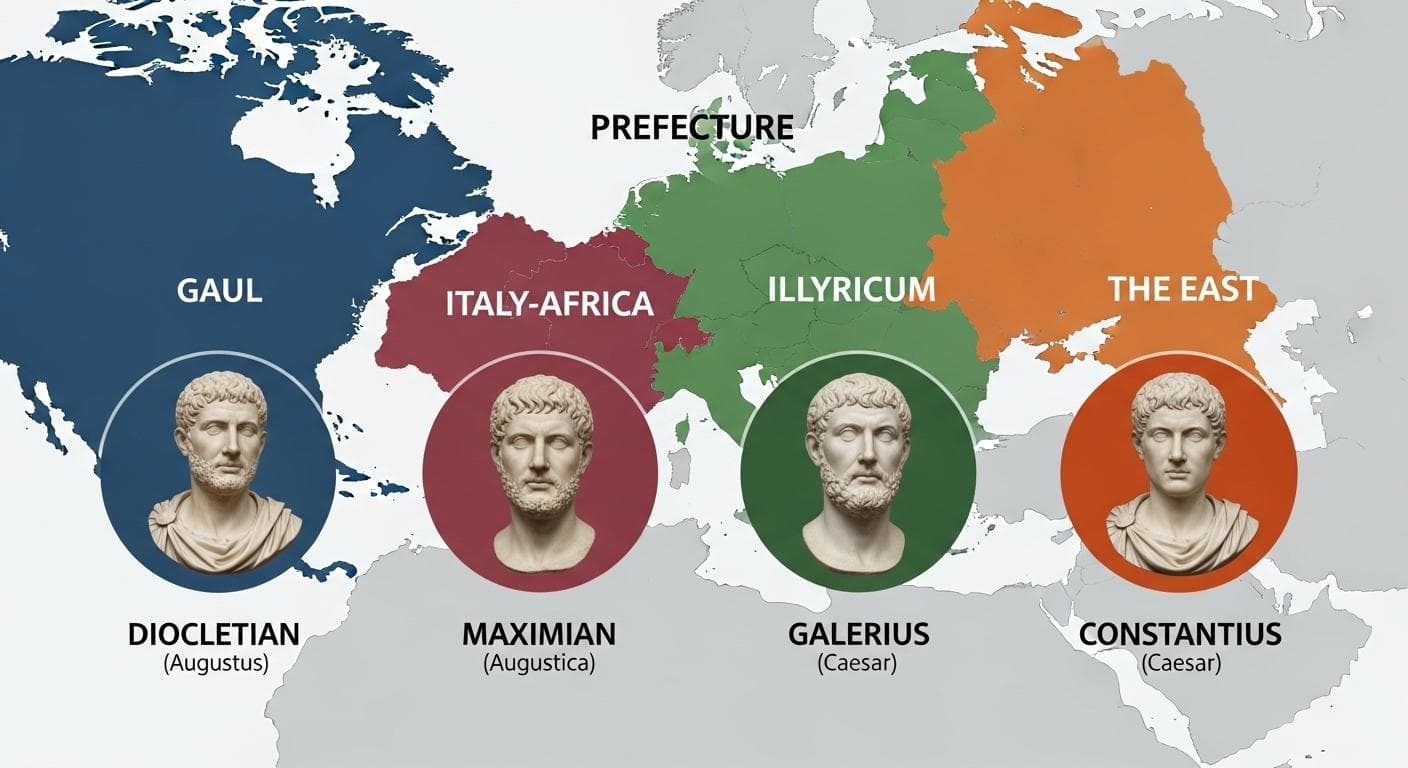
Diocletian's single most famous innovation was the Tetrarchy. Realizing the empire was too vast for one man to rule, he divided it. He appointed a co-emperor (an Augustus) named Maximian to rule the West while he ruled the East. Then, he went a step further, appointing a junior emperor (a Caesar) under each Augustus. Galerius served under Diocletian in the East, and Constantius served under Maximian in the West. This "Rule of Four" had two goals: to provide stable leadership in all parts of the empire simultaneously and, crucially, to solve the succession crisis. The plan was for the Caesars to succeed the Augusti, and then appoint new Caesars. It was a brilliant, non-hereditary system designed to eliminate the civil wars that had plagued Rome.
Rebuilding the State: Provincial, Military, and Bureaucratic Overhauls
Diocletian doubled the number of provinces from around 50 to over 100. This wasn't for expansion; it was for control. By making provinces smaller, he weakened the power of individual governors, making it harder for them to launch rebellions. He then grouped these provinces into twelve "dioceses," creating a new layer of administration.
Crucially, he separated civil and military power. Provincial governors no longer commanded legions. This brilliant move ensured that a governor with political ambitions couldn't use a local army to make a play for the throne. He also massively expanded the army and the civil bureaucracy, creating a larger, more complex, and more expensive government machine to enforce his will.
Fighting Inflation: The Draconian Edict on Maximum Prices
To combat hyperinflation, Diocletian tried a form of brute-force economics. In 301 CE, he issued the Edict on Maximum Prices, which set a fixed legal price for over a thousand goods and services, from wheat and eggs to haircuts and legal fees. The penalty for violating the edict was death. While a bold attempt, it was an economic disaster. Producers couldn't afford to sell goods at the mandated low prices, leading to widespread shortages and the rise of a massive black market. The edict was ultimately unenforceable and eventually ignored.
The Last Persecution: A Final, Failed Attempt at Religious Unity
Diocletian saw the growing Christian faith, with its refusal to participate in the imperial cult, as a threat to traditional Roman values and unity. He unleashed the "Great Persecution," the most severe and systematic oppression of Christians in the empire's history. His goal was to stamp out the religion and restore ideological conformity. However, like his price controls, this policy failed. The faith only grew stronger under the pressure, demonstrating the limits of even his absolute power.
The Visionary Successor: Constantine's Completion of the New Model (306-337 CE)
Diocletian's Tetrarchy ultimately failed its primary goal of ensuring a peaceful succession. After he voluntarily retired in 305 CE-the first Roman emperor to do so-a series of brutal civil wars erupted among the Caesars and their sons. The victor who emerged from this bloody chaos was Flavius Valerius Constantinus, or Constantine the Great. Constantine didn't reject Diocletian's new state; he embraced its autocratic structure but gave it a new foundation and a new future.

From Tetrarchy to Dynasty: The Violent Consolidation of Power
Constantine systematically dismantled the Tetrarchy. He believed in his own destiny and the right of his family to rule. Over two decades of warfare, he defeated all his rivals, reuniting the entire empire under his sole command by 324 CE. He kept Diocletian's administrative and military structures but replaced the principle of meritocratic succession with a hereditary dynasty, paving the way for his sons to inherit the empire.
A New Faith for a New Empire: The Embrace of Christianity and the Edict of Milan
Constantine's most revolutionary act was his reversal of religious policy. Famously converting after a vision of a Christian symbol before a key battle, he understood that Christianity was not a threat to be destroyed but a force to be harnessed. In 313 CE, the Edict of Milan, issued with his co-emperor Licinius, officially granted religious tolerance throughout the empire, ending the persecutions. Constantine went much further, actively patronizing the Church, funding the construction of magnificent basilicas, and elevating bishops to positions of influence. He made Christianity the ideological glue for his new Roman state.

A New Capital for a New Era: The Founding of Constantinople
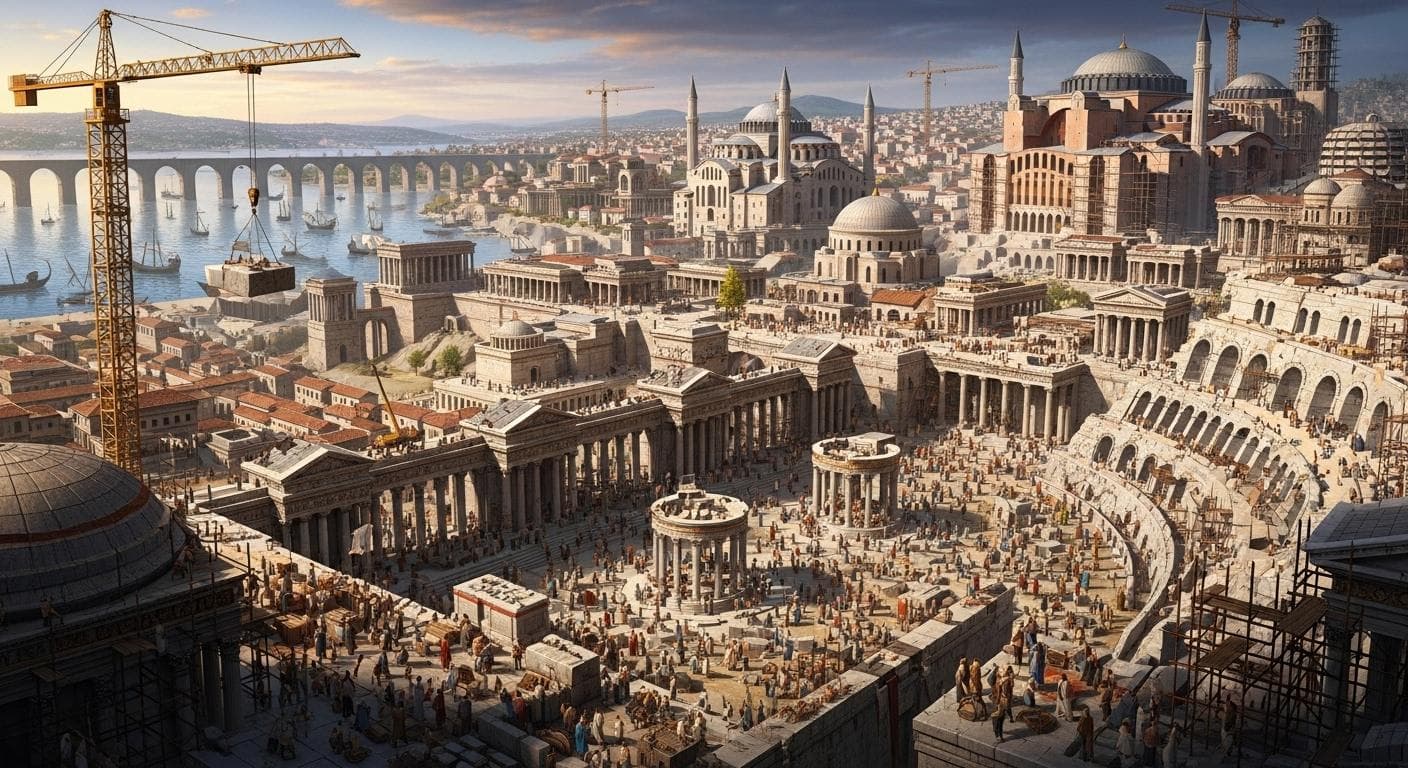
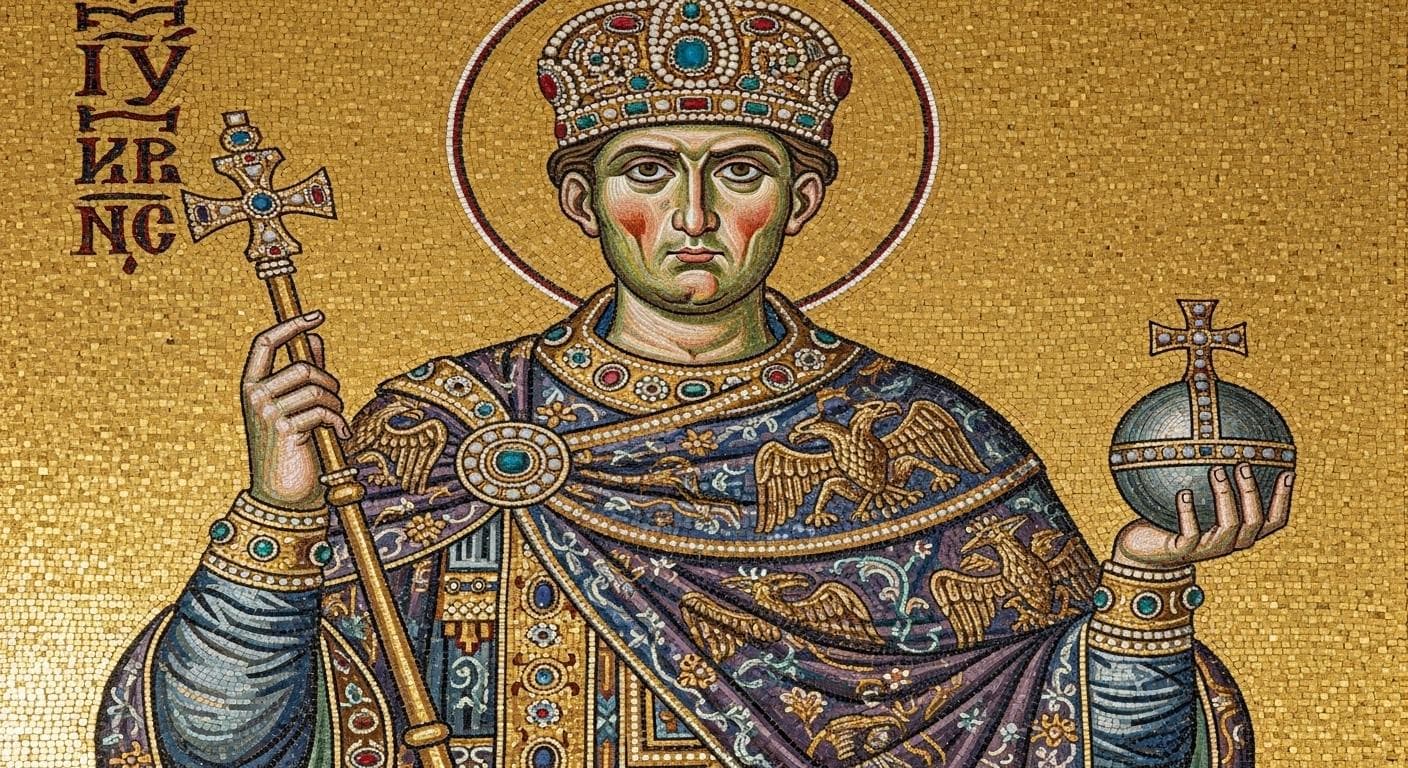
Constantine recognized that the empire's center of gravity-its wealth, population, and strategic challenges-had shifted east. The old city of Rome was politically symbolic but strategically obsolete. In 330 CE, he inaugurated his magnificent new capital, Constantinople, on the site of the ancient Greek city of Byzantium. Positioned at the crossroads of Europe and Asia, it was a defensive fortress and a commercial hub. This "New Rome" would become the heart of the empire for the next thousand years.
Stabilizing the Economy: The Gold Solidus and the Price of Autocracy
Where Diocletian's price controls failed, Constantine's monetary reform succeeded spectacularly. He introduced a new gold coin, the Solidus, which would maintain its weight and purity for over 700 years, becoming the most trusted currency in the Mediterranean world. This provided the economic stability the empire desperately needed. However, this stability came at a cost. To guarantee the state's tax base, Constantine's government enacted laws that made many professions, such as farming and soldiering, hereditary. Society became more rigid, tying people and their children to their land and their jobs.
The Verdict of History: Did They Save Rome or Merely Delay the Inevitable?
So, what was the ultimate legacy of these two titans? Their reforms were undeniably successful in the short term, pulling the empire back from the brink and giving it a new lease on life. But they also created a very different kind of empire, sowing the seeds of future developments.
The Success: A Century of Stability and the Birth of Byzantium
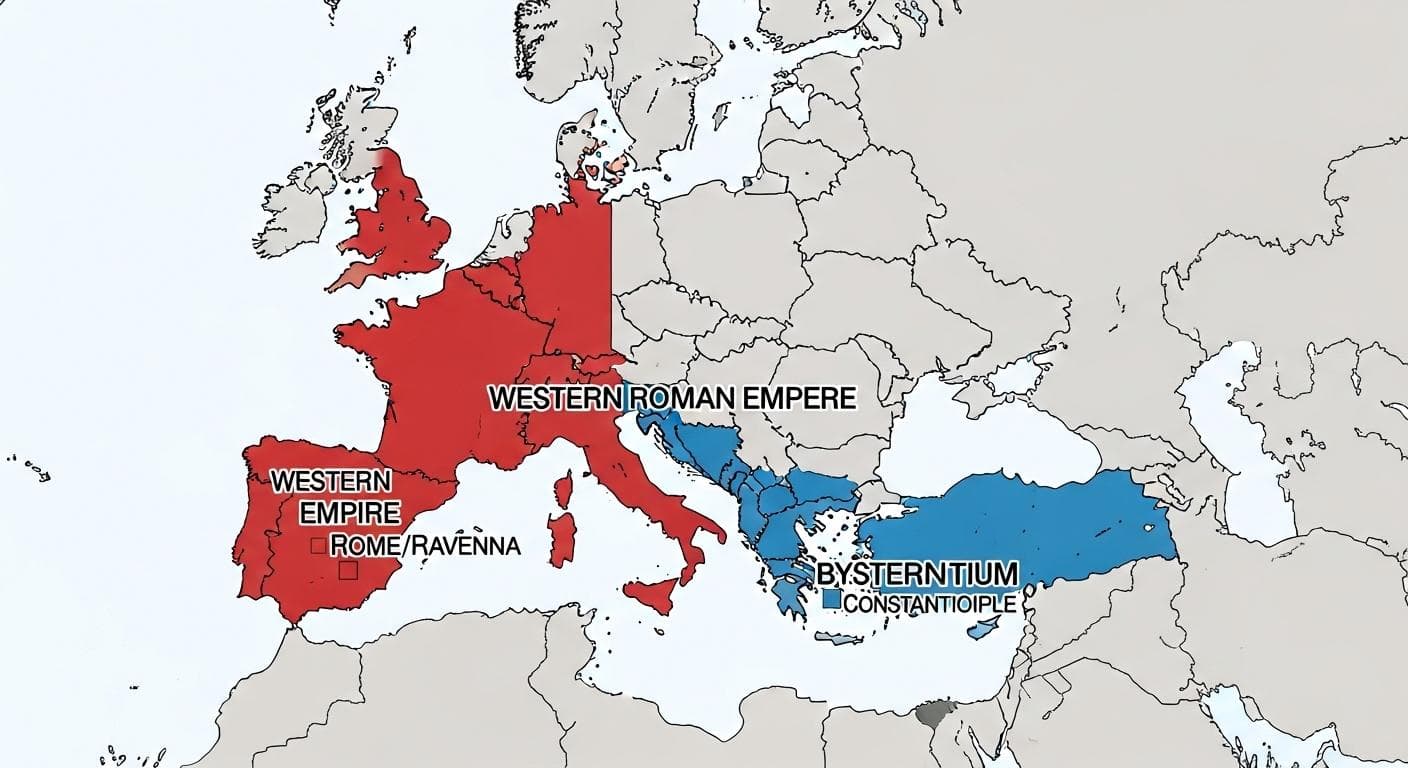
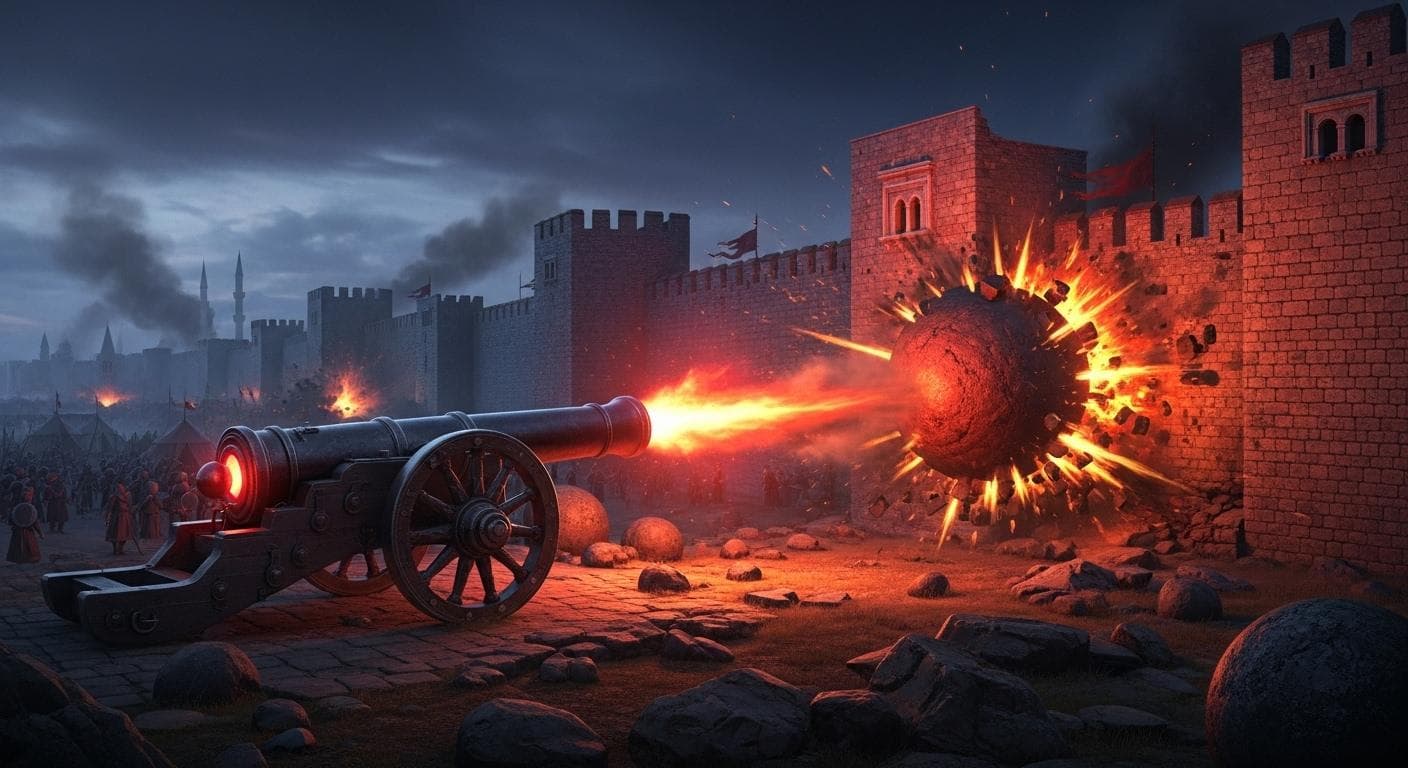
Their work gave the Roman world another century and a half of life in the West and over a millennium in the East. The administrative and military machine they built was robust enough to manage the vast state. The Eastern Roman Empire, centered on the fortress of Constantinople, would evolve into the Byzantine Empire, a direct inheritor of Rome's legacy that lasted until 1453.
The Cost: The Seeds of Division Between East and West
The Tetrarchy's division of the empire, and especially Constantine's founding of a new capital in the East, created a permanent administrative and cultural rift. The Greek-speaking, wealthier, and more urbanized East began to drift away from the Latin-speaking, more rural, and less defensible West. This division, though not intended to be permanent, became solidified after the final split in 395 CE, making it impossible for the two halves to effectively support each other against external threats.
The Legacy: A More Rigid, Authoritarian, and Expensive Empire
The state that Diocletian and Constantine built was far more authoritarian and bureaucratic than the early empire. The emperor was a remote, divine figure, and the lives of citizens were heavily regulated. The massive army and civil service were incredibly expensive, requiring a heavy and often oppressive tax burden that fell hardest on the agricultural backbone of the empire. While this new model worked, it created a brittle social structure that contributed to the Western Empire's inability to withstand the pressures of the fifth century.
Conclusion: The End of the Classical World, The Beginning of the Medieval
Diocletian and Constantine were not restorers; they were revolutionaries. They looked at a failed state and, with ruthless pragmatism and bold vision, created a new one. They ended the chaos of the third century by forging an empire that was more centralized, more religious, and more absolute. They saved the Roman state, but in doing so, they brought the classical world of the Principate to a definitive end and laid the foundations for the world of Late Antiquity and the medieval Byzantine Empire.
Their story is a powerful testament to how systems, even those that seem eternal, can collapse-and how visionary, if autocratic, leadership can build something entirely new from the ruins. It proves that sometimes, to save an institution, you must be willing to transform it into something unrecognizable.
What do you think was the single most important reform enacted by either emperor? Was it the Tetrarchy, the move to Christianity, or the founding of Constantinople? Share your thoughts in the comments below!

Comments
We load comments on demand to keep the page fast.