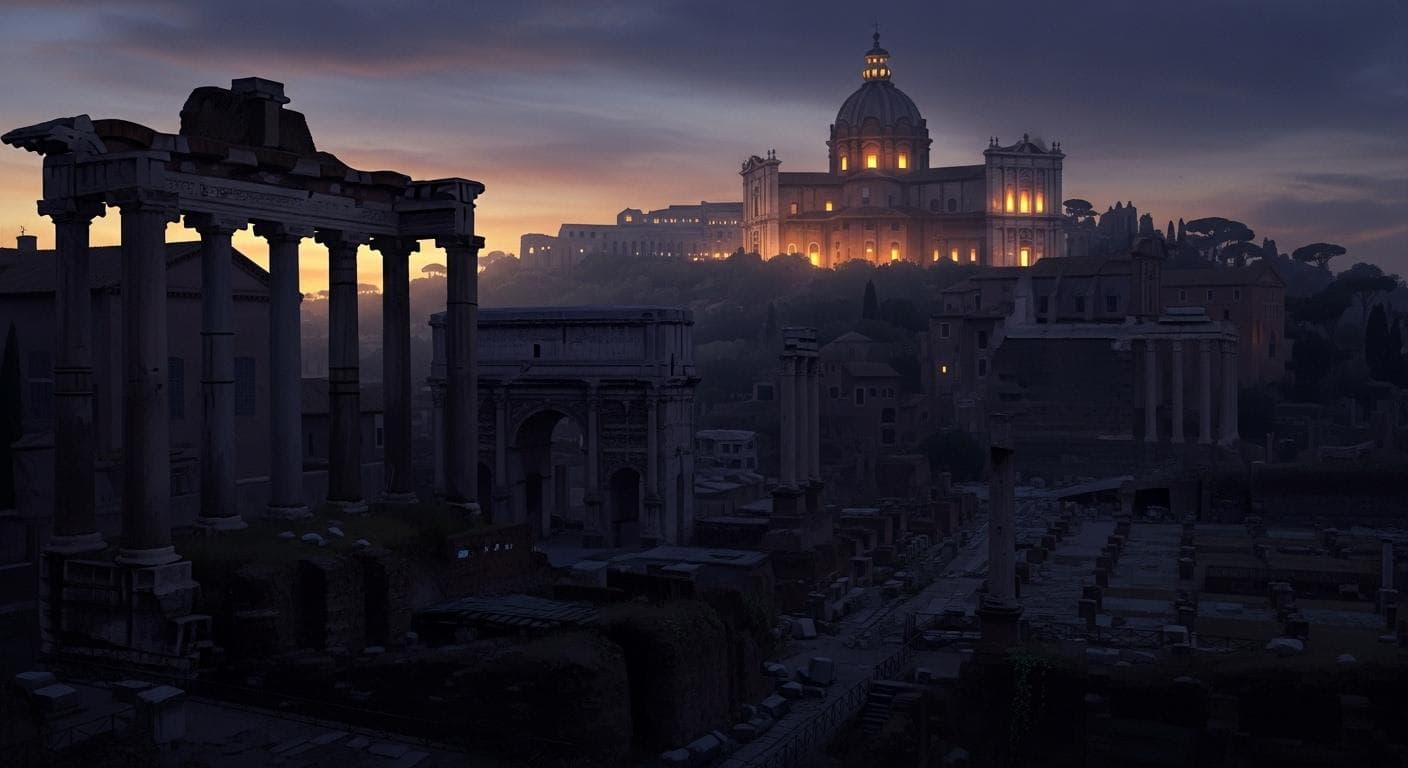
When an Empire Dies, What Is Left Behind?
Picture a crumbling Roman aqueduct, its magnificent arches finally surrendering to time and gravity. For centuries, it carried life-giving water to a bustling city, a testament to an empire's engineering genius. Now, it stands as a silent monument to a civilization that vanished. But look closer, perhaps on a nearby hill. You might see a stone church, built in the same era, its walls still standing, its bells still ringing. The empire is gone, but this institution remains.
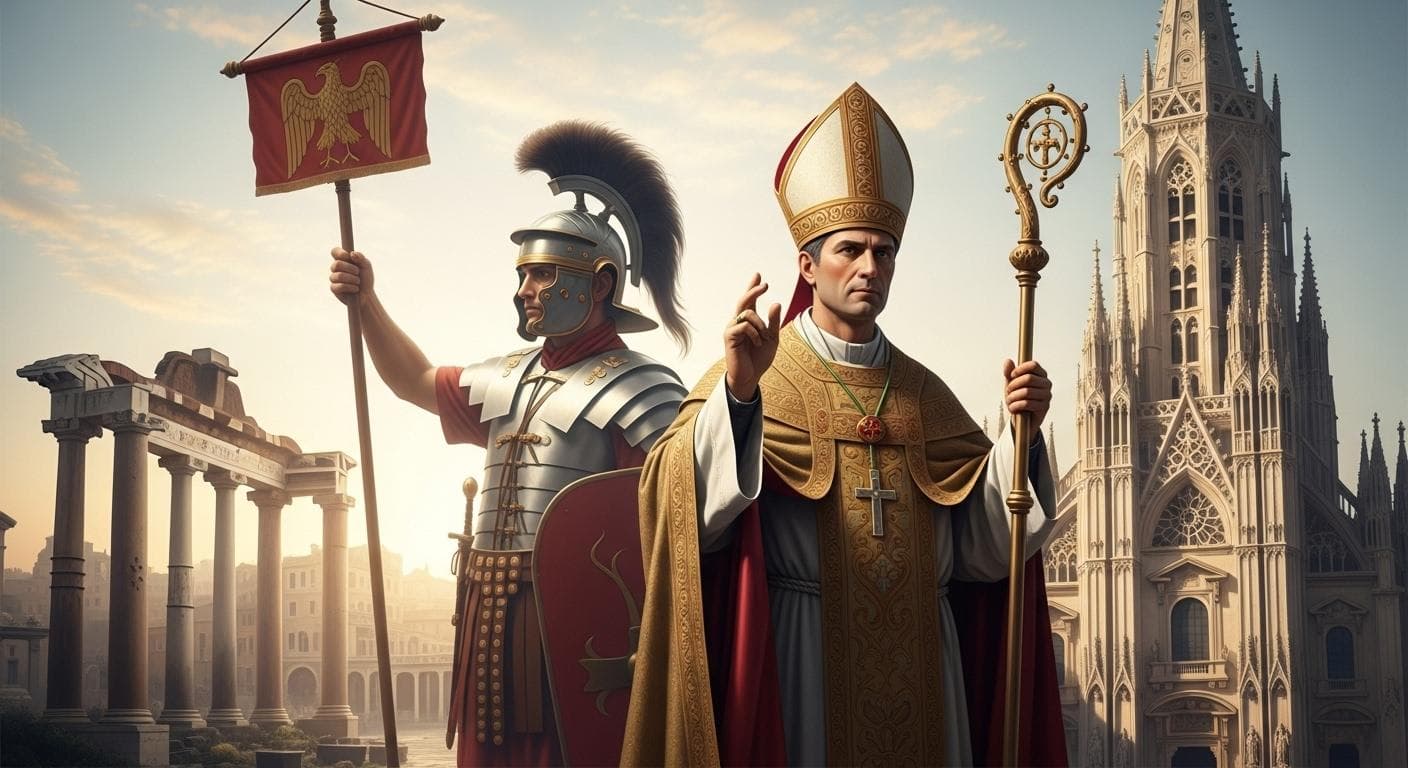
This image captures one of history's most profound transitions: the fall of the Western Roman Empire and the rise of the Roman Catholic Church. It wasn't simply a case of one power collapsing and another emerging from the rubble. The reality is far more intricate. The Church didn't just outlast Rome; in many ways, it became Rome, inheriting its structure, its language, its administrative genius, and its ambition for a universal order. This is the story of how the ghost of a secular empire provided the blueprint for a spiritual one that would dominate the West for a millennium.
A Failing State, A Rising Faith: Setting the Stage
By the fourth and fifth centuries CE, the Western Roman Empire was a giant in decline. It was reeling from what historians call the 'Crisis of the Third Century'-a period marked by civil war, economic collapse, plagues, and relentless pressure on its borders. The state bureaucracy, once a model of efficiency, became bloated and corrupt. This decay created a massive power vacuum. As the imperial state failed to provide basic services like security, justice, and social welfare, citizens began looking for an alternative.
Everything changed with Emperor Constantine the Great. His conversion in the early 4th century was a political and cultural earthquake. With the Edict of Milan in 313 CE, he legalized Christianity, ending centuries of persecution. Later, in 380 CE, Emperor Theodosius I made Nicene Christianity the official state religion. This imperial endorsement was the Church's launchpad. Suddenly, this once-marginalized faith was showered with wealth, land, and legal privileges. Bishops were granted secular rank, and the Church was given a place at the heart of the imperial power structure before that structure completely disintegrated.
The Blueprint for Power: How the Church Copied the Empire
As the secular Roman state withered away, the Church proved to be its most adept student. It didn't just build on Roman foundations; it moved directly into the abandoned administrative buildings, picked up the discarded tools of governance, and put them to new use. This was not a coincidence but a deliberate and brilliant strategy of institutional mimicry.
Mirrored Bureaucracy: From Roman Provinces to Catholic Dioceses
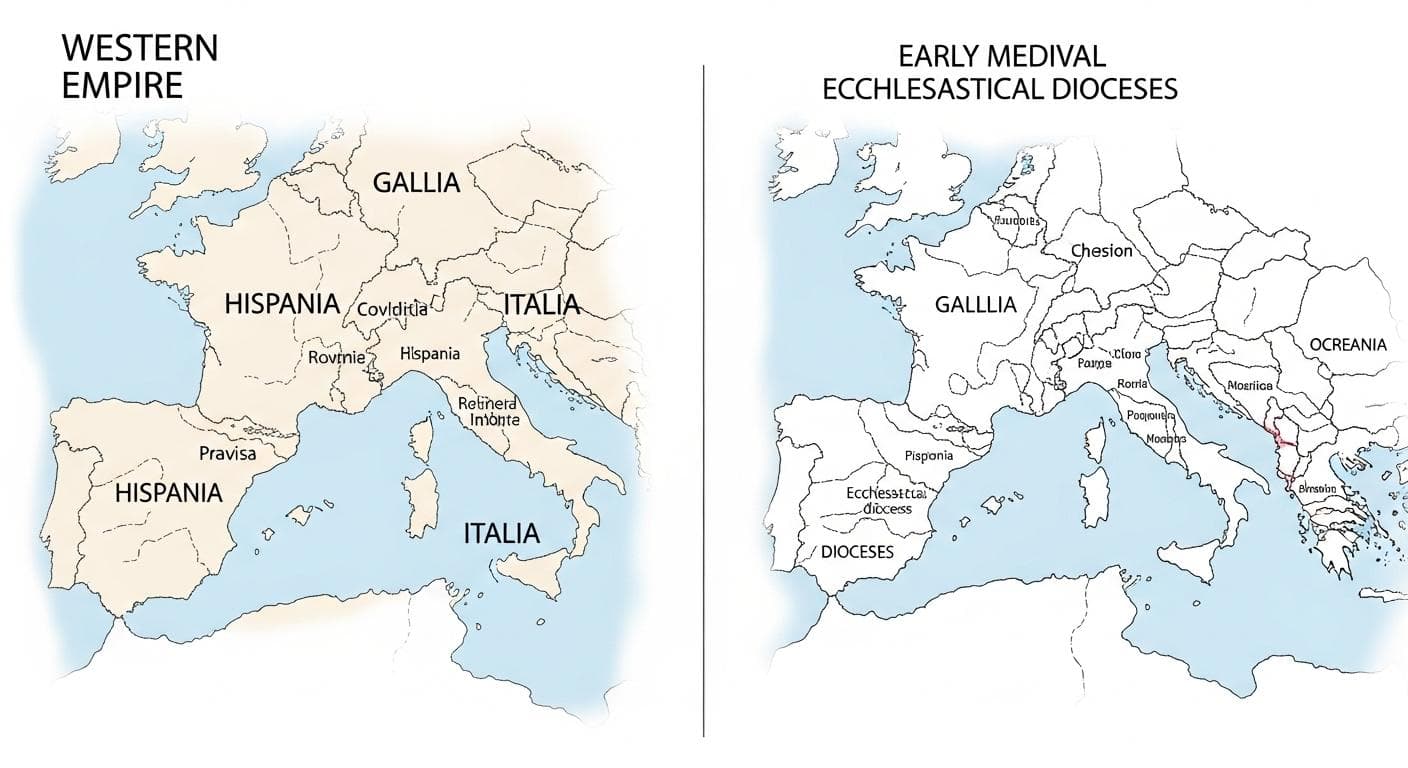
The most striking example of this inheritance is found on the map. The Roman Empire was administered through provinces, which were further subdivided into districts called dioceses. As the Church grew, it simply adopted the Roman one. The territory overseen by a bishop became known as a diocese, its boundaries often corresponding exactly to the old Roman civic districts. A Roman provincial capital became the seat of an archbishop. This meant that as imperial governors fled the chaos, a parallel church hierarchy was already in place, ready to assume control with a familiar structure.
The New Administrators: When Bishops Became Mayors
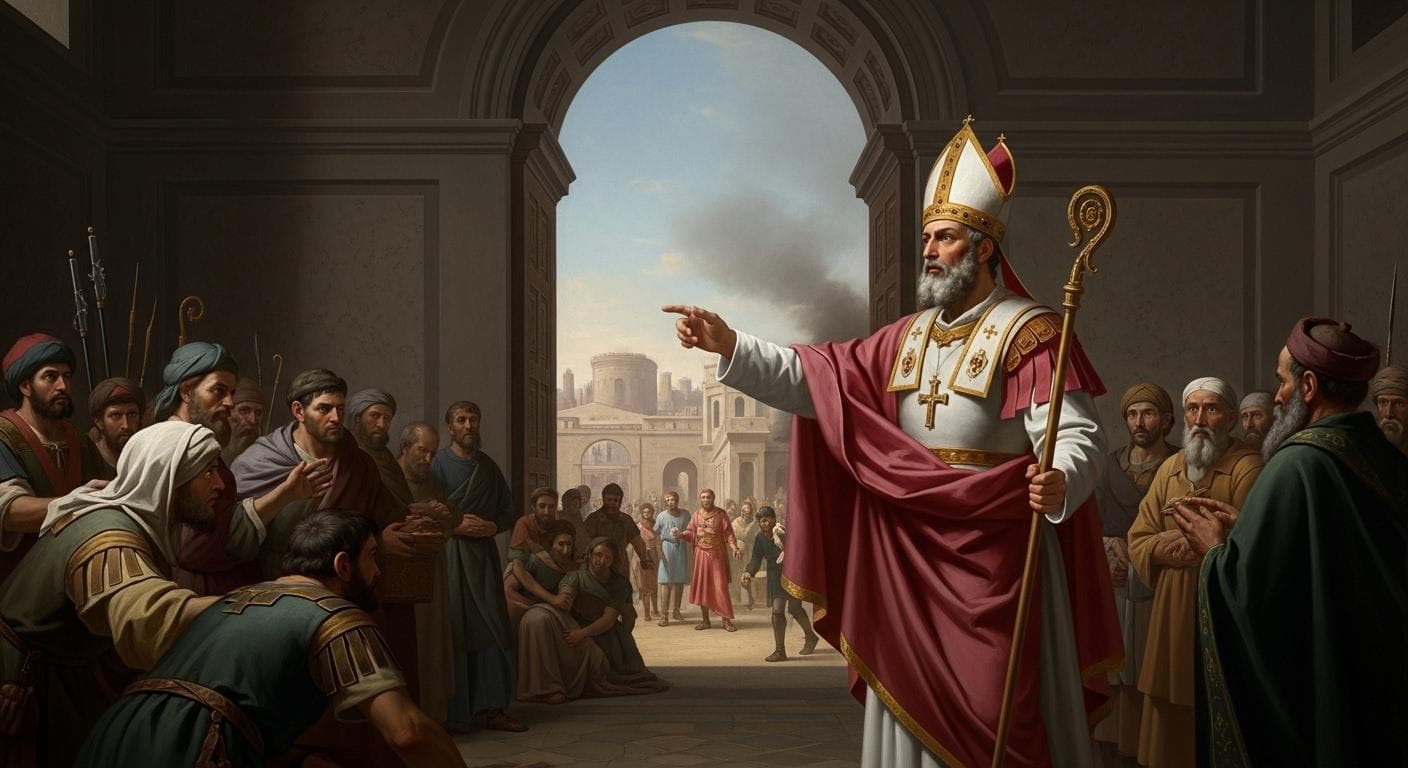
With Roman officials gone, who was left to organize the defense of a city, dispense justice, or negotiate with invaders? Increasingly, the answer was the local bishop. The most famous example is Pope Leo I, who in 452 CE famously rode out to meet Attila the Hun and persuaded him to spare Rome. But this was not an isolated incident. In Gaul, the aristocrat-turned-bishop Sidonius Apollinaris organized the defense of his city, Clermont, against the Visigoths. Across the former empire, these church leaders became the de facto mayors and protectors of their communities, wielding authority rooted in both spiritual faith and practical necessity.
The Language of Power: The Preservation of Latin
As Germanic tribes carved up the Western Empire, the common Latin language began to fracture into the vernaculars that would become Spanish, French, and Italian. Yet, one institution kept classical Latin alive: the Church. It became the official language of scripture, theology, and administration. By preserving Latin, the Church controlled the language of power and scholarship in a fragmented Europe, giving it immense cultural and intellectual power for centuries.
The Economic Engine: Inheriting Rome's Wealth
Political and administrative succession required a financial foundation. The Church inherited not just structures, but also immense wealth. Constantine's policies initiated this transfer. He granted the Church exemption from certain taxes and, crucially, legalized its ability to receive bequests. Suddenly, wealthy Romans could leave vast estates of land and money to the Church in their wills.
Over the next century, the Church became the largest landowner in the West. This economic power was the engine that allowed it to perform state-like functions. It could fund charities, maintain public works, and even raise militias because it controlled a vast and growing portfolio of income-generating land. This economic self-sufficiency was vital to its independence and its ability to fill the power vacuum left by the collapsing secular state.
476 CE: The Emperor Is Gone, Long Live the Pope
The year 476 CE, when the last Western Roman Emperor, Romulus Augustulus, was deposed, is the traditional date for the 'fall' of Rome. But for the Bishop of Rome, it was less an ending than a promotion. The final removal of a secular ruler from the city was the last step in cementing the Pope's authority.
A Power Vacuum in the Eternal City
With no emperor left in the West, the Pope became the most powerful figure in Rome and a symbolic anchor to its glorious past. He began to adopt the trappings of imperial power. The title 'Pontifex Maximus,' once held by the Roman Emperor as the chief priest, was adopted by the Pope. The Church, centered in Rome, became the new, permanent 'eternal' institution.
East vs. West: A Tale of Two Churches
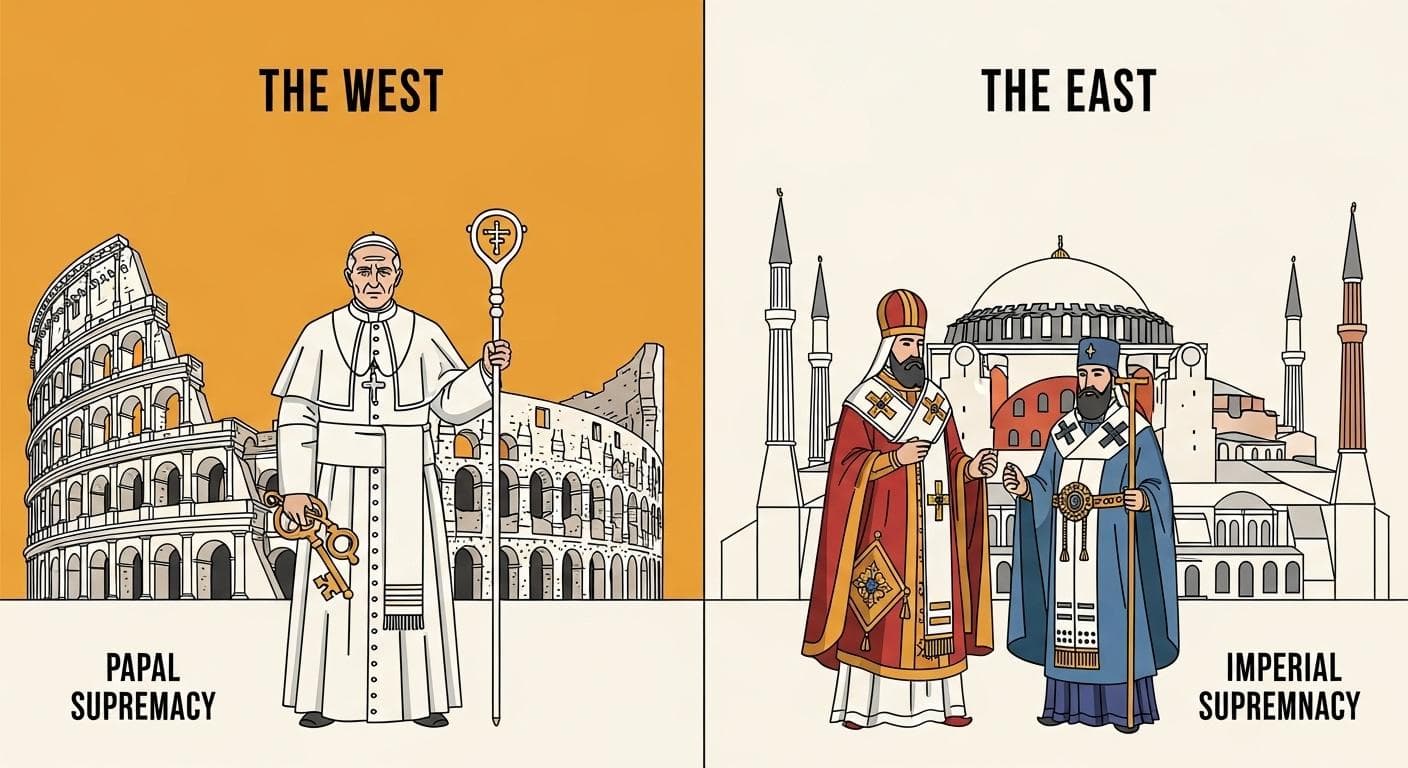
To understand the unique rise of the Papacy, one only needs to look east. The Eastern Roman Empire, or Byzantium, did not fall in 476. It thrived for another thousand years. But there, the Church never achieved independent power. The Byzantine Emperor remained the ultimate authority, viewing the Patriarch of Constantinople as his spiritual subordinate. It was the absence of an emperor in the West that allowed the Bishop of Rome to claim both spiritual and temporal supremacy, a position his eastern counterpart could never attain.
Forging Christendom: The Lasting Roman Legacy
The Catholic Church did more than just survive Rome's collapse; it actively repurposed the memory and machinery of the empire to forge a new civilization: Christendom.
The Philosophical Foundation: Augustine's City of God
As Rome was being sacked, the theologian St. Augustine wrote his masterpiece, 'The City of God.' He argued that the earthly city-the Roman Empire-was mortal and flawed, destined to fall. But the City of God-the spiritual community of the Church-was eternal. This powerful idea provided the perfect philosophical justification for the new world order. It reframed Rome's political collapse not as a tragedy, but as a necessary step in the rise of a more perfect, spiritual kingdom on Earth, led by the Church.
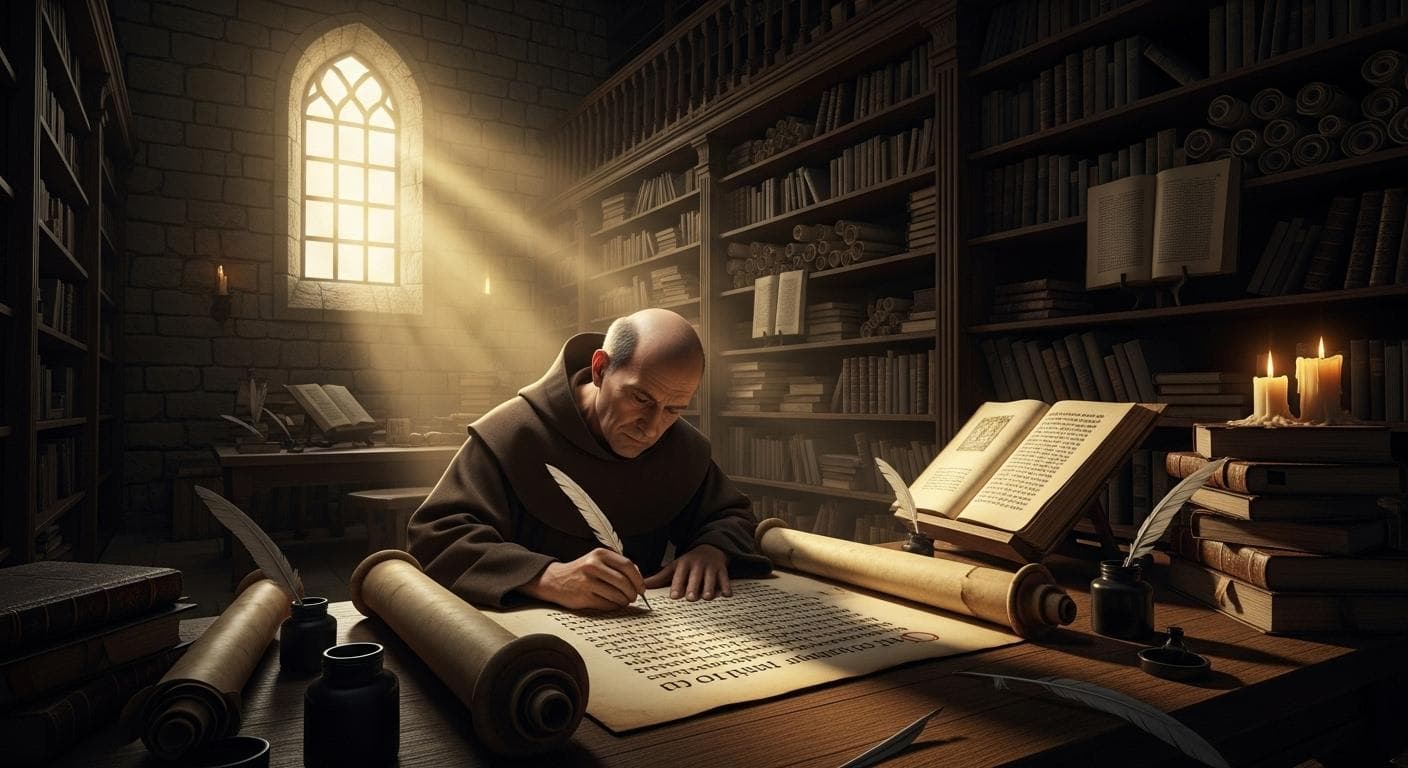
The Preservers of Knowledge: Monasteries as Libraries of the Ancient World
As society fragmented, the flame of ancient knowledge was nearly extinguished. It was kept alive in the quiet scriptoriums of monasteries. Monks didn't just copy the Bible; they painstakingly preserved the works of Roman poets, historians, and philosophers like Virgil, Cicero, and Seneca. Without these monastic libraries, much of the intellectual heritage of the classical world would have been lost forever.
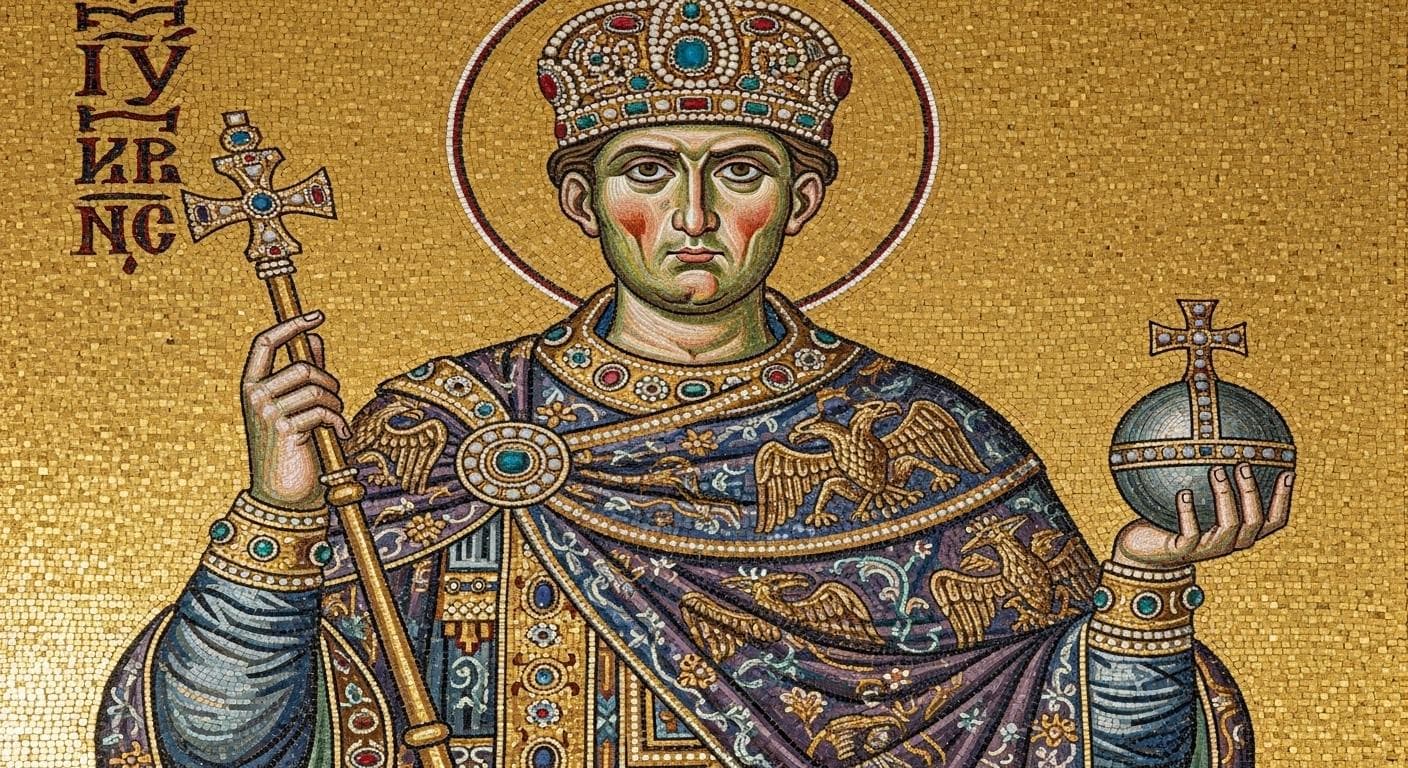
The "Idea of Rome" Reborn: The Coronation of Charlemagne
Perhaps the greatest inheritance was the Roman idea of a single, universal, ordered civilization. The Church took this political concept and transformed it into a spiritual mission. This culminated on Christmas Day, 800 CE, when Pope Leo III crowned the Frankish king, Charlemagne, as 'Emperor of the Romans.' This act was a stunning declaration: the power to create an emperor, the ultimate symbol of Roman authority, now rested not with an army or a senate, but with the Pope. The fusion was complete. A Germanic king was crowned by a Roman Pope, resurrecting a Roman title to rule a Christian empire.
This grand, unifying vision-the ghost of the Roman Empire given new life-would define the identity of Europe for the next thousand years. The Roman legions were gone, but a new army, armed with faith and a Roman sense of order, had taken its place.
The empire never truly died. It simply changed its clothes, trading the emperor's purple toga for the Pope's white cassock, and continued its long march through history.
What do you think is the most significant Roman legacy that the Church inherited? And can you see the 'ghosts' of other past empires in our modern institutions today? Share your thoughts in the comments below!

Comments
We load comments on demand to keep the page fast.